





A review on zirconium-based metal–organic frameworks: synthetic approaches and biomedical applications
文献信息
发布日期
2023-11-21
DOI
10.1039/D3MA00735A
影响因子
0
作者
Krishna Chattopadhyay, Manas Mandal, Dilip Kumar Maiti
查看原文
摘要
Since the last decade, metal–organic frameworks (MOFs) have received great attention from the materials scientist community owing to their excellent storage capacities, high surface area with tunable porous structures, functionalization-friendliness and biocompatible nature, which enable MOF-based materials to be suitable for biomedical applications. Zirconium-based MOFs (Zr-MOFs) are comparatively stable with low cytotoxicity and high drug-loading capacity. Therefore, Zr-MOFs and their composites have been thoroughly investigated for various bio-related applications such as drug delivery, anti-cancer activity, bio-sensing, and imaging. This review article demonstrates the recently developed synthetic routes for various surface-functionalized Zr-MOFs with their advantages and disadvantages. This review concisely summarizes some important Zr-based MOFs employed for biomedical applications such as drug delivery, immunoassay, antitumor activity, cytotoxicity activity, etc. Finally, a comparative analysis of the mode of action of the Zr-MOFs with varying organic linkers for biomedical applications is also provided to afford new directions for further research.
相关文献
Water-soluble random and alternating copolymers of styrene monomers with adjustable lower critical solution temperature
Jan Weiss, Ang Li, Erik Wischerhoff
2011-11-18
Paper
DOI: 10.1039/C1PY00422K
Azlactone-functionalized polymers as reactive platforms for the design of advanced materials: Progress in the last ten years
Maren E. Buck
2011-10-12
Review Article
DOI: 10.1039/C1PY00314C
Biodegradable, pH-sensitive P(CL-Pluronic-CL-co-MAA-MEG) hydrogel for 5-aminosalicylic acid delivery
Ke Wang, Qiang Fu, WeiFeng Li, Yang Gao, JiYe Zhang
2012-03-28
Paper
DOI: 10.1039/C2PY20086D
Lubrication mechanism of concentrated polymer brushes in solvents: effect of solvent viscosity
Akihiro Nomura, Kohji Ohno, Takeshi Fukuda
2011-11-14
Paper
DOI: 10.1039/C1PY00215E
Simple efficient one-pot synthesis of 5-hydroxymethylfurfural and 2,5-diformylfuran from carbohydrates
Boris Estrine, Norbert Hoffmann, Jean Le Bras, Siniša Marinković, Jacques Muzart
2015-11-04
Paper
DOI: 10.1039/C5RE00004A
Investigations on the spermine provoked liquid crystalline phase behavior of high molecular weight DNA in the presence of alkali and alkaline earth metal ions
Neethu Sundaresan, Thresia Thomas, T. J. Thomas, C. K. S. Pillai
2011-10-05
Paper
DOI: 10.1039/C1PY00302J
Two-dimensional copolymers with D–A type side chains for organic thin-film transistors: Synthesis and properties
Dugang Chen, Yan Zhao, Cheng Zhong, Gui Yu, Yunqi Liu, Jingui Qin
2011-10-07
Paper
DOI: 10.1039/C1PY00331C
Cationic polyesters bearing pendent amino groups prepared by thiol–ene chemistry
Vincent Darcos, Sarah Antoniacomi, Cédric Paniagua, Jean Coudane
2011-11-21
Paper
DOI: 10.1039/C1PY00414J
Facile synthesis of novel poly(α-aminonitrile) networks through one-pot Strecker reactions
Jiacheng Wang, Yoichi Masui, Makoto Onaka
2012-02-08
Communication
DOI: 10.1039/C2PY00002D
您可能还喜欢
化合物问答
4-((4-甲基哌嗪-1-基)甲基)苯硼酸(CAS号:763120-62-3)的市场或研究趋势如何?
随着有机硼化学的发展,该化合物在催化、药物合成、材料科学等领域展现出潜在的应用价值。近年来,其在药物前体合成中的应用越来越受到关注。市场趋势显示,随着科研投入的...
763120-62-3{4-[(4-Methyl-1-pipe...
化合物问答
如何储存2,4,5-三甲基-1-硝基苯(CAS号:610-91-3)?
2,4,5-三甲基-1-硝基苯应储存在阴凉、干燥且通风良好的地方,避免阳光直射。储存在密封的金属容器中,远离火源和热源。储存温度应控制在25°C以下,湿度不宜过...
610-91-31,2,4-Trimethyl-5-ni...
化合物问答
处理2,5-二碘噻吩(CAS号:625-88-7)时应注意哪些实验室安全事项?
在处理2,5-二碘噻吩时,应穿戴适当的个人防护装备(PPE),包括实验室外套、手套和防护眼镜。在通风橱中进行操作以避免吸入蒸气。如果发生泄漏,应立即疏散人员并使...
625-88-72,5-Diiodothiophene
化合物问答
在合成中是否有6-bromo-3-chloro-1H-indole(CAS号:57916-08-2)的替代品?
在合成6-溴-3-氯-1H-吲哚(CAS号:57916-08-2)时,可以考虑使用一些类似的化合物作为替代品,如6-氯-3-氯-1H-吲哚或3-氯-1H-吲哚,...
57916-08-26-bromo-3-chloro-1H-...
化合物问答
在合成中是否有(R)-(-)-1-(1-萘基)乙基异氰酸酯(CAS号:42340-98-7)的替代品?
可以考虑使用类似结构的化合物,如1-[(1R)-1-(2-氨基乙基)萘-1-基]乙基异氰酸酯作为替代品。此外,还可以寻找其他类型的异氰酸酯衍生物,如苯基异氰酸酯...
42340-98-71-[(1R)-1-Isocyanato...
化合物问答
3-氨基苯甲酰苯胺(CAS号:14315-16-3)适用哪些法规指南?
3-氨基苯甲酰苯胺适用于多项法规指南,包括但不限于GHS(全球化学品统一分类和标签制度)分类为皮肤腐蚀/刺激类别2,以及潜在的皮肤过敏性类别1。在欧盟地区,它受...
14315-16-33-Amino-N-phenylbenz...
化合物问答
β-环柠檬醛-D5(CAS号:26309-95-5)通常如何合成?
β-环柠檬醛-D5可通过不对称合成方法获得。常见的合成路线包括以环己酮为原料,经过选择性氧化、还原、保护基引入等步骤,最终得到目标化合物。该合成过程中通常使用多...
26309-95-5[(2,2-Dimethylpropan...
34915-68-9Bunitrolol
化合物问答
如何处理含有BIO-1211(CAS号:187735-94-0)的废料?
对于含有BIO-1211(CAS号:187735-94-0)的废料,首先应进行分类收集,确保符合环保要求。然后,可以考虑通过焚烧或其他专业处理方法进行处置。在处...
187735-94-0BIO-1211
化合物问答
如何处理含有4-氯-2-氟-3-甲基苯酚(CAS号:1351668-24-0)的废料?
含有该化合物的废液应收集至专用容器中,避免与其他化学品混合。可采用焚烧或送交专业废弃物处理公司处理。处理过程中需遵守当地环保法规,确保不产生二次污染。处理前应进...
1351668-24-04-Chloro-2-fluoro-3-...
来源期刊
推荐化合物
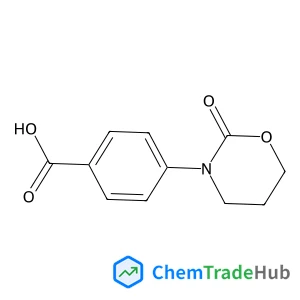
推荐供应商



免责声明
本页面提供的学术期刊信息仅供参考和研究使用。我们与任何期刊出版商均无关联,也不处理投稿事宜。如有投稿相关咨询,请直接联系相关期刊出版商。
如发现页面信息有误,请发送邮件至 support@chemtradehub.com 联系我们。我们将及时核实并处理您的问题。