



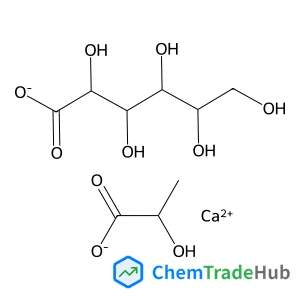
Taming of 4-azido-3,5-dinitropyrazole based energetic materials
文献信息
发布日期
2023-11-01
DOI
10.1039/D3MA00742A
影响因子
0
作者
Priyanka Das, Prachi Bhatia, Krishna Pandey, Dheeraj Kumar
查看原文
摘要
4-Azido-3,5-dinitropyrazole (AzDNP) and its derivatives are attractive candidates as high-performance energetic materials due to their excellent energetic properties and high nitrogen and oxygen contents. However, they are often more sensitive (primary explosives) and have poor thermal stability (Td < 150 °C), attributed to the presence of the azido functionality. In this work, we have tried to fine-tune the properties of 4-azido-3,5-dinitropyrazole by connecting it to 5-nitramino-1,2,4-oxadiazole moieties via N-methylene-C bridges. Furthermore, a series of nitrogen-rich energetic salts (compounds 7–17) were prepared from neutral compound 6 by reacting with different nitrogen-rich bases. All compounds were thoroughly characterized using IR and multinuclear NMR spectroscopy, differential scanning calorimetry (DSC), elemental analysis, and HRMS studies. Compounds 4, 7, and 9 were further confirmed through single-crystal X-ray diffraction studies. The physicochemical and energetic properties of all energetic compounds were also investigated. A hydroxylammonium salt, 12 (Dv: 8961 m s−1; P: 33.0 GPa), has been found to be the most energetic derivative of AzDNP to date. Compounds 6 (Dv: 8734 m s−1; P: 33.9 GPa; IS < 2.5 J) and 12 (Dv: 8961 m s−1; P: 33.0 GPa; IS < 2.5 J) show potential to be used as metal-free high-performance primary explosives. The most comprehensive properties are shown by ammonium salt 7 (Dv: 8591 m s−1; P: 30.6 GPa, Td: 173 °C; IS: 14 J). The structure–property relationship was studied using Hirshfeld surface and non covalent interaction (NCI) analyses.
期刊推荐
Pure and Applied Chemistry

Nature

Science Progress

European Journal of Wood and Wood Products
Journal of Physics and Chemistry of Solids

Science

Proceedings of the National Academy of Sciences of the United States of America
Pharmacological Reviews
Israel Journal of Chemistry
Journal of Organometallic Chemistry
相关文献
A facile and fast method for the functionalization of polymersomes by photoinduced cycloaddition chemistry
Hans-Peter M. de Hoog, Bo Liedberg
2011-12-08
Communication
DOI: 10.1039/C1PY00413A
Synthesis of DNA intercalator–immobilized cyclodextrin and interaction with double-stranded DNA: Utilization of DNA–cyclodextrin conjugated material as an environmental remediation material
Masanori Yamada, Masamitsu Inoue, Tetsuya Yamada
2012-03-23
Paper
DOI: 10.1039/C2PY00007E
Self-assembled poly(2-ethyl-2-oxazoline) fibers in aqueous solutions
Pınar Tatar Güner, Annamária Mikó, Florian F. Schweinberger
2011-12-01
Communication
DOI: 10.1039/C1PY00463H
Aqueous RAFT/MADIX polymerisation of vinylphosphonic acid
Issam Blidi, Roland Geagea, Olivier Coutelier, Stéphane Mazières, Frédéric Violleau, Mathias Destarac
2012-01-11
Communication
DOI: 10.1039/C2PY00541G
Enzymatically degradable nanogels by inverse miniemulsion copolymerization of acrylamide with dextran methacrylates as crosslinkers
Daniel Klinger, Eugen M. Aschenbrenner, Clemens K. Weiss, Katharina Landfester
2011-11-18
Paper
DOI: 10.1039/C1PY00415H
Self-assembled amino acids and dipeptides as noncovalent hydrogels for tissue engineering
Derek M. Ryan, Bradley L. Nilsson
2011-10-07
Review Article
DOI: 10.1039/C1PY00335F
Simple efficient one-pot synthesis of 5-hydroxymethylfurfural and 2,5-diformylfuran from carbohydrates
Boris Estrine, Norbert Hoffmann, Jean Le Bras, Siniša Marinković, Jacques Muzart
2015-11-04
Paper
DOI: 10.1039/C5RE00004A
Functionalized polycarbonates from dihydroxyacetone: insights into the immortal ring-opening polymerization of 2,2-dimethoxytrimethylene carbonate
Marion Helou, Jean-Michel Brusson, Jean-François Carpentier, Sophie M. Guillaume
2011-10-14
Communication
DOI: 10.1039/C1PY00405K
Random introduction of degradable linkages into functional vinyl polymers by radical ring-opening polymerization, tailored for soft tissue engineering
Jenny Undin, Teresa Illanes, Anna Finne-Wistrand, Ann-Christine Albertsson
2012-03-19
Paper
DOI: 10.1039/C2PY20034A
您可能还喜欢
化合物问答
4-((4-甲基哌嗪-1-基)甲基)苯硼酸(CAS号:763120-62-3)的市场或研究趋势如何?
随着有机硼化学的发展,该化合物在催化、药物合成、材料科学等领域展现出潜在的应用价值。近年来,其在药物前体合成中的应用越来越受到关注。市场趋势显示,随着科研投入的...
763120-62-3{4-[(4-Methyl-1-pipe...
化合物问答
如何储存2,4,5-三甲基-1-硝基苯(CAS号:610-91-3)?
2,4,5-三甲基-1-硝基苯应储存在阴凉、干燥且通风良好的地方,避免阳光直射。储存在密封的金属容器中,远离火源和热源。储存温度应控制在25°C以下,湿度不宜过...
610-91-31,2,4-Trimethyl-5-ni...
化合物问答
处理2,5-二碘噻吩(CAS号:625-88-7)时应注意哪些实验室安全事项?
在处理2,5-二碘噻吩时,应穿戴适当的个人防护装备(PPE),包括实验室外套、手套和防护眼镜。在通风橱中进行操作以避免吸入蒸气。如果发生泄漏,应立即疏散人员并使...
625-88-72,5-Diiodothiophene
化合物问答
在合成中是否有6-bromo-3-chloro-1H-indole(CAS号:57916-08-2)的替代品?
在合成6-溴-3-氯-1H-吲哚(CAS号:57916-08-2)时,可以考虑使用一些类似的化合物作为替代品,如6-氯-3-氯-1H-吲哚或3-氯-1H-吲哚,...
57916-08-26-bromo-3-chloro-1H-...
化合物问答
在合成中是否有(R)-(-)-1-(1-萘基)乙基异氰酸酯(CAS号:42340-98-7)的替代品?
可以考虑使用类似结构的化合物,如1-[(1R)-1-(2-氨基乙基)萘-1-基]乙基异氰酸酯作为替代品。此外,还可以寻找其他类型的异氰酸酯衍生物,如苯基异氰酸酯...
42340-98-71-[(1R)-1-Isocyanato...
化合物问答
3-氨基苯甲酰苯胺(CAS号:14315-16-3)适用哪些法规指南?
3-氨基苯甲酰苯胺适用于多项法规指南,包括但不限于GHS(全球化学品统一分类和标签制度)分类为皮肤腐蚀/刺激类别2,以及潜在的皮肤过敏性类别1。在欧盟地区,它受...
14315-16-33-Amino-N-phenylbenz...
化合物问答
β-环柠檬醛-D5(CAS号:26309-95-5)通常如何合成?
β-环柠檬醛-D5可通过不对称合成方法获得。常见的合成路线包括以环己酮为原料,经过选择性氧化、还原、保护基引入等步骤,最终得到目标化合物。该合成过程中通常使用多...
26309-95-5[(2,2-Dimethylpropan...
34915-68-9Bunitrolol
化合物问答
如何处理含有BIO-1211(CAS号:187735-94-0)的废料?
对于含有BIO-1211(CAS号:187735-94-0)的废料,首先应进行分类收集,确保符合环保要求。然后,可以考虑通过焚烧或其他专业处理方法进行处置。在处...
187735-94-0BIO-1211
化合物问答
如何处理含有4-氯-2-氟-3-甲基苯酚(CAS号:1351668-24-0)的废料?
含有该化合物的废液应收集至专用容器中,避免与其他化学品混合。可采用焚烧或送交专业废弃物处理公司处理。处理过程中需遵守当地环保法规,确保不产生二次污染。处理前应进...
1351668-24-04-Chloro-2-fluoro-3-...
来源期刊
推荐化合物

推荐供应商





免责声明
本页面提供的学术期刊信息仅供参考和研究使用。我们与任何期刊出版商均无关联,也不处理投稿事宜。如有投稿相关咨询,请直接联系相关期刊出版商。
如发现页面信息有误,请发送邮件至 support@chemtradehub.com 联系我们。我们将及时核实并处理您的问题。