





Microfluidic synthesis of nanomaterials for biomedical applications
文献信息
发布日期
2023-09-05
DOI
10.1039/D3NH00217A
影响因子
10.989
作者
查看原文
摘要
The field of nanomaterials has progressed dramatically over the past decades with important contributions to the biomedical area. The physicochemical properties of nanomaterials, such as the size and structure, can be controlled through manipulation of mass and heat transfer conditions during synthesis. In particular, microfluidic systems with rapid mixing and precise fluid control are ideal platforms for creating appropriate synthesis conditions. One notable example of microfluidics-based synthesis is the development of lipid nanoparticle (LNP)-based mRNA vaccines with accelerated clinical translation and robust efficacy during the COVID-19 pandemic. In addition to LNPs, microfluidic systems have been adopted for the controlled synthesis of a broad range of nanomaterials. In this review, we introduce the fundamental principles of microfluidic technologies including flow field- and multiple field-based methods for fabricating nanoparticles, and discuss their applications in the biomedical field. We conclude this review by outlining several major challenges and future directions in the implementation of microfluidic synthesis of nanomaterials.
相关文献
CO2: a wild solvent, tamed
Stephen Cummings, Kieran Trickett, Robert Enick, Julian Eastoe
2010-07-20
Perspective
DOI: 10.1039/C003856C
Selective transport of amino acids into the gas phase: driving forces for amino acid solubilization in gas-phase reverse micelles
Yigang Fang, Andrew Bennett, Jianbo Liu
2010-12-07
Paper
DOI: 10.1039/C0CP00823K
Nitrate radical addition–elimination reactions of atmospherically relevant sulfur-containing molecules
Joseph R. Lane, Solvejg Jørgensen, Henrik G. Kjaergaard
2010-08-27
Paper
DOI: 10.1039/C0CP00383B
Gas–surface energy exchange and thermal accommodation of CO2 and Ar in collisions with methyl, hydroxyl, and perfluorinated self-assembled monolayers
Jessica W. Lu, William A. Alexander, John R. Morris
2010-08-20
Paper
DOI: 10.1039/B921893A
Preparation and photocatalytic activity of eccentric Au–titania core–shell nanoparticles by block copolymer templates
Xue Li, Xiaoning Fu, Hui Yang
2010-12-14
Paper
DOI: 10.1039/C0CP01353F
Molecular weight dependence of emission intensity and emitting sites distribution within single conjugated polymer molecules
Satoshi Habuchi, Suguru Onda, Martin Vacha
2010-11-26
Paper
DOI: 10.1039/C0CP01729A
Photochemical induced growth and aggregation of metal nanoparticles in diode-array spectrophotometer via excited dimethyl-sulfoxide
Tomer Zidki
2010-08-31
Paper
DOI: 10.1039/C0CP01037E
Should negative electron affinities be used for evaluating the chemical hardness?
Carlos Cárdenas, Paul Ayers, Frank De Proft, David J. Tozer, Paul Geerlings
2010-11-26
Paper
DOI: 10.1039/C0CP01785J
Rules for selectivity in oxidation processes on RuO2(110)
Núria López, Gerard Novell-Leruth
2010-08-18
Paper
DOI: 10.1039/C0CP00176G
您可能还喜欢
化合物问答
什么是2,6-二溴-4,8-双[(2-乙基己基)氧基]苯并[1,2-b:4,5-b']二噻吩(CAS号:1226782-13-3)?
2,6-二溴-4,8-双[(2-乙基己基)氧基]苯并[1,2-b:4,5-b']二噻吩是一种有机化合物,分子式为C23H32Br2O2S2。该化合物具有芳香性和...
1226782-13-32,6-Dibromo-4,8-bis[...
化合物问答
木聚硫钠(CAS号:37319-17-8)的物理化学性质是什么?
木聚硫钠通常为无色或白色结晶性粉末,具有吸湿性。其分子量约为121.11 g/mol。木聚硫钠易溶于水,不溶于醇类和其他非极性溶剂。在酸性或碱性溶液中,木聚硫钠...
37319-17-8Pentosan
化合物问答
2-甲氧基-4-(三氟甲基)苄溴, JRD(CAS号:886500-59-0)适用哪些法规指南?
该化合物在合成、储存和运输过程中需遵循《全球化学品统一分类和标签制度》(GHS)的健康、环境和物理危险分类。在欧洲还需符合《化学品注册、评估、授权和限制》(RE...
886500-59-02-Methoxy-4-(trifluo...
化合物问答
1,4-Diazoniabicyclo[2.2.2]octane-1,4-disulfinate(CAS号:119752-83-9)的主要用途是什么?
1,4-二氮杂双环[2.2.2]辛烷-1,4-二硫酸二酯主要用于有机合成中的保护基团,特别是在保护胺基和硫醇基方面具有广泛应用。此外,它还用于一些特殊化学反应的...
119752-83-91,4-Diazabicyclo[2.2...
化合物问答
如何处理含有4-(Bromomethyl)-2-fluorobenzenesulphonamide(CAS号:1645275-47-3)的废料?
含有4-(Bromomethyl)-2-fluorobenzenesulphonamide的废液应首先进行中和处理,以降低pH值,避免对环境造成腐蚀性影响。随后...
1645275-47-34-(Bromomethyl)-2-fl...
化合物问答
Loureiriol(CAS号:479195-44-3)的物理化学性质是什么?
Loureiriol是一种天然化合物,其分子式为C15H22O4。Loureiriol为无色结晶性粉末,具有较高的熔点和良好的热稳定性。其相对分子质量为262....
479195-44-3Loureiriol
化合物问答
在合成中是否有3-氨基苯甲酰苯胺(CAS号:14315-16-3)的替代品?
在合成过程中,可以考虑使用类似结构的化合物作为3-氨基苯甲酰苯胺的替代品,例如N-苯基-3-氰基苯胺或N-苯基-3-硝基苯胺等,这些化合物具有相似的化学性质,可...
14315-16-33-Amino-N-phenylbenz...
化合物问答
4-异氰酰苯基硼酸频哪醇酯(CAS号:380430-64-8)的市场或研究趋势如何?
4-异氰酰苯基硼酸频哪醇酯主要应用于有机合成、药物化学和材料科学领域。随着绿色化学的发展,该化合物因其高效的官能团转化能力和环境友好性而受到越来越多的关注。近年...
380430-64-82-(4-Isocyanatopheny...
化合物问答
如何储存3β-乙酰氧基-7,25-甘遂二烯-24(R)-醇(CAS号:1352001-09-2)?
3β-乙酰氧基-7,25-甘遂二烯-24(R)-醇应储存在阴凉、干燥、通风良好的地方,避免直接光照。储存容器应密封,防止空气中的水分和氧气影响化合物的稳定性。建...
1352001-09-23β-acetoxy-eupha- 7,...
化合物问答
如何储存4-氟-2-甲基-1H-吲哚(CAS号:1260383-51-4)?
应将4-氟-2-甲基-1H-吲哚存放在阴凉、干燥、通风良好的地方,避免直接暴露在光照下。容器应密封,避免与空气中的水蒸气接触。建议在避光、温度不超过25℃的环境...
1260383-51-44-Fluoro-2-methyl-1H...
来源期刊
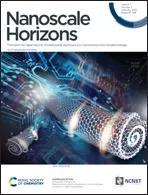
Nanoscale Horizons
CiteScore:
16.3
自引率:
3.4%
年发文量:
138
Nanoscale Horizons is a leading journal for the publication of exceptionally high-quality, innovative nanoscience and nanotechnology. The journal places an emphasis on original research that demonstrates a new concept or a new way of thinking (a conceptual advance), rather than primarily reporting technological improvements. However, outstanding articles featuring truly breakthrough developments such as record performance alone may also be published in the journal. For work to be published it must be of significant general interest to our community-spanning readership. Topics covered in the journal include, but are not limited to: Synthesis of nanostructured and nanoscale materials Quantum materials 2D materials Layered materials Layered quantum materials Characterisation of functional nanoscale materials and bio-assemblies Properties of nanoscale materials Self-assembly and molecular organisation Complex hybrid nanostructures Nanocomposites, nanoparticles, nanocrystalline materials, and nanoclusters Nanotubes, molecular nanowires and nanocrystals Molecular nanoscience Nanocatalysis Theoretical modelling Single-molecules Plasmonics Nanoelectronics and molecular electronics Nanophotonics Nanochips, nanosensors, nanofluidics and nanofabrication Carbon-based nanoscale materials and devices Biomimetic materials Nanobiotechnology/bionanomaterials Nanomedicine Regulatory approaches and risk assessment
推荐化合物

![1-[4-(4-Methyl-1H-imidazol-1-yl)phenyl]ethanone structure](https://cnstatic.chemtradehub.com/structs/142/142161-53-3-7f55.webp "1-[4-(4-Methyl-1H-imidazol-1-yl)phenyl]ethanone structure")
![(1R,5R)-3-{[(2-Methyl-2-propanyl)oxy]carbonyl}-3-azabicyclo[3.1.0]hexane-1-carboxylic acid structure](https://cnstatic.chemtradehub.com/structs/116/1165450-63-4-bfe1.webp "(1R,5R)-3-{[(2-Methyl-2-propanyl)oxy]carbonyl}-3-azabicyclo[3.1.0]hexane-1-carboxylic acid structure")
推荐供应商





免责声明
本页面提供的学术期刊信息仅供参考和研究使用。我们与任何期刊出版商均无关联,也不处理投稿事宜。如有投稿相关咨询,请直接联系相关期刊出版商。
如发现页面信息有误,请发送邮件至 support@chemtradehub.com 联系我们。我们将及时核实并处理您的问题。