





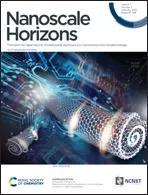
Front cover
文献信息
发布日期
2023-08-21
DOI
10.1039/D3NH90035E
影响因子
10.989
作者
查看原文
摘要
A graphical abstract is available for this content
相关文献
Non-universal tracer diffusion in crowded media of non-inert obstacles
Surya K. Ghosh, Andrey G. Cherstvy
2014-11-26
Paper
DOI: 10.1039/C4CP03599B
Magnetic and geometric anisotropy in particle-crosslinked ferrohydrogels
Lisa Roeder, Philipp Bender, Matthias Kundt, Andreas Tschöpe, Annette M. Schmidt
2014-11-17
Paper
DOI: 10.1039/C4CP04493B
The role of Schottky barrier in the resistive switching of SrTiO3: direct experimental evidence
Xue-Bing Yin, Zheng-Hua Tan, Xin Guo
2014-11-07
Communication
DOI: 10.1039/C4CP04151H
Formation of 2- and 1-methyl-1,4-dihydronaphthalene isomers via the crossed beam reactions of phenyl radicals (C6H5) with isoprene (CH2C(CH3)CHCH2) and 1,3-pentadiene (CH2CHCHCHCH3)
Tao Yang, Lloyd Muzangwa, Dorian S. N. Parker, Ralf I. Kaiser, Alexander M. Mebel
2014-11-07
Paper
DOI: 10.1039/C4CP04612A
Oxygen vacancy and hole conduction in amorphous TiO2
Hieu H. Pham, Lin-Wang Wang
2014-11-05
Paper
DOI: 10.1039/C4CP04209C
An approach to classification and capacitance expressions in electrochemical capacitors technology
Silvia Roldán, Daniel Barreda, Marcos Granda, Rosa Menéndez, Ricardo Santamaría, Clara Blanco
2014-11-12
Paper
DOI: 10.1039/C4CP05124F
Ab initio quantum dynamical analysis of ultrafast nonradiative transitions via conical intersections in pyrazine
Manabu Kanno, Yuta Ito, Noriyuki Shimakura, Shiro Koseki, Hirohiko Kono
2014-11-26
Paper
DOI: 10.1039/C4CP04807E
Development of new auxiliary basis functions of the Karlsruhe segmented contracted basis sets including diffuse basis functions (def2-SVPD, def2-TZVPPD, and def2-QVPPD) for RI-MP2 and RI-CC calculations
Arnim Hellweg, Dmitrij Rappoport
2014-11-14
Paper
DOI: 10.1039/C4CP04286G
Stability and spinodal decomposition of the solid-solution phase in the ruthenium–cerium–oxide electro-catalyst
Yanmei Li, Xin Wang, Yanqun Shao, Bo Wu, Zhongzhi Tang, Wei Lin
2014-10-29
Paper
DOI: 10.1039/C4CP04131C
Using beryllium bonds to change halogen bonds from traditional to chlorine-shared to ion-pair bonds
Ibon Alkorta, José Elguero, Otilia Mó, Manuel Yáñez, Janet E. Del Bene
2014-11-28
Paper
DOI: 10.1039/C4CP04574B
您可能还喜欢
化合物问答
4-[4-三氟甲基苯基]恶唑(CAS号:1126636-40-5)通常如何合成?
4-[4-三氟甲基苯基]恶唑通常通过将4-三氟甲基苯酚与异硫氰酸苯酯在有机溶剂中进行酯化反应合成。该反应可在无水条件下,使用适当的催化剂,如四丁基氢氧化铵,以提...
1126636-40-54-(4-(Trifluoromethy...
59729-32-71-[3-(Dimethylamino)...
化合物问答
RockPhos Pd G3(CAS号:2009020-38-4)通常如何合成?
RockPhos Pd G3 通常通过钯催化偶联反应合成,使用配体 (2'-Amino-2-biphenylyl)(methanesulfonato-kappa...
2009020-38-4(2'-Amino-2-biphenyl...
化合物问答
1-哌啶甲酰胺(CAS号:2158-03-4)的市场或研究趋势如何?
1-哌啶甲酰胺作为有机合成中的重要中间体,其市场需求主要受医药、农药、染料等行业推动。近年来,随着新药开发和绿色化学的发展,该化合物的研究趋势集中在开发更高效、...
2158-03-41-Piperidinecarboxam...
化合物问答
2-(二苯基膦基)乙胺(CAS号:4848-43-5)适用哪些法规指南?
2-(二苯基膦基)乙胺适用于多种法规指南,包括但不限于《全球化学品统一分类和标签制度》(GHS),欧盟《化学品注册、评估、授权和限制》法规(REACH),以及美...
4848-43-52-(Diphenylphosphino...
化合物问答
如何储存间苯二甲酸二烯丙酯(CAS号:1087-21-4)?
间苯二甲酸二烯丙酯应储存在阴凉、干燥、通风良好的地方,远离火源和热源。储存容器应密封,避免光照和高温。储存温度应控制在25℃以下,相对湿度应低于80%。避免与其...
1087-21-4Diallyl isophthalate
化合物问答
什么是间甲苯异硫代异氰酸酯(CAS号:621-30-7)?
间甲苯异硫代异氰酸酯是一种有机化合物,分子式为C7H7NO2S,具有刺激性气味。它是一种重要的有机合成中间体,在合成其他化合物时广泛应用。
621-30-71-Isothiocyanato-3-m...
化合物问答
在合成中是否有N-Boc-D-苯丙氨醇(CAS号:106454-69-7)的替代品?
在合成中,可以考虑使用N-Cbz-D-苯丙氨醇或N-Fmoc-D-苯丙氨醇作为替代品。这些化合物同样具有保护氨基的功能,且在合成过程中表现出良好的反应性能。
106454-69-72-Methyl-2-propanyl ...
化合物问答
3-羟甲基-2-氧异丙基吡啶(CAS号:954240-50-7)的主要用途是什么?
3-羟甲基-2-氧异丙基吡啶主要用于有机合成领域,可以作为合成其他药物、农药或精细化学品的中间体。此外,它还可能在实验室研究中作为特定反应的前体或溶剂。
954240-50-7(2-Isopropoxy-3-pyri...
化合物问答
6-氨基-9-甲基嘌呤(CAS号:700-00-5)应用于哪些行业?
6-氨基-9-甲基嘌呤目前主要应用于医药行业,作为某些药物的中间体。此外,它还可能用于聚合物、传感器和半导体的某些领域,作为功能性单体或掺杂剂。
700-00-59-Methyl-9H-purin-6-...
来源期刊
Nanoscale Horizons
CiteScore:
16.3
自引率:
3.4%
年发文量:
138
Nanoscale Horizons is a leading journal for the publication of exceptionally high-quality, innovative nanoscience and nanotechnology. The journal places an emphasis on original research that demonstrates a new concept or a new way of thinking (a conceptual advance), rather than primarily reporting technological improvements. However, outstanding articles featuring truly breakthrough developments such as record performance alone may also be published in the journal. For work to be published it must be of significant general interest to our community-spanning readership. Topics covered in the journal include, but are not limited to: Synthesis of nanostructured and nanoscale materials Quantum materials 2D materials Layered materials Layered quantum materials Characterisation of functional nanoscale materials and bio-assemblies Properties of nanoscale materials Self-assembly and molecular organisation Complex hybrid nanostructures Nanocomposites, nanoparticles, nanocrystalline materials, and nanoclusters Nanotubes, molecular nanowires and nanocrystals Molecular nanoscience Nanocatalysis Theoretical modelling Single-molecules Plasmonics Nanoelectronics and molecular electronics Nanophotonics Nanochips, nanosensors, nanofluidics and nanofabrication Carbon-based nanoscale materials and devices Biomimetic materials Nanobiotechnology/bionanomaterials Nanomedicine Regulatory approaches and risk assessment
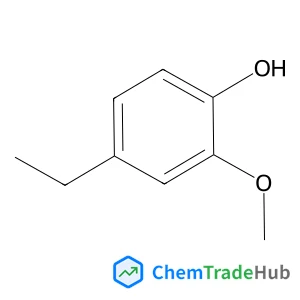
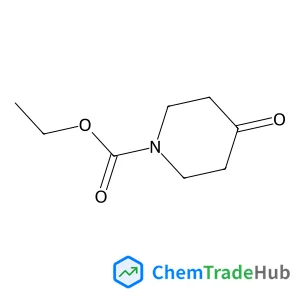
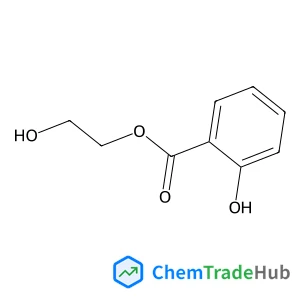
推荐化合物

推荐供应商




免责声明
本页面提供的学术期刊信息仅供参考和研究使用。我们与任何期刊出版商均无关联,也不处理投稿事宜。如有投稿相关咨询,请直接联系相关期刊出版商。
如发现页面信息有误,请发送邮件至 support@chemtradehub.com 联系我们。我们将及时核实并处理您的问题。