



Selective dye adsorption by pH modulation on chemically modified nanopolyaniline by N-grafting of maleic acid
文献信息
发布日期
2023-11-07
DOI
10.1039/D3PY00968H
影响因子
5.582
作者
Sai Sushree Rath, Nehapadma Mohanty, Braja N. Patra
查看原文
摘要
Dyes are potential pollutants in water due to their non-degradable nature and stability toward oxidizing agents and light. Among all the techniques available for the removal of dyes, the adsorption method is attracting the interest of researchers worldwide owing to its advantages, for instance, inexpensiveness, high efficiency and ease of synthesis. In this work, the emeraldine base form of polyaniline (EBPANI) was used as a nucleophile to synthesize polyaniline grafted maleic acid (PANI-g-MA) adsorbent, which was used to adsorb dyes selectively from wastewater upon modulation of the pH. The prepared grafted polymer was analysed using characterization techniques including transmission electron microscopy (TEM), scanning electron microscopy (SEM), X-ray diffraction (XRD), and Fourier transform infrared (FTIR) spectroscopy. PANI-g-MA demonstrated the adsorption of cationic and anionic dyes selectively at different pH values owing to the availability of different charges. The maximum adoption capacity for methylene blue (MB) dyes was found to be 181.81 mg g−1. The adsorption parameters, such as adsorbent dose, pH, temperature, initial dye concentration and contact time, along with the kinetics and thermodynamic parameters (ΔG°, ΔH°, ΔS°), were evaluated for potential application in the real world. The Langmuir isotherm model is best suited to explain this adsorption process. This type of adsorption follows pseudo-second-order kinetics.
相关文献
Lone-pair distribution and plumbite network formation in high lead silicate glass, 80PbO·20SiO2
Oliver L. G. Alderman, Alex C. Hannon, Diane Holland, Steve Feller, Gloria Lehr, Adam J. Vitale, Uwe Hoppe, Martin v. Zimmerman, Anke Watenphul
2013-04-29
Paper
DOI: 10.1039/C3CP51348C
New Li-doped fullerene-intercalated phthalocyanine covalent organic frameworks designed for hydrogen storage
Jing-Hua Guo, Yoshiyuki Miyamoto
2013-04-23
Paper
DOI: 10.1039/C3CP50492A
Chemically modified ribbon edge stimulated H2 dissociation: a first-principles computational study
Ting Liao, Ziqi Sun, Aijun Du, Sean Smith
2013-04-12
Communication
DOI: 10.1039/C3CP50654A
Free volume in ionic liquids: a connection of experimentally accessible observables from PALS and PVT experiments with the molecular structure from XRD data‡
Yang Yu, Günter Dlubek, Reinhard Krause-Rehberg, Jürgen Pionteck, Dirk Pfefferkorn, Safak Bulut, Dana Bejan, Christian Friedrich
2013-04-10
Paper
DOI: 10.1039/C3CP43306D
The chemical sensitivity of X-ray spectroscopy: high energy resolution XANESversusX-ray emission spectroscopy of substituted ferrocenes
Andrew J. Atkins, Matthias Bauer, Christoph R. Jacob
2013-04-12
Paper
DOI: 10.1039/C3CP50999K
Single-layered V2O5 a promising cathode material for rechargeable Li and Mg ion batteries: an ab initio study
Zhiguo Wang, Qiulei Su, Huiqiu Deng
2013-04-12
Communication
DOI: 10.1039/C3CP51167G
Surface modification imparts selectivity, facilitating redox catalytic studies: quinone mediated oxygen reduction
Joseph Mason, Christopher Batchelor-McAuley, Richard G. Compton
2013-04-22
Paper
DOI: 10.1039/C3CP50607J
A XAS study of the luminescent Eu centers in thiosilicate phosphors
Katleen Korthout, Anthony B. Parmentier, Philippe F. Smet, Dirk Poelman
2013-03-22
Paper
DOI: 10.1039/C3CP44334E
Oxidation stages of Ni electrodes in solid oxidefuel cell environments
Farid El Gabaly, Kevin F. McCarty, Hendrik Bluhm, Anthony H. McDaniel
2013-04-18
Paper
DOI: 10.1039/C3CP50366F
您可能还喜欢
化合物问答
(5-氨基吡唑-3-基)乙酸(CAS号:174891-10-2)的物理化学性质是什么?
(5-氨基吡唑-3-基)乙酸是一种无色至白色固体,分子量为174.15 g/mol。它在水中具有较好的溶解性,在有机溶剂中的溶解度较低。该化合物具有较好的反应活...
174891-10-2(3-Amino-1H-pyrazol-...
化合物问答
3-氟-4,5-二氯苯胺(CAS号:35754-38-2)适用哪些法规指南?
3-氟-4,5-二氯苯胺受到多项法规指南的约束,包括但不限于GHS(全球化学品统一分类和标签制度)的危险分类标准、欧盟的REACH法规(注册、评估、授权和限制)...
35754-38-23,4-Dichloro-5-fluor...
化合物问答
什么是(R)-(+)-2,2',6,6'-四甲氧基-4,4'-联(二(3,5-二甲苯基基)膦基)-3,3'-二联吡啶(CAS号:442905-33-1)?
这是一种有机化合物,化学名为(R)-(+)-2,2',6,6'-四甲氧基-4,4'-联(二(3,5-二甲苯基基)膦基)-3,3'-二联吡啶,CAS号为44290...
442905-33-14,4'-Bis[bis(3,5-dim...
化合物问答
1-氨基-2-氰基萘(CAS号:3100-67-2)应用于哪些行业?
1-氨基-2-氰基萘在医药、聚合物、传感器和半导体等行业中有应用。在医药领域,它可用作中间体合成某些药物。在聚合物行业,它可以用于制备具有特定性能的聚合物。此外...
3100-67-21-Amino-2-naphthonit...
化合物问答
如何处理含有1-溴-4-(异丙氧基甲基)苯(CAS号:98446-84-5)的废料?
处理含1-溴-4-(异丙氧基甲基)苯的废料时,首先应确保废液收集在防渗漏的容器中,避免泄露。然后,可以考虑采用化学降解法或物理吸附法进行处理。在特定条件下,可通...
98446-84-51-Bromo-4-(isopropox...
化合物问答
6-Chloro-8-(trifluoromethyl)chroman-4-one(CAS号:1344889-75-3)的主要用途是什么?
6-氯-8-三氟甲基-2,3-二氢-4H-色喃-4-酮主要用于有机合成中的中间体,也可作为研究试剂使用。
1344889-75-36-Chloro-8-(trifluor...
化合物问答
7-乙氧基-2-萘酚(CAS号:57944-44-2)通常如何合成?
7-乙氧基-2-萘酚通常通过N-乙氧基化反应合成,首先将2-萘酚与乙醇钠在乙醇中反应生成7-乙氧基-2-萘酚钠盐,再通过酸化进一步得到7-乙氧基-2-萘酚。该合...
57944-44-27-Ethoxy-2-naphthol
化合物问答
4-(1,1-二氧硫代吗啉)丁醇(CAS号:59801-41-1)适用哪些法规指南?
该化合物需遵循一系列的法规指南,包括但不限于GHS全球统一分类和标签制度,其分类可能包括易燃液体和可能危害水生环境。在欧洲,还需遵循REACH法规,确保物质和混...
59801-41-14-(4-Hydroxybutyl)th...
化合物问答
4-甲氧基苄基叠氮甲酸酯(CAS号:25474-85-5)的物理化学性质是什么?
4-甲氧基苄基叠氮甲酸酯是一种无色液体,具有一定的挥发性。其分子量为198.16,熔点为-69°C,沸点为105°C。该化合物在水中溶解度较低,在有机溶剂如乙醇...
25474-85-54-Methoxybenzyl carb...
化合物问答
如何处理含有4-氯-2-氟嘧啶(CAS号:51422-00-5)的废料?
含有4-氯-2-氟嘧啶的废料应按照危险废物处理。首先,应收集并分类这些废料,避免与其他废物混合。然后,可以采用焚烧处理或者交由专业机构进行处置。在处理过程中,需...
51422-00-54-Chloro-2-fluoropyr...
来源期刊
Polymer Chemistry

CiteScore:
8.6
自引率:
7.3%
年发文量:
457
Polymer Chemistry welcomes submissions in all areas of polymer science that have a strong focus on macromolecular chemistry. Manuscripts may cover a broad range of fields, yet no direct application focus is required.
推荐化合物
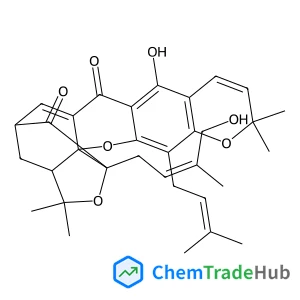
![N-{15-[(2,5-Dioxo-1-pyrrolidinyl)oxy]-15-oxo-3,6,9,12-tetraoxapentadec-1-yl}-2-(2-propyn-1-yloxy)acetamide structure](https://cnstatic.chemtradehub.com/structs/210/2101206-92-0-2eb5.webp "N-{15-[(2,5-Dioxo-1-pyrrolidinyl)oxy]-15-oxo-3,6,9,12-tetraoxapentadec-1-yl}-2-(2-propyn-1-yloxy)acetamide structure")
![N-{[(2-Methyl-2-propanyl)oxy]carbonyl}-L-methionylglycine structure](https://cnstatic.chemtradehub.com/structs/234/23446-03-9-e1e5.webp "N-{[(2-Methyl-2-propanyl)oxy]carbonyl}-L-methionylglycine structure")
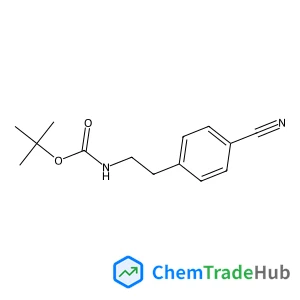
推荐供应商




免责声明
本页面提供的学术期刊信息仅供参考和研究使用。我们与任何期刊出版商均无关联,也不处理投稿事宜。如有投稿相关咨询,请直接联系相关期刊出版商。
如发现页面信息有误,请发送邮件至 support@chemtradehub.com 联系我们。我们将及时核实并处理您的问题。