








Multi-tunable thermoresponsive behaviors of poly(amido thioether)s
文献信息
发布日期
2023-12-06
DOI
10.1039/D3PY01101A
影响因子
5.582
作者
Lu Lian, Qingqing Wang, Fujin Duan, Youliang Zhao
查看原文
摘要
Rational macromolecular design can endow polymers with on-demand thermoresponsive behaviors. To achieve multi-tunable LCST/UCST behaviors, stepwise polymerization of N-acryloylhomocysteine thiolactone with primary amines involving glycinamide, N-(3-aminopropyl)imidazole, N,N-diethylethylenediamine, ethanolamine, and 3-amino-1-propanol is adopted to synthesize poly(amido thioether)s (PATEs) with distinct side groups. Under suitable conditions, PATE solutions can exhibit single or dual phase transitions relying on the chemical composition, polymer concentration, additive, external stimuli and solution blending, as evidenced from turbidimetry and fluorometry analyses. Owing to strengthened hydrogen bonding, primary amide-bearing PATE solutions have some advantages such as concentration-insensitive UCST behavior, good thermal stability against high salt concentration, and formation of dual UCSTs in a water/ethanol mixture. Imidazolyl-bearing PATEs in buffer solutions shift from hydrophilic to LCST and LCST–UCST in a specific pH range, and hydroxyl-bearing PATE solutions can present concentration-dependent thermoresponsive behaviors. Meanwhile, solution blending leads to composition-tunable UCST, UCST–LCST and LCST behaviors. As analogues of polyacrylamides, PATEs comprising a thermo/oxidation-responsive and hydrogen bonding-related backbone can usually exhibit some differences in thermoresponsiveness and hold great promise as important thermoresponsive polymers.
相关文献
Unraveling the atomic structure of Ge-rich sulfide glasses
Gabriel J. Cuello, Shinji Kohara, Chris J. Benmore, David L. Price, Eugene Bychkov
2013-04-08
Paper
DOI: 10.1039/C3CP50536G
A physicochemical mechanism of chemical gas sensors using an AC analysis
Jaehyun Moon, Jin-Ah Park, Su-Jae Lee, Jeong-Ik Lee, Taehyong Zyung, Eui-Chol Shin, Jong-Sook Lee
2013-04-16
Paper
DOI: 10.1039/C3CP44684K
Adsorption of N/S heterocycles in the flexible metal–organic framework MIL-53(FeIII) studied by in situ energy dispersive X-ray diffraction
Ben Van de Voorde, Alexis S. Munn, Nathalie Guillou, Franck Millange, Dirk E. De Vos, Richard I. Walton
2013-02-14
Paper
DOI: 10.1039/C3CP44349C
Tip enhanced Raman spectroscopy (TERS) as a probe for the buckling distortion in silicene
Deepthi Jose, A. Nijamudheen
2013-04-18
Communication
DOI: 10.1039/C3CP51028J
Structure of Nb2O5–NaPO3 glasses by X-ray and neutron diffraction
U. Hoppe, L. Delevoye, L. Montagne, M. v. Zimmermann, A. C. Hannon
2012-12-03
Paper
DOI: 10.1039/C2CP42772A
New Li2FeSiO4–carbon monoliths with controlled macropores: effects of pore properties on electrode performance
George Hasegawa, Mai Sannohe, Yuya Ishihara, Kazuyoshi Kanamori, Kazuki Nakanishi, Takeshi Abe
2013-04-09
Paper
DOI: 10.1039/C3CP50352F
Photofragmentation at 263 nm of small peptides containing tyrosine: the role of the charge transfer on CO
Christophe Dehon, Satchin Soorkia, Mélanie Pedrazzani, Christophe Jouvet, Michel Barat, Jacqueline A. Fayeton, Bruno Lucas
2013-04-05
Paper
DOI: 10.1039/C3CP50720C
In situXRD studies of nanocrystallization of Fe-based metallic glass: a comparative study by reciprocal and direct space methods
Jozef Bednarcik, Stefan Michalik, Vladimir Kolesar, Uta Rütt, Hermann Franz
2013-04-15
Paper
DOI: 10.1039/C3CP44445G
Synthesis of chemically pure, luminescent Eu3+ doped HAp nanoparticles: a promising fluorescent probe for in vivo imaging applications
S. Sasanka Kumar, Manoj Komath, Manoj Raama Varma, M. K. Jayaraj, K. Rajeev Kumar
2013-04-12
Paper
DOI: 10.1039/C3CP42648C
您可能还喜欢
化合物问答
(5-氨基吡唑-3-基)乙酸(CAS号:174891-10-2)的物理化学性质是什么?
(5-氨基吡唑-3-基)乙酸是一种无色至白色固体,分子量为174.15 g/mol。它在水中具有较好的溶解性,在有机溶剂中的溶解度较低。该化合物具有较好的反应活...
174891-10-2(3-Amino-1H-pyrazol-...
化合物问答
3-氟-4,5-二氯苯胺(CAS号:35754-38-2)适用哪些法规指南?
3-氟-4,5-二氯苯胺受到多项法规指南的约束,包括但不限于GHS(全球化学品统一分类和标签制度)的危险分类标准、欧盟的REACH法规(注册、评估、授权和限制)...
35754-38-23,4-Dichloro-5-fluor...
化合物问答
什么是(R)-(+)-2,2',6,6'-四甲氧基-4,4'-联(二(3,5-二甲苯基基)膦基)-3,3'-二联吡啶(CAS号:442905-33-1)?
这是一种有机化合物,化学名为(R)-(+)-2,2',6,6'-四甲氧基-4,4'-联(二(3,5-二甲苯基基)膦基)-3,3'-二联吡啶,CAS号为44290...
442905-33-14,4'-Bis[bis(3,5-dim...
化合物问答
1-氨基-2-氰基萘(CAS号:3100-67-2)应用于哪些行业?
1-氨基-2-氰基萘在医药、聚合物、传感器和半导体等行业中有应用。在医药领域,它可用作中间体合成某些药物。在聚合物行业,它可以用于制备具有特定性能的聚合物。此外...
3100-67-21-Amino-2-naphthonit...
化合物问答
如何处理含有1-溴-4-(异丙氧基甲基)苯(CAS号:98446-84-5)的废料?
处理含1-溴-4-(异丙氧基甲基)苯的废料时,首先应确保废液收集在防渗漏的容器中,避免泄露。然后,可以考虑采用化学降解法或物理吸附法进行处理。在特定条件下,可通...
98446-84-51-Bromo-4-(isopropox...
化合物问答
6-Chloro-8-(trifluoromethyl)chroman-4-one(CAS号:1344889-75-3)的主要用途是什么?
6-氯-8-三氟甲基-2,3-二氢-4H-色喃-4-酮主要用于有机合成中的中间体,也可作为研究试剂使用。
1344889-75-36-Chloro-8-(trifluor...
化合物问答
7-乙氧基-2-萘酚(CAS号:57944-44-2)通常如何合成?
7-乙氧基-2-萘酚通常通过N-乙氧基化反应合成,首先将2-萘酚与乙醇钠在乙醇中反应生成7-乙氧基-2-萘酚钠盐,再通过酸化进一步得到7-乙氧基-2-萘酚。该合...
57944-44-27-Ethoxy-2-naphthol
化合物问答
4-(1,1-二氧硫代吗啉)丁醇(CAS号:59801-41-1)适用哪些法规指南?
该化合物需遵循一系列的法规指南,包括但不限于GHS全球统一分类和标签制度,其分类可能包括易燃液体和可能危害水生环境。在欧洲,还需遵循REACH法规,确保物质和混...
59801-41-14-(4-Hydroxybutyl)th...
化合物问答
4-甲氧基苄基叠氮甲酸酯(CAS号:25474-85-5)的物理化学性质是什么?
4-甲氧基苄基叠氮甲酸酯是一种无色液体,具有一定的挥发性。其分子量为198.16,熔点为-69°C,沸点为105°C。该化合物在水中溶解度较低,在有机溶剂如乙醇...
25474-85-54-Methoxybenzyl carb...
化合物问答
如何处理含有4-氯-2-氟嘧啶(CAS号:51422-00-5)的废料?
含有4-氯-2-氟嘧啶的废料应按照危险废物处理。首先,应收集并分类这些废料,避免与其他废物混合。然后,可以采用焚烧处理或者交由专业机构进行处置。在处理过程中,需...
51422-00-54-Chloro-2-fluoropyr...
来源期刊
Polymer Chemistry

CiteScore:
8.6
自引率:
7.3%
年发文量:
457
Polymer Chemistry welcomes submissions in all areas of polymer science that have a strong focus on macromolecular chemistry. Manuscripts may cover a broad range of fields, yet no direct application focus is required.
推荐化合物
![1-{3-[4-Amino-3-(4-phenoxyphenyl)-1H-pyrazolo[3,4-d]pyrimidin-1-yl]-1-piperidinyl}-2,3-dihydroxy-1-propanone structure](https://cnstatic.chemtradehub.com/structs/122/1226872-27-0-e037.webp "1-{3-[4-Amino-3-(4-phenoxyphenyl)-1H-pyrazolo[3,4-d]pyrimidin-1-yl]-1-piperidinyl}-2,3-dihydroxy-1-propanone structure")
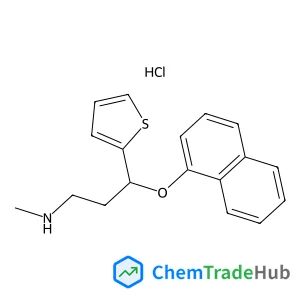
N-Methyl-3-(1-naphthyloxy)-3-(2-thienyl)-1-propanamine hydrochloride (1:1)
CAS号:
1188266-11-6
分子式:
C18H20ClNOS
推荐供应商





免责声明
本页面提供的学术期刊信息仅供参考和研究使用。我们与任何期刊出版商均无关联,也不处理投稿事宜。如有投稿相关咨询,请直接联系相关期刊出版商。
如发现页面信息有误,请发送邮件至 support@chemtradehub.com 联系我们。我们将及时核实并处理您的问题。