


Photoredox dearomative β-hydroborylation of indoles for the synthesis of borylated indolines
文献信息
发布日期
2023-11-15
DOI
10.1039/D3QO01452E
影响因子
5.281
作者
Yongchan Jian, Fei Wen, Jianping Shang, Xiaolong Li, Zhenyu Liu, Yuanyuan An, Yubin Wang
查看原文
摘要
A photocatalysed dearomative β-hydroborylation reaction of indole derivatives with NHC-boranes has been accomplished. This protocol shows a broad substrate scope with moderate to excellent yields, providing a novel and efficient route for the preparation of C2- and C3-borylated indolines, which are important structural units in pharmaceuticals, natural products and functional materials. Control experiments elucidated a radical process initiated by photoinduced energy transfer and single-electron transfer for this transformation. Furthermore, gram-scale reactions demonstrated the synthetic value of this method.
相关文献
Contribution of hydrogen bonding to charge-transfer induced surface-enhanced Raman scattering of an intermolecular system comprising p-aminothiophenol and benzoic acid
Yue Wang, Wei Ji, Zhi Yu, Ran Li, Xu Wang, Wei Song, Weidong Ruan, Bing Zhao, Yukihiro Ozaki
2013-12-09
Paper
DOI: 10.1039/C3CP54856B
A new approach to determine vapour pressures and hygroscopicities of aqueous aerosols containing semi-volatile organic compounds
D. J. Stewart, T. C. Preston, J. S. Walker, Y.-H. Zhang, J. P. Reid
2014-01-02
Paper
DOI: 10.1039/C3CP54948H
Adsorption studies of a phosphonic acid on ITO: film coverage, purity, and induced electronic structure changes
S. A. Paniagua, E. L. Li, S. R. Marder
2013-12-19
Paper
DOI: 10.1039/C3CP54637C
Comment on “Volume shrinkage of a metal–organic framework host induced by the dispersive attraction of guest gas molecules”
François-Xavier Coudert, Alain H. Fuchs, Alexander V. Neimark
2014-01-07
Comment
DOI: 10.1039/C3CP54042A
Theoretical investigation of the effects of doping on the electronic structure and thermoelectric properties of ZnO nanowires
Chao Wang, Yuanxu Wang, Guangbiao Zhang, Chengxiao Peng, Gui Yang
2013-12-17
Paper
DOI: 10.1039/C3CP54289K
Hybrid pn-junction solar cells based on layers of inorganic nanocrystals and organic semiconductors: optimization of layer thickness by considering the width of the depletion region
Sudip K. Saha, Asim Guchhait, Amlan J. Pal
2013-11-29
Paper
DOI: 10.1039/C3CP52227J
Formation of hydroxyacetonitrile (HOCH2CN) and polyoxymethylene (POM)-derivatives in comets from formaldehyde (CH2O) and hydrogen cyanide (HCN) activated by water
Grégoire Danger, Albert Rimola, Ninette Abou Mrad, Fabrice Duvernay, Gaël Roussin, Patrice Theule, Thierry Chiavassa
2013-10-18
Paper
DOI: 10.1039/C3CP54034K
Theoretical and experimental studies of the interactions between Au2− and nucleobases
Hong-Guang Xu, Wei-Jun Zheng, Jun Li
2013-12-02
Paper
DOI: 10.1039/C3CP54478H
Photochemistry of a 1 : 1 hydrogen-bonded CH3CN : HCOOH complex under astrochemically-relevant conditions
2013-11-01
Paper
DOI: 10.1039/C3CP54041C
您可能还喜欢
化合物问答
(5-氨基吡唑-3-基)乙酸(CAS号:174891-10-2)的物理化学性质是什么?
(5-氨基吡唑-3-基)乙酸是一种无色至白色固体,分子量为174.15 g/mol。它在水中具有较好的溶解性,在有机溶剂中的溶解度较低。该化合物具有较好的反应活...
174891-10-2(3-Amino-1H-pyrazol-...
化合物问答
3-氟-4,5-二氯苯胺(CAS号:35754-38-2)适用哪些法规指南?
3-氟-4,5-二氯苯胺受到多项法规指南的约束,包括但不限于GHS(全球化学品统一分类和标签制度)的危险分类标准、欧盟的REACH法规(注册、评估、授权和限制)...
35754-38-23,4-Dichloro-5-fluor...
化合物问答
什么是(R)-(+)-2,2',6,6'-四甲氧基-4,4'-联(二(3,5-二甲苯基基)膦基)-3,3'-二联吡啶(CAS号:442905-33-1)?
这是一种有机化合物,化学名为(R)-(+)-2,2',6,6'-四甲氧基-4,4'-联(二(3,5-二甲苯基基)膦基)-3,3'-二联吡啶,CAS号为44290...
442905-33-14,4'-Bis[bis(3,5-dim...
化合物问答
1-氨基-2-氰基萘(CAS号:3100-67-2)应用于哪些行业?
1-氨基-2-氰基萘在医药、聚合物、传感器和半导体等行业中有应用。在医药领域,它可用作中间体合成某些药物。在聚合物行业,它可以用于制备具有特定性能的聚合物。此外...
3100-67-21-Amino-2-naphthonit...
化合物问答
如何处理含有1-溴-4-(异丙氧基甲基)苯(CAS号:98446-84-5)的废料?
处理含1-溴-4-(异丙氧基甲基)苯的废料时,首先应确保废液收集在防渗漏的容器中,避免泄露。然后,可以考虑采用化学降解法或物理吸附法进行处理。在特定条件下,可通...
98446-84-51-Bromo-4-(isopropox...
化合物问答
6-Chloro-8-(trifluoromethyl)chroman-4-one(CAS号:1344889-75-3)的主要用途是什么?
6-氯-8-三氟甲基-2,3-二氢-4H-色喃-4-酮主要用于有机合成中的中间体,也可作为研究试剂使用。
1344889-75-36-Chloro-8-(trifluor...
化合物问答
7-乙氧基-2-萘酚(CAS号:57944-44-2)通常如何合成?
7-乙氧基-2-萘酚通常通过N-乙氧基化反应合成,首先将2-萘酚与乙醇钠在乙醇中反应生成7-乙氧基-2-萘酚钠盐,再通过酸化进一步得到7-乙氧基-2-萘酚。该合...
57944-44-27-Ethoxy-2-naphthol
化合物问答
4-(1,1-二氧硫代吗啉)丁醇(CAS号:59801-41-1)适用哪些法规指南?
该化合物需遵循一系列的法规指南,包括但不限于GHS全球统一分类和标签制度,其分类可能包括易燃液体和可能危害水生环境。在欧洲,还需遵循REACH法规,确保物质和混...
59801-41-14-(4-Hydroxybutyl)th...
化合物问答
4-甲氧基苄基叠氮甲酸酯(CAS号:25474-85-5)的物理化学性质是什么?
4-甲氧基苄基叠氮甲酸酯是一种无色液体,具有一定的挥发性。其分子量为198.16,熔点为-69°C,沸点为105°C。该化合物在水中溶解度较低,在有机溶剂如乙醇...
25474-85-54-Methoxybenzyl carb...
化合物问答
如何处理含有4-氯-2-氟嘧啶(CAS号:51422-00-5)的废料?
含有4-氯-2-氟嘧啶的废料应按照危险废物处理。首先,应收集并分类这些废料,避免与其他废物混合。然后,可以采用焚烧处理或者交由专业机构进行处置。在处理过程中,需...
51422-00-54-Chloro-2-fluoropyr...
来源期刊
Organic Chemistry Frontiers
CiteScore:
7.8
自引率:
8.7%
年发文量:
724
Organic Chemistry Frontiers publishes high-quality research from across organic chemistry. Emphases are placed on studies that make significant contributions to the field of organic chemistry by reporting either new or significantly improved protocols or methodologies. Topics include, but are not limited to the following: Organic synthesis Development of synthetic methodologies Catalysis Natural products Functional organic materials Supramolecular and macromolecular chemistry Physical and computational organic chemistry
推荐化合物
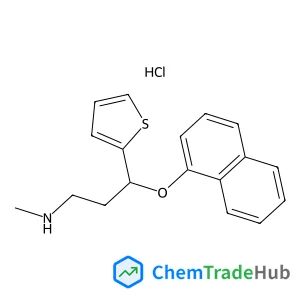
N-Methyl-3-(1-naphthyloxy)-3-(2-thienyl)-1-propanamine hydrochloride (1:1)
CAS号:
1188266-11-6
分子式:
C18H20ClNOS
推荐供应商




免责声明
本页面提供的学术期刊信息仅供参考和研究使用。我们与任何期刊出版商均无关联,也不处理投稿事宜。如有投稿相关咨询,请直接联系相关期刊出版商。
如发现页面信息有误,请发送邮件至 support@chemtradehub.com 联系我们。我们将及时核实并处理您的问题。