


Decorrelated singlet and triplet exciton delocalization in acetylene-bridged Zn-porphyrin dimers
文献信息
发布日期
2023-12-19
DOI
10.1039/D3SC03327A
影响因子
9.825
作者
Hasini Medagedara, Mandefro Y. Teferi, Sachithra T. Wanasinghe, Wade Burson, Shahad Kizi, Bradly Zaslona, Kristy L. Mardis, Jens Niklas, Oleg G. Poluektov, Aaron S. Rury
查看原文
摘要
The controlled delocalization of molecular excitons remains an important goal towards the application of organic chromophores in processes ranging from light-initiated chemical transformations to classical and quantum information processing. In this study, we present a methodology to couple optical and magnetic spectroscopic techniques and assess the delocalization of singlet and triplet excitons in model molecular chromophores. By comparing the steady-state and time-resolved optical spectra of Zn-porphyrin monomers and weakly coupled dimers, we show that we can use the identity of substituents bound at specific positions of the macromolecules' rings to control the inter-ring delocalization of singlet excitons stemming from their B states through acetylene bridges. While broadened steady-state absorption spectra suggest the presence of delocalized B state excitons in mesityl-substituted Zn-tetraphenyl porphyrin dimers (Zn2U-D), we confirm this conclusion by measuring an enhanced ultrafast non-radiative relaxation from these inter-ring excitonic states to lower lying electronic states relative to their monomer. In contrast to the delocalized nature of singlet excitons, we use time-resolved EPR and ENDOR spectroscopies to show that the triplet states of the Zn-porphyrin dimers remain localized on one of the two macrocyclic sub-units. We use the analysis of EPR and ENDOR measurements on unmetallated model porphyrin monomers and dimers to support this conclusion. The results of DFT calculations also support the interpretation of localized triplet states. These results demonstrate researchers cannot conclude triplet excitons delocalize in macromolecular based on the presence of spatially extended singlet excitons, which can help in the design of chromophores for application in spin conversion and information processing technologies.
期刊推荐
Current Opinion in Solid State & Materials Science

Chemistry Education Research and Practice
Crystallography Reports
New Journal of Chemistry
Journal of Saudi Chemical Society
Russian Journal of Bioorganic Chemistry
Journal of Natural Medicines
Russian Journal of Coordination Chemistry
Current Opinion in Colloid & Interface Science
Organic Process Research & Development
相关文献
Detailed kinetics of tetrafluoroethene ozonolysis
Minh v. Duong, Hieu T. Nguyen, Lam K. Huynh
2018-10-18
Paper
DOI: 10.1039/C8CP05386C
Temperature dependence of the violation of Purcell's theorem experienced by a folding molecular motor
Victor Teboul, Gabriel Rajonson
2019-01-10
Paper
DOI: 10.1039/C8CP06129G
Quantifying the conceptual problems associated with the isotropic NICS through analyses of its underlying density
Guillaume Acke, Sofie Van Damme, Remco W. A. Havenith, Patrick Bultinck
2019-01-24
Paper
DOI: 10.1039/C8CP07343K
The effect of two types of dibenzoannulation of pentalene on molecular energies and magnetically induced currents
Marija Baranac-Stojanović, Milovan Stojanović
2019-01-15
Paper
DOI: 10.1039/C8CP07875K
Crack propagation in graphene monolayer under tear loading
Yang Cai, Xiaoyi Liu, Xiaohu Yao
2019-01-04
Paper
DOI: 10.1039/C8CP07477A
Significantly enhanced phonon mean free path and thermal conductivity by percolation of silver nanoflowers
Daewoo Suh, Sanghoon Lee, Chenchen Xu, Agha Aamir Jan, Seunghyun Baik
2019-01-17
Paper
DOI: 10.1039/C8CP07229A
Strong enrichment of atmospherically relevant organic ions at the aqueous interface: the role of ion pairing and cooperative effects
Victor Ekholm, Nicklas Bjärnhall Prytz, Marie-Madeleine Walz, Josephina Werner, Gunnar Öhrwall, Jan-Erik Rubensson, Olle Björneholm
2018-10-12
Paper
DOI: 10.1039/C8CP04525A
Structural characterization of nucleotide 5′-triphosphates by infrared ion spectroscopy and theoretical studies
Rianne E. van Outersterp, Jonathan Martens, Giel Berden, Jeffrey D. Steill, Anouk M. Rijs
2018-10-25
Paper
DOI: 10.1039/C8CP03314E
Preparation of graphene bilayers on platinum by sequential chemical vapour deposition
Johannes Halle, Alexander Mehler, Nicolas Néel, Jörg Kröger
2019-01-18
Paper
DOI: 10.1039/C8CP07569G
您可能还喜欢
化合物问答
2-(甲基磺酰基)嘧啶-5-胺(CAS号:56621-92-2)适用哪些法规指南?
该化合物适用的法规指南包括GHS(全球化学品统一分类和标签制度)分类为特定目标器官毒性-单次接触类别3;根据欧盟REACH法规,该化合物需要进行注册和评估;在美...
56621-92-22-(Methylsulfonyl)py...
化合物问答
在合成中是否有4-(4-氯苯基)-1H-咪唑(CAS号:35512-29-9)的替代品?
在合成中,可以考虑使用一些类似的化合物作为4-(4-氯苯基)-1H-咪唑的替代品,如4-(4-溴苯基)-1H-咪唑或4-(4-甲氧基苯基)-1H-咪唑。这些化合...
35512-29-94-(4-Chlorophenyl)-1...
化合物问答
什么是N~2~-甲基丙氨酸酰胺(CAS号:32012-16-1)?
N~2~-甲基丙氨酸酰胺是一种有机化合物,其化学名为2-(Methylamino)propanamide。它是一种酰胺类化合物,分子式为C4H10N2O,相对分...
32012-16-12-(Methylamino)propa...
化合物问答
如何处理含有N-苄基-3-氨基氧杂环丁烷草酸盐(CAS号:1956341-96-0)的废料?
处理含有N-苄基-3-氨基氧杂环丁烷草酸盐(CAS号:1956341-96-0)的废料时,应首先确保遵循相关法规要求,如GHS和REACH等。通常,废液应先进行...
1956341-96-0N-Benzyloxetan-3-ami...
化合物问答
4-bromo-2-chloro-6-methylbenzoic acid(CAS号:877149-07-0)的物理化学性质是什么?
4-溴-2-氯-6-甲基苯甲酸是一种固体化合物,具有较高的熔点和较低的沸点。它的分子量为261.03 g/mol。该化合物在水中几乎不溶,在有机溶剂中溶解度适中...
877149-07-04-Bromo-2-chloro-6-m...
化合物问答
2-[(2,5-二氯-4-嘧啶)氨基]-N-甲基苯甲酰胺(CAS号:761440-08-8)通常如何合成?
该化合物通常通过缩合反应合成,典型的方法是将2,5-二氯嘧啶与N-甲基苯甲酰胺在碱性条件下进行偶联反应。常用的碱包括NaH、LDA等强碱。该合成路线具有较高的选...
761440-08-82-[(2,5-dichloropyri...
4752-10-71,4-Dichlorophthalaz...
化合物问答
在合成中是否有3,5-二溴-4-甲基苯胺(CAS号:13194-73-5)的替代品?
3,5-二溴-4-甲基苯胺在某些合成路线中可能没有直接替代品。然而,在某些应用场景下,可以考虑使用其他类似结构的化合物如3,5-二溴-4-硝基苯胺或3,5-二碘...
13194-73-53,5-Dibromo-4-methyl...
化合物问答
2-氯喹啉-4-羧酸甲酯(CAS号:62482-26-2)的主要用途是什么?
2-氯喹啉-4-羧酸甲酯主要用于有机合成和药物合成领域,作为中间体或原料。它在合成某些药物和染料时具有重要作用。此外,该化合物还可能用于某些特定的化学研究中。
62482-26-2Methyl 2-chloro-4-qu...
化合物问答
i>]吡啶(CAS号:474708-88-8)安全吗?
6-溴-8-氯咪唑[1,2-a]吡啶在操作过程中需要谨慎以确保安全。该化合物具有一定的毒性,吸入其蒸气或粉尘可能导致呼吸道刺激。处理时应佩戴适当的防护装备,如手...
474708-88-86-Bromo-8-chloroimid...
来源期刊
Chemical Science
CiteScore:
14.4
自引率:
3.9%
年发文量:
1413
Our journal has a wide-ranging scope which covers the full breadth of the chemical sciences. The research we publish contains the sorts of novel ideas, challenging questions and progressive thinking that bring undiscovered breakthroughs within reach. Your paper could focus on a single area, or cross many. It could be beyond the accepted bounds of the chemical sciences. It might address an immediate challenge, contribute to a future breakthrough or be wholly conceptual. We’re a team from every field of the chemical sciences, and know from experience that breakthroughs that drive the solutions to global challenges can come from anywhere, at any time. You could even start an entirely new area of research. Too bold? Too progressive? No such thing
推荐化合物
![5-(2-Phenylpyrazolo[1,5-a]pyridin-3-yl)-2H-pyrazolo[3,4-c]pyridazin-3-amine structure](https://cnstatic.chemtradehub.com/structs/865/865362-74-9-0091.webp "5-(2-Phenylpyrazolo[1,5-a]pyridin-3-yl)-2H-pyrazolo[3,4-c]pyridazin-3-amine structure")
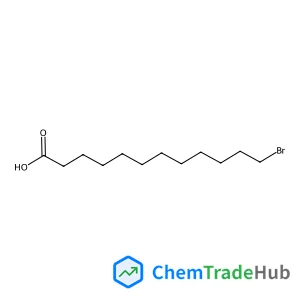
![2,4,5-Trichloro-7H-pyrrolo[2,3-d]pyrimidine structure](https://cnstatic.chemtradehub.com/structs/105/1053228-28-6-fba3.webp "2,4,5-Trichloro-7H-pyrrolo[2,3-d]pyrimidine structure")
推荐供应商




免责声明
本页面提供的学术期刊信息仅供参考和研究使用。我们与任何期刊出版商均无关联,也不处理投稿事宜。如有投稿相关咨询,请直接联系相关期刊出版商。
如发现页面信息有误,请发送邮件至 support@chemtradehub.com 联系我们。我们将及时核实并处理您的问题。