



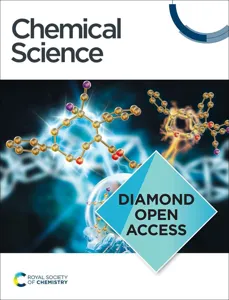
Challenges in the design and synthesis of self-assembling molecules as selective contacts in perovskite solar cells
文献信息
发布日期
2023-11-10
DOI
10.1039/D3SC04668K
影响因子
9.825
作者
Carlos E. Puerto Galvis, Eugenia Martínez-Ferrero
查看原文
摘要
Self-assembling molecules (SAMs), as selective contacts, play an important role in perovskite solar cells (PSCs), determining the performance and stability of these photovoltaic devices. These materials offer many advantages over other traditional materials used as hole-selective contacts, as they can be easily deposited on a large area of metal oxides, can modify the work function of these substrates, and reduce optical and electric losses with low material consumption. However, the most interesting thing about SAMs is that by modifying the chemical structure of the small molecules used, the energy levels, molecular dipoles, and surface properties of this assembled monolayer can be modulated to fine-tune the desired interactions between the substrate and the active layer. Due to the important role of organic chemistry in the field of photovoltaics, in this review, we will cover the current challenges for the design and synthesis of SAMs PSCs. Discussing, the structural features that define a SAM, (ii) disclosing how commercial molecules inspired the synthesis of new SAMs; and (iii) detailing the pros- and cons- of the reported synthetic protocols that have been employed for the synthesis of molecules for SAMs, helping synthetic chemists to develop novel structures and promoting the fast industrialization of PSCs.
相关文献
Prediction of flatness-driven quantum spin Hall effect in functionalized germanene and stanene
Run-wu Zhang, Wei-xiao Ji, Chang-wen Zhang, Ping Li, Pei-ji Wang
2016-09-21
Paper
DOI: 10.1039/C6CP06216D
Direct photoisomerization of CH2I2vs. CHBr3 in the gas phase: a joint 50 fs experimental and multireference resonance-theoretical study
Veniamin A. Borin, Sergey M. Matveev, Darya S. Budkina, Patrick Z. El-Khoury, Alexander N. Tarnovsky
2016-09-20
Paper
DOI: 10.1039/C6CP05129D
Prediction of proton affinities of organic molecules using the any-particle molecular-orbital second-order proton propagator approach
Laura Pedraza-González, Jonathan Romero, Jorge Alí-Torres, Andrés Reyes
2016-09-08
Communication
DOI: 10.1039/C6CP05128F
Theoretical and experimental investigation on structural, electronic and magnetic properties of layered Mn5O8
M. R. Ashwin Kishore, H. Okamoto, Lokanath Patra, R. Vidya, Anja O. Sjåstad, H. Fjellvåg
2016-09-08
Paper
DOI: 10.1039/C6CP04170A
Aggregation-induced emission and intermolecular charge transfer effect in triphenylamine fluorophores containing diphenylhydrazone structures
Wen Yang, Chunchun Li, Mengmeng Zhang, Weiqun Zhou, Renyu Xue, Haili Liu, Youyong Li
2016-09-15
Paper
DOI: 10.1039/C6CP04755F
Nuclear spin hyperpolarization with ansa-aminoboranes: a metal-free perspective for parahydrogen-induced polarization
Kristina Sorochkina, Konstantin Chernichenko, Bianka Kótai, Tamás Földes, Imre Pápai, Ville-Veikko Telkki, Timo Repo
2016-09-06
Paper
DOI: 10.1039/C6CP05211H
Direct comparison of 3-centre and 4-centre HBr elimination pathways in methyl-substituted vinyl bromides
Shubhrangshu Pandit, Balázs Hornung, Andrew J. Orr-Ewing
2016-09-21
Paper
DOI: 10.1039/C6CP05393A
The rectifying and negative differential resistance effects in graphene/h-BN nanoribbon heterojunctions
Yipeng An, Mengjun Zhang, Dapeng Wu, Tianxing Wang, Zhaoyong Jiao, Congxin Xia, Kun Wang
2016-09-21
Paper
DOI: 10.1039/C6CP05912K
N2 activation on Al metal clusters: catalyzing role of BN-doped graphene support
Deepak Kumar, Sourav Pal, Sailaja Krishnamurty
2016-09-21
Communication
DOI: 10.1039/C6CP03342C
Reaction mechanisms of carbon dioxide, ethylene oxide and amines catalyzed by ionic liquids BmimBr and BmimOAc: a DFT study
Zhoujie Luo, Binsen Wang, Yuan Liu, Guohua Gao
2016-09-13
Paper
DOI: 10.1039/C6CP05291F
您可能还喜欢
化合物问答
什么是3-表南美楝属二醇(CAS号:19942-04-2)?
3-表南美楝属二醇是一种具有特定立体化学结构的化合物,其分子式为C31H52O2,属于甾醇类化合物。它具有光学活性,是一种复杂的有机分子,主要存在于一些植物中。
19942-04-2(3S,5R,8R,9R,10R,13R...
化合物问答
3-羧基-5-碘苯甲酸甲酯(CAS号:50765-22-5)应用于哪些行业?
3-羧基-5-碘苯甲酸甲酯主要应用于医药行业,作为合成某些药物中间体的重要原料。此外,它还可能用于聚合物的改性、传感器的制备以及半导体材料的制备等领域。
50765-22-5Methyl 3-hydroxy-5-i...
化合物问答
什么是3-Bromoindolin-2-one(CAS号:22942-87-6)?
3-Bromoindolin-2-one是一种含有溴代基团的吲哚酮衍生物,分子式为C9H7BrNO。它是一种无色固体,具有一定的挥发性,熔点为158-159°C...
22942-87-63-Bromoindolin-2-one
化合物问答
如何处理含有L-Lysyl-L-phenylalanyl-L-isoleucylglycyl-L-leucyl-L-methioninamide(CAS号:2990-43-4)的废料?
对于含有该化合物的废液,应先进行中和处理,然后根据其毒性和活性选择合适的处置方法。可以考虑焚烧处理或由专业的化学品废物处理公司进行无害化处理。处理过程中需注意环...
2990-43-4L-Lysyl-L-phenylalan...
化合物问答
ANGIOTENSIN 1/2 + A (2 - 8)(CAS号:51833-76-2)的物理化学性质是什么?
ANGIOTENSIN 1/2 + A (2 - 8)是一种蛋白质类化合物,具有典型的蛋白质性质。它的分子量约为5900 Da。该化合物在水中具有一定的溶解性,...
51833-76-2ANGIOTENSIN 1/2 + A ...
化合物问答
如何储存2-甲基硫代嘧啶-5-硼酸频那酯(CAS号:940284-18-4)?
应将该化合物存放在阴凉干燥、通风良好的地方,避免阳光直射。建议将化合物密封保存在避光的、干燥的容器中,远离火源和高温环境。
940284-18-42-(Methylthio)-5-(4,...
化合物问答
什么是苏丹红IV氘代物 标准品(CAS号:1014689-18-9)?
苏丹红IV氘代物 标准品是一种含有氘代标记的苏丹红IV化合物,是一种用于化合物分析、结构确证以及代谢研究的标准物质。
1014689-18-91-[(E)-{2-Methyl-4-[...
化合物问答
(+)-2-Amino-6-propionamido-d3-tetrahydrobenzothiazole(CAS号:1217680-69-7)适用哪些法规指南?
该化合物需要遵循《全球化学品统一分类和标签制度》(GHS)中的分类和标签要求,具体分类需依据其毒性和物理化学性质。此外,还需要符合《欧盟化学品注册、评估、授权和...
1217680-69-7(+)-2-Amino-6-propio...
化合物问答
如何储存2-氨基-2-(2-吡啶)乙酸乙酯(CAS号:55243-15-7)?
2-氨基-2-(2-吡啶)乙酸乙酯应储存于阴凉、干燥、通风良好的环境中,避免高温和光照。应使用密封容器储存,并远离易燃物、氧化剂和其他危险化学品。
55243-15-7Ethyl 2-amino-2-(pyr...
化合物问答
3-羟基-4-甲氧基吡啶-2-羧酸(CAS号:210300-09-7)的主要用途是什么?
3-羟基-4-甲氧基吡啶-2-羧酸主要用于合成其他有机化合物,如药物合成、农药合成和染料合成等。此外,它还可用作中间体和试剂,在化学研究领域也有一定的应用。
210300-09-73-Hydroxy-4-methoxy-...
来源期刊
Chemical Science
CiteScore:
14.4
自引率:
3.9%
年发文量:
1413
Our journal has a wide-ranging scope which covers the full breadth of the chemical sciences. The research we publish contains the sorts of novel ideas, challenging questions and progressive thinking that bring undiscovered breakthroughs within reach. Your paper could focus on a single area, or cross many. It could be beyond the accepted bounds of the chemical sciences. It might address an immediate challenge, contribute to a future breakthrough or be wholly conceptual. We’re a team from every field of the chemical sciences, and know from experience that breakthroughs that drive the solutions to global challenges can come from anywhere, at any time. You could even start an entirely new area of research. Too bold? Too progressive? No such thing
推荐化合物
![(3S,4aS,8aS)-2-[(2R,3S)-3-Amino-2-hydroxy-4-phenylbutyl]-N-(2-methyl-2-propanyl)decahydro-3-isoquinolinecarboxamide structure](https://cnstatic.chemtradehub.com/structs/136/136522-17-3-4d77.webp "(3S,4aS,8aS)-2-[(2R,3S)-3-Amino-2-hydroxy-4-phenylbutyl]-N-(2-methyl-2-propanyl)decahydro-3-isoquinolinecarboxamide structure")
![(1R)-N-((1R)-1-Phenylethyl)-1-[4-(tert-butyldimethylsilyloxymethyl)cyclohexyl]ethan-1-amine structure](https://cnstatic.chemtradehub.com/structs/672/672314-45-3-47ef.webp "(1R)-N-((1R)-1-Phenylethyl)-1-[4-(tert-butyldimethylsilyloxymethyl)cyclohexyl]ethan-1-amine structure")
推荐供应商





免责声明
本页面提供的学术期刊信息仅供参考和研究使用。我们与任何期刊出版商均无关联,也不处理投稿事宜。如有投稿相关咨询,请直接联系相关期刊出版商。
如发现页面信息有误,请发送邮件至 support@chemtradehub.com 联系我们。我们将及时核实并处理您的问题。