


![Pyrazolo[1,5-a]pyridine-3-carbothioamide structure](https://cnstatic.chemtradehub.com/structs/885/885275-44-5-aae0.webp "Pyrazolo[1,5-a]pyridine-3-carbothioamide structure")
Using waste to treat waste: facile synthesis of hollow carbon nanospheres from lignin for water decontamination
文献信息
发布日期
2023-11-27
DOI
10.1039/D3SC05275C
影响因子
9.825
作者
Xiang Liu, Zixuan Hao, Chen Fang, Kun Pang, Jiaying Yan, Yingping Huang, Di Huang
查看原文
摘要
Lignin, the most abundant natural material, is considered as a low-value commercial biomass waste from paper mills and wineries. In an effort to turn biomass waste into a highly valuable material, herein, a new-type of hollow carbon nanospheres (HCNs) is designed and synthesized by pyrolysis of biomass dealkali lignin, as an efficient nanocatalyst for the elimination of antibiotics in complex water matrices. Detailed characterization shows that HCNs possess a hollow nanosphere structure, with abundant graphitic C/N and surface N and O-containing functional groups favorable for peroxydisulfate (PDS) activation. Among them, HCN-500 provides the maximum degradation rate (95.0%) and mineralization efficiency (74.4%) surpassing those of most metal-based advanced oxidation processes (AOPs) in the elimination of oxytetracycline (OTC). Density functional theory (DFT) calculations and high-resolution mass spectroscopy (HR-MS) were employed to reveal the possible degradation pathway of OTC elimination. In addition, the HCN-500/PDS system is also successfully applied to real antibiotics removal in complex water matrices (e.g. river water and tap water), with excellent catalytic performances.
相关文献
Spontaneous formation of a chiral supramolecular superhelix in the crystalline state using a single-stranded tetranuclear metallohelicate
Shigehisa Akine, Takashi Matsumoto, Tatsuya Nabeshima
2008-08-27
Communication
DOI: 10.1039/B810426C
Chemoenzymatic synthesis of GDP-azidodeoxymannoses: non-radioactive probes for mannosyltransferase activity
Silvia Marchesan, Derek Macmillan
2008-07-18
Communication
DOI: 10.1039/B807016D
Silica-supported catalysts for ring-closing metathesis: effects of linker group and microenvironment on recyclability
Jaehong Lim, Su Seong Lee, Jackie Y. Ying
2008-07-17
Communication
DOI: 10.1039/B803663B
Transistors from a conjugated macrocycle molecule: field and photo effects
Wei Zhao, Qin Tang, Hoi Shan Chan, Jianbin Xu, Ka Yuen Lo, Qian Miao
2008-07-18
Communication
DOI: 10.1039/B806601A
Hierarchical carbon nanotube assemblies created by sugar–boric or boronic acid interactions
Shingo Tamesue, Munenori Numata, Kenji Kaneko, Tony D. James, Seiji Shinkai
2008-07-30
Communication
DOI: 10.1039/B808599D
Carborane-based metal–organic frameworks as highly selective sorbents for CO2 over methane
Youn-Sang Bae, Omar K. Farha, Alexander M. Spokoyny, Chad A. Mirkin, Joseph T. Hupp, Randall Q. Snurr
2008-07-15
Communication
DOI: 10.1039/B805785K
Towards understanding phosphonoacetaldehyde hydrolase: an alternative mechanism involving proton transfer that triggers P–C bond cleavage
2008-07-15
Communication
DOI: 10.1039/B806280C
Directing single-walled carbon nanotubes to self-assemble at water/oil interfaces and facilitate electron transfer
Yuanjian Zhang, Yanfei Shen, Daniel Kuehner, Shuixing Wu, Zhongmin Su, Shen Ye, Li Niu
2008-07-17
Communication
DOI: 10.1039/B805789C
B-Alkyl Suzuki couplings for the stereoselective synthesis of substituted pyrans
Gregory W. O’Neil, Alois Fürstner
2008-07-16
Communication
DOI: 10.1039/B806898D
Facile one pot synthesis of a range of reversible addition–fragmentation chain transfer (RAFT) agents
Jared Skey, Rachel K. O’Reilly
2008-07-25
Communication
DOI: 10.1039/B804260H
您可能还喜欢
化合物问答
6-氯-2H-1,4-苯并噁嗪-3(4H)-酮(CAS号:7652-29-1)应用于哪些行业?
6-氯-2H-1,4-苯并噁嗪-3(4H)-酮主要应用于医药、农药和聚合物等领域。在医药领域,该化合物可用于合成抗菌药物;在农药领域,可用作杀虫剂的中间体;在聚...
7652-29-16-Chloro-2H-1,4-benz...
化合物问答
活性氧化铝(CAS号:1302-74-5)应用于哪些行业?
活性氧化铝广泛应用于医药、聚合物、传感器、半导体和催化等领域。在医药行业,活性氧化铝用作吸附剂和干燥剂,有助于去除杂质和水分。在聚合物行业,它用作增白剂和抗结块...
1302-74-5aluminum;trihydrate
化合物问答
什么是硅胶(CAS号:112926-00-8)?
硅胶(Silica gel, pptd.,cryst.-free)是一种无定形、多孔的硅酸盐材料,主要成分为二氧化硅(SiO₂)。其结构由硅氧四面体构成,通过酸...
112926-00-8Silica gel, pptd.,cr...
化合物问答
二乙基甲基一氢硅烷(CAS号:760-32-7)的主要用途是什么?
二乙基甲基一氢硅烷主要用于有机合成、表面处理以及作为溶剂。它还被用作合成其他硅烷化合物的原料,以及在涂料、粘合剂和密封剂中的应用。
760-32-7Diethyl(methyl)silan...
化合物问答
在合成中是否有N-花生四烯酰基甘氨酸(CAS号:179113-91-8)的替代品?
在合成过程中,可以考虑使用类似结构的化合物作为替代品,例如N-亚油酰基甘氨酸或N-花生二烯酰基甘氨酸。这些替代品在结构上有类似的双键位置,但可能具有不同的物理化...
179113-91-8Glycine, N-[(5Z,8Z,1...
化合物问答
在合成中是否有1-(4-甲氧基苯基)丙烷-1,2-二酮(CAS号:10557-27-4)的替代品?
在合成过程中,可以考虑使用类似结构的化合物作为替代品,例如1-(3-甲氧基苯基)丙烷-1,2-二酮或1-(4-羟基苯基)丙烷-1,2-二酮。这些替代品具有相似的...
10557-27-41-(4-Methoxyphenyl)p...
化合物问答
N-(4-氨基-1-苄基-3-羟基-5-苯基戊基)-3-甲基-2-(2-氧代四氢嘧啶-1-基)-丁酰胺 5-氧代吡咯烷-2-甲酸(CAS号:192726-06-0)通常如何合成?
该化合物通常通过一系列复杂的有机合成步骤获得。首先,通过芳香族化合物的羟基化反应获得羟基化产物,然后通过酰化反应形成酰胺中间体,最后通过环化反应得到目标产物。常...
192726-06-05-Oxo-L-proline - (2...
化合物问答
(S)-2-氨基-3-喹啉-2-丙酸(CAS号:161513-46-8)的市场或研究趋势如何?
该化合物作为生物活性化合物,尤其是在药物化学领域表现出色。近年来,随着对新型抗炎、抗病毒和抗癌药物的研究增加,其市场和研究趋势持续增长。此外,其在神经科学领域的...
161513-46-8(S)-2-Amino-3-quinol...
化合物问答
核黄素磷酸钠(CAS号:130-40-5)安全吗?
核黄素磷酸钠在常规使用条件下安全,但高剂量可能引起刺激性反应。操作时需佩戴防护手套和护目镜,避免吸入粉尘。若接触皮肤或眼睛,应立即用大量清水冲洗。急救时需根据接...
130-40-5Sodium 1-deoxy-1-(7,...
化合物问答
盐酸丙胺卡因杂质A(EP) 标准品(CAS号:19281-31-3)通常如何合成?
盐酸丙胺卡因杂质A(EP) 标准品可通过重氮化反应和随后的酰胺化反应合成。首先,利用氯化反应将苯环上的氢原子转化为氯原子,然后通过芳香族重氮化反应引入氨基,最后...
19281-31-32-Chloro-N-(2-methyl...
来源期刊
Chemical Science
CiteScore:
14.4
自引率:
3.9%
年发文量:
1413
Our journal has a wide-ranging scope which covers the full breadth of the chemical sciences. The research we publish contains the sorts of novel ideas, challenging questions and progressive thinking that bring undiscovered breakthroughs within reach. Your paper could focus on a single area, or cross many. It could be beyond the accepted bounds of the chemical sciences. It might address an immediate challenge, contribute to a future breakthrough or be wholly conceptual. We’re a team from every field of the chemical sciences, and know from experience that breakthroughs that drive the solutions to global challenges can come from anywhere, at any time. You could even start an entirely new area of research. Too bold? Too progressive? No such thing
推荐化合物
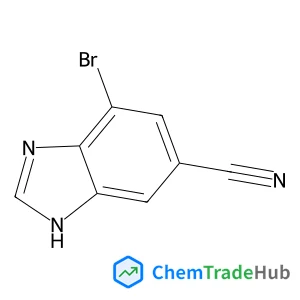
![1-[3-(4-Morpholinylsulfonyl)phenyl]methanamine structure](https://cnstatic.chemtradehub.com/structs/933/933989-32-3-51af.webp "1-[3-(4-Morpholinylsulfonyl)phenyl]methanamine structure")
推荐供应商





免责声明
本页面提供的学术期刊信息仅供参考和研究使用。我们与任何期刊出版商均无关联,也不处理投稿事宜。如有投稿相关咨询,请直接联系相关期刊出版商。
如发现页面信息有误,请发送邮件至 support@chemtradehub.com 联系我们。我们将及时核实并处理您的问题。