






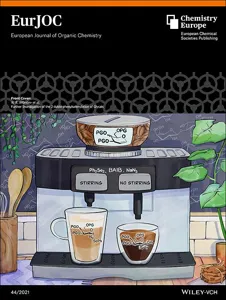

Top-ranked efficiency under indoor light of DSSCs enabled by iodide-based DES-like solvent electrolyte
文献信息
发布日期
2023-12-11
DOI
10.1039/D3SE00949A
影响因子
6.367
作者
Chiara Liliana Boldrini, Andrea Francesca Quivelli, Filippo Maria Perna, Paolo Biagini, Vito Capriati, Alessandro Abbotto, Norberto Manfredi
查看原文
摘要
This work presents the next paradigm shift in solar energy technology in which a novel iodide-based DES-like mixture has been first investigated as an active electrolyte solvent in dye-sensitized solar cells (DSSCs) in the absence of any co-solvent and any external iodide source. The optimization of the cell design jointly with a bespoke dye functionalized with a hydrophobic chain, properly positioned along the molecular backbone, ensures (a) one of the highest power conversion efficiencies (PCEs) up to 4% for DSSCs based on non-VOC solvents, and (b) a remarkable temporal stability of nearly 95% over a period longer than 2 months. Higher power conversion efficiency values (up to 8.0%) than those reported in the literature with traditional sensitizers and environmentally friendly electrolytes (e.g., water-based electrolytes) have been achieved under low-light illumination. These results are very promising for the realization of next-generation nature-inspired low-cost and high-performing DSSC devices for indoor and outdoor applications.
期刊推荐
相关文献
Synthesis of functionalised diarylmethanes via a cobalt-catalysed cross-coupling of arylzinc species with benzyl chlorides
Muriel Amatore, Corinne Gosmini
2008-09-02
Communication
DOI: 10.1039/B809626K
Quantitative formation of a tetraporphyrin [2]catenaneviacopper and zinc coordination
Maryline Beyler, Valérie Heitz, Jean-Pierre Sauvage
2008-09-17
Communication
DOI: 10.1039/B811013A
Constructing channel structures based on the assembly of p-sulfonatocalix[4]arene nanocapsules and [M(bpdo)3]2+(M = Cu, Zn)
2008-09-09
Communication
DOI: 10.1039/B807584K
Heparin–cellulose–charcoal composites for drug detoxification prepared using room temperature ionic liquids
Tae-Joon Park, Sang-Hyun Lee, Trevor J. Simmons, Shaker A. Mousa, Elisaveta A. Snezhkova, Veronika V. Sarnatskaya, Vladimir G. Nikolaev
2008-09-02
Communication
DOI: 10.1039/B809791G
One-pot synthesis of benzo[c]carbazoles by photochemical annulation of 2-chloroindole-3-carbaldehydes
Cailin Wang, Wei Zhang, Shenci Lu, Jingfei Wu, Zongjun Shi
2008-09-12
Communication
DOI: 10.1039/B808854C
Facile synthesis, assembly, and immobilization of ordered arrays of monodisperse magnetic nanoparticles on silicon substrates
Gyu Leem, Andrew C. Jamison, Shishan Zhang, Dmitri Litvinov, T. Randall Lee
2008-09-10
Communication
DOI: 10.1039/B804633F
Electron transfer in pristine and functionalised single-walled carbon nanotubes
Matteo Iurlo, Demis Paolucci, Massimo Marcaccio, Francesco Paolucci
2008-08-21
Feature Article
DOI: 10.1039/B809285K
Supramolecular aptamer–thrombin linear and branched nanostructures
Yossi Weizmann, Adam B. Braunschweig, Ofer I. Wilner, Zoya Cheglakov, Itamar Willner
2008-09-22
Communication
DOI: 10.1039/B812486H
Formation of an ink-bottle-like pore structure in SBA-15 by MOCVD
Ying Zhang, Frank Leung-Yuk Lam, Xijun Hu, Zifeng Yan
2008-10-21
Communication
DOI: 10.1039/B809290G
Room temperature benzene C–H activation by a new [PSiP]Ir pincer complex
Darren F. MacLean, Robert McDonald, Michael J. Ferguson, Andrew J. Caddell, Laura Turculet
2008-09-23
Communication
DOI: 10.1039/B811811F
您可能还喜欢
化合物问答
3 - (二氟甲基)-1 -氟苯(CAS号:26029-52-7)适用哪些法规指南?
3 - (二氟甲基)-1 -氟苯需遵循联合国全球化学品统一分类和标签制度(GHS),包括急性毒性、皮肤腐蚀/刺激、严重眼损伤/眼刺激等分类。同时,该化合物还需符...
26029-52-71-(Difluoromethyl)-3...
化合物问答
3,5-二甲基苯胺(CAS号:108-69-0)通常如何合成?
3,5-二甲基苯胺通常通过乙苯的氨解反应合成。反应中使用硫酸作为催化剂,反应温度为120-130°C。乙苯在硫酸存在下与氨反应,生成3,5-二甲基苯胺和苯胺副产...
108-69-03,5-Dimethylaniline
化合物问答
3-甲基异噻唑-5-胺(CAS号:24340-76-9)安全吗?
3-甲基异噻唑-5-胺在适当使用和储存条件下是相对安全的,但在操作时应注意防护措施。应避免吸入粉尘,避免与皮肤和眼睛直接接触。在操作过程中,应穿戴适当的防护装备...
24340-76-93-Methyl-1,2-thiazol...
化合物问答
3-(1,3-Thiazol-2-yl)-1H-indole(CAS号:135531-86-1)通常如何合成?
3-(1,3-噻唑-2-基)-1H-吲哚通常通过多步合成方法制备。首先,由噻唑-2-基溴化物和吲哚进行偶联反应,得到中间体。然后,通过还原反应将中间体转化为所需...
135531-86-13-(1,3-Thiazol-2-yl)...
化合物问答
4-溴-2-氟苯甲基氯(CAS号:85510-82-3)的主要用途是什么?
4-溴-2-氟苯甲基氯主要用于有机合成中间体,特别是在医药、农药和染料等领域。作为一种具有特定结构的化合物,它在合成复杂有机分子时扮演重要角色。
85510-82-34-Bromo-1-(chloromet...
化合物问答
处理Fmoc-β-(3-噻吩基)-D-Ala-OH(CAS号:220497-90-5)时应注意哪些实验室安全事项?
处理Fmoc-β-(3-噻吩基)-D-Ala-OH时,应佩戴防护手套、护目镜和实验服。操作应在通风橱内进行。如发生泄露,应立即用大量水冲洗,并通知实验室管理人员...
220497-90-5N-[(9H-Fluoren-9-ylm...
化合物问答
氮化硅(CAS号:12033-89-5)通常如何合成?
氮化硅通常通过氮化硅的直接反应合成,即在高温下将四氯化硅与氨气反应。具体步骤是将四氯化硅和氨气混合并加热至1300-1700℃,在该条件下,四氯化硅与氨气反应生...
12033-89-5Trisilicon tetranitr...
化合物问答
Cetirizine EP Impurity B DiHCl(CAS号:1000690-91-4)通常如何合成?
Cetirizine EP Impurity B DiHCl通常通过一锅法合成,首先将4-氯苯基-苯甲基氯甲酸酯与1-哌嗪乙酸反应,生成相应的酸,然后与盐酸反应...
1000690-91-4{4-[(4-Chlorophenyl)...
化合物问答
如何储存1-哌啶-4-基丁-1-酮(CAS号:3509-15-7)?
1-哌啶-4-基丁-1-酮应储存在阴凉、干燥的地方,避免阳光直射。存储容器应密封,并确保通风良好。建议储存温度不超过25℃,湿度保持在相对较低的水平。
3509-15-71-Piperidin-4-ylbuta...
化合物问答
如何处理含有VORUCICLIB(CAS号:1000023-04-0)的废料?
含有VORUCICLIB的废料应进行专业的收集和处理,包括使用适当的容器进行隔离,避免与其他化学品接触。处理方法通常包括化学中和、沉淀反应或吸附过程,随后进行焚...
1000023-04-02-[2-Chloro-4-(trifl...
来源期刊
推荐化合物
推荐供应商





免责声明
本页面提供的学术期刊信息仅供参考和研究使用。我们与任何期刊出版商均无关联,也不处理投稿事宜。如有投稿相关咨询,请直接联系相关期刊出版商。
如发现页面信息有误,请发送邮件至 support@chemtradehub.com 联系我们。我们将及时核实并处理您的问题。