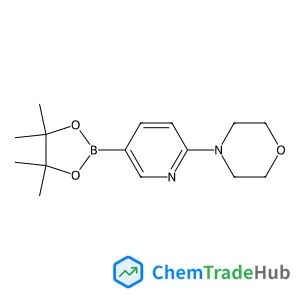
4-(5-(4,4,5,5-tetramethyl-1,3,2-dioxaborolan-2-yl)pyridin-2-yl)morpholine
CAS号:
485799-04-0
分子式:
C15H23BN2O3
Jenni Tienaho, Hanna Brännström, Risto Korpinen, Juha-Matti Pihlava, Jarkko Hellström, Paula Jylhä, Jaana Liimatainen, Veikko Möttönen, Jyri Maunuksela, Petri Kilpeläinen
Underutilised agricultural land and former peat production areas in northern Europe are potentially suitable for growing lignocellulosic biomass that could be used in various non-food applications. In this study, the biorefining process of Phalaris arundinacea (reed canary grass), Phragmites australis (common reed), and Cannabis sativa (oil and fibre hemp cultivars) was assessed based on their chemical composition and biological activity using various analytical techniques. Two-stage accelerated solvent extraction was used first with hexane, followed by EtOH/H2O (95/5, v/v) to extract the lipophilic and hydrophilic fractions of the samples collected during and after the growing season. Later, pressurised hot water extraction (PHWE) and two-stage extraction were performed to examine the biorefinery potential of aqueous extracts focusing on extraction efficiency, quality, and chemical composition of the plant materials. Combining two-stage and elevated extraction temperatures with PHWE resulted in high levels of total dissolved solids (TDS), carbohydrates, phenolics, and bioactivities. Data showed that TDS yielded over 400 mg g−1 for summer oil hemp and approximately 300 mg g−1 for reed canary grass and common reed. Summer-harvested plants had carbohydrate yields of 110–155 mg g−1, while autumn yields were 40–60 mg g−1 for hemp and 120–170 mg g−1 for reed canary grass and common reed, respectively. The findings suggest that aboveground biomass from marginal lands holds potential as a valuable source of bioactive compounds for biorefinery feedstocks, thereby presenting new opportunities for sustainable biomass-based valorisation and future optimisation of two-stage extraction methods targeting hemicellulose-rich fractions.

Acta Metallurgica Sinica-English Letters
Journal of Chemical Sciences

Biocatalysis and Biotransformation

Main Group Chemistry

Heteroatom Chemistry

Medicinal Chemistry Research

Polycyclic Aromatic Compounds

Herald of the Russian Academy of Sciences
NDT & E International
Journal of Asian Natural Products Research
Juliana Coatrini Soares, Valquiria da Cruz Rodrigues, Iram Taj Awan, Matias Eliseo Melendez, Maria Helena Oliveira Piazzetta, Angelo Luiz Gobbi, José Humberto T. G. Fregnani, André Lopes Carvalho, Osvaldo N. Oliveira, Jr
DOI: 10.1039/C8AN00430G
Robert A. Hill, Marie Claire Parker
DOI: 10.1039/B307118A
Hanchuang Zhu, Caiyun Liu, Ruifang Yuan, Ruikang Wang, Hanming Zhang, Zilu Li, Pan Jia, Baocun Zhu, Wenlong Sheng
DOI: 10.1039/C9AN00818G
Beant Kaur Billing, Mayank, Prabhat K. Agnihotri, Narinder Singh
DOI: 10.1039/C8AN00286J
DOI: 10.1039/B315302A
Ali Khodayari Bavil, Jungkyu Kim
DOI: 10.1039/C8AN00898A
处理含有8-氯咪唑并[1,2-A]吡嗪的废料时,应首先将其收集并进行化学回收或降解。如果无法回收,需采用安全的化学处理方法,如中和、氧化还原或沉淀。处理过程中需...
Calhex 231 hydrochloride 需要遵循《全球化学品统一分类和标签制度》(GHS)的分类和标签要求,以及欧盟的《化学品注册、评估、授权和限制条...
11-Beta,17-alpha,21-三羟基-5-beta-孕烯-3,20-二酮是一种无色结晶性粉末,分子量为372.45 g/mol。该化合物在水中的溶解度...
处理5-异丙基-1,3,4-恶二唑-2-羧酸时应注意以下安全事项:穿戴适当的个人防护装备,包括实验室外套、手套和护目镜;操作应在通风橱中进行,以减少吸入或接触有...
Benzyl 3-bromopropanoate属于有毒物质,吸入、摄入或皮肤接触均可能对人体造成伤害。操作时应佩戴防护眼镜、口罩和手套,避免吸入蒸汽和直接接触...
(R)-N-苄氧羰基-3,4-二氢-1H-异喹啉羧酸是一种含有苄氧羰基和异喹啉环结构的化合物,分子式为C17H15NO3。它是一种有机化合物,具有一定的生物活性...
可以考虑使用1-苄基吡啶-3-羧酸盐作为1-苄基吡啶嗡-3-羧酸盐的替代品。此外,还可以探索其他类似物,如1-苄基吡啶-3-氨基甲酸酯等。具体的替代品选择需根据...
(2,6-二甲基吡啶-3-基)甲醇在使用时需注意安全,应避免吸入其蒸汽,接触皮肤和眼睛。操作应在通风良好的环境中进行,佩戴适当的个人防护装备。
5-溴-2-乙烯基吡啶是一种有机化合物,外观为白色固体,具有良好的结晶性。分子量约为190.03 g/mol。它的溶解性在水中较差,但在有机溶剂如二氯甲烷、甲醇...
2-羟基-3-硝基-5-甲基吡啶主要应用于医药、聚合物和半导体行业。在医药领域,它可以用作合成其他药物的中间体。在聚合物领域,它可以作为功能性单体参与聚合反应,...
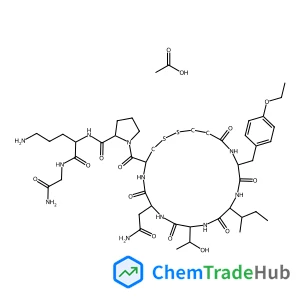
![Ethyl 3-((6-(4,5-dihydro-1H-benzo[d]azepin-3(2H)-yl)-2-(pyridin-2-yl)pyrimidin-4-yl)amino)propanoate structure](https://cnstatic.chemtradehub.com/structs/137/1373423-53-0-496a.webp "Ethyl 3-((6-(4,5-dihydro-1H-benzo[d]azepin-3(2H)-yl)-2-(pyridin-2-yl)pyrimidin-4-yl)amino)propanoate structure")