







Building fast and selective Zn ion channels for highly stable quasi-solid-state Zn-ion batteries
文献信息
发布日期
2023-09-30
DOI
10.1039/D3TA02866F
影响因子
12.732
作者
Chun-Chuan Kao, Jiahao Liu, Chao Ye, Shao-Jian Zhang, Junnan Hao, Shi-Zhang Qiao
查看原文
摘要
Quasi-solid-state Zn-ion batteries (QSSZIBs) with gel electrolytes hold practical promise to deliver a high energy density because of their high safety and ionic conductivity of gel electrolytes. However, the sluggish and the low selectivity of Zn ion transportation leads to unsatisfactory cycle life of QSSZIBs. Herein, a Zn ion channel was constructed by confining the gel electrolyte in intercalated halloysite nanotubes. The resultant Zn ion channels show fast and highly selective Zn ion transportation and therefore suppress hydrogen evolution, Zn dendrite growth and formation of Zn4SO4(OH)6·χH2O during cycling. The QSSZIBs exhibit an excellent Zn plating/stripping coulombic efficiency of ∼99.7% in 400 cycles and over 1600 h cycle life at a current density of 1 mA cm−2 and a corresponding areal capacity of 1 mA h cm−2. Building Zn ion channels for fast and selective Zn ion transportation can direct development of QSSZIBs with high cycling stability. Based on the aforementioned advantages, the assembled Zn/i-HNTs@PAM/I2 full battery exhibits an exceptionally long cycle life of 8000 cycles at a high current density of 8 C.
相关文献
Demystifying the solvatochromic reversal in Brooker’s merocyanine dye
N. Arul Murugan, Jacob Kongsted, Zilvinas Rinkevicius, Hans Ågren
2010-12-03
Communication
DOI: 10.1039/C0CP01014F
Product pair correlation in CH3OH photodissociation at 157 nm: the OH + CH3 channel
Andre T. J. B. Eppink, Bo Jiang, Gerrit C. Groenenboom, Xueming Yang, David H. Parker
2010-11-26
Paper
DOI: 10.1039/C0CP01794A
In situ surface-enhanced Raman scattering and X-ray photoelectron spectroscopic investigation of coenzyme Q10 on silver electrode
Dan Li, Da-Wei Li, Yi-Tao Long
2010-12-08
Paper
DOI: 10.1039/C0CP01449D
Competitive reaction pathways of C2Cl3 + NO via four-membered ring and bicyclic ring intermediates
Kunhui Liu, Di Song, Shaolei Zhao, Sufan Wang, Chunfan Yang, Hongmei Su
2010-11-04
Paper
DOI: 10.1039/C0CP01192D
Mechanism study on inhibited Ru(bpy)32+ electrochemiluminescence between coreactants
Lingling Xue, Bin Qiu, Zhenyu Lin, Donghwan Kim, Guonan Chen
2010-08-27
Paper
DOI: 10.1039/C004277C
Infrared spectra of protonated neurotransmitters: dopamine
Anita Lagutschenkov, Judith Langer, Giel Berden, Otto Dopfer
2010-12-13
Paper
DOI: 10.1039/C0CP02133D
Nuclear spin conversion of molecular hydrogen on amorphous solid water in the presence of O2 traces
H. Chaabouni, H. Mokrane, E. Congiu, F. Dulieu, E. Matar, J. L. Lemaire
2010-11-26
Paper
DOI: 10.1039/C0CP01322F
Temperature dependence of coarse-grained potentials for liquid hexane
Karim Farah, Aoife Catherine Fogarty, Michael Christian Böhm, Florian Müller-Plathe
2010-12-15
Paper
DOI: 10.1039/C0CP01333A
您可能还喜欢
化合物问答
什么是2,6-二溴-4,8-双[(2-乙基己基)氧基]苯并[1,2-b:4,5-b']二噻吩(CAS号:1226782-13-3)?
2,6-二溴-4,8-双[(2-乙基己基)氧基]苯并[1,2-b:4,5-b']二噻吩是一种有机化合物,分子式为C23H32Br2O2S2。该化合物具有芳香性和...
1226782-13-32,6-Dibromo-4,8-bis[...
化合物问答
木聚硫钠(CAS号:37319-17-8)的物理化学性质是什么?
木聚硫钠通常为无色或白色结晶性粉末,具有吸湿性。其分子量约为121.11 g/mol。木聚硫钠易溶于水,不溶于醇类和其他非极性溶剂。在酸性或碱性溶液中,木聚硫钠...
37319-17-8Pentosan
化合物问答
2-甲氧基-4-(三氟甲基)苄溴, JRD(CAS号:886500-59-0)适用哪些法规指南?
该化合物在合成、储存和运输过程中需遵循《全球化学品统一分类和标签制度》(GHS)的健康、环境和物理危险分类。在欧洲还需符合《化学品注册、评估、授权和限制》(RE...
886500-59-02-Methoxy-4-(trifluo...
化合物问答
1,4-Diazoniabicyclo[2.2.2]octane-1,4-disulfinate(CAS号:119752-83-9)的主要用途是什么?
1,4-二氮杂双环[2.2.2]辛烷-1,4-二硫酸二酯主要用于有机合成中的保护基团,特别是在保护胺基和硫醇基方面具有广泛应用。此外,它还用于一些特殊化学反应的...
119752-83-91,4-Diazabicyclo[2.2...
化合物问答
如何处理含有4-(Bromomethyl)-2-fluorobenzenesulphonamide(CAS号:1645275-47-3)的废料?
含有4-(Bromomethyl)-2-fluorobenzenesulphonamide的废液应首先进行中和处理,以降低pH值,避免对环境造成腐蚀性影响。随后...
1645275-47-34-(Bromomethyl)-2-fl...
化合物问答
Loureiriol(CAS号:479195-44-3)的物理化学性质是什么?
Loureiriol是一种天然化合物,其分子式为C15H22O4。Loureiriol为无色结晶性粉末,具有较高的熔点和良好的热稳定性。其相对分子质量为262....
479195-44-3Loureiriol
化合物问答
在合成中是否有3-氨基苯甲酰苯胺(CAS号:14315-16-3)的替代品?
在合成过程中,可以考虑使用类似结构的化合物作为3-氨基苯甲酰苯胺的替代品,例如N-苯基-3-氰基苯胺或N-苯基-3-硝基苯胺等,这些化合物具有相似的化学性质,可...
14315-16-33-Amino-N-phenylbenz...
化合物问答
4-异氰酰苯基硼酸频哪醇酯(CAS号:380430-64-8)的市场或研究趋势如何?
4-异氰酰苯基硼酸频哪醇酯主要应用于有机合成、药物化学和材料科学领域。随着绿色化学的发展,该化合物因其高效的官能团转化能力和环境友好性而受到越来越多的关注。近年...
380430-64-82-(4-Isocyanatopheny...
化合物问答
如何储存3β-乙酰氧基-7,25-甘遂二烯-24(R)-醇(CAS号:1352001-09-2)?
3β-乙酰氧基-7,25-甘遂二烯-24(R)-醇应储存在阴凉、干燥、通风良好的地方,避免直接光照。储存容器应密封,防止空气中的水分和氧气影响化合物的稳定性。建...
1352001-09-23β-acetoxy-eupha- 7,...
化合物问答
如何储存4-氟-2-甲基-1H-吲哚(CAS号:1260383-51-4)?
应将4-氟-2-甲基-1H-吲哚存放在阴凉、干燥、通风良好的地方,避免直接暴露在光照下。容器应密封,避免与空气中的水蒸气接触。建议在避光、温度不超过25℃的环境...
1260383-51-44-Fluoro-2-methyl-1H...
来源期刊
Journal of Materials Chemistry A
CiteScore:
19.5
自引率:
4.7%
年发文量:
2211
Journal of Materials Chemistry A, B & C cover high quality studies across all fields of materials chemistry. The journals focus on those theoretical or experimental studies that report new understanding, applications, properties and synthesis of materials. The journals have a strong history of publishing quality reports of interest to interdisciplinary communities and providing an efficient and rigorous service through peer review and publication. The journals are led by an international team of Editors-in-Chief and Associate Editors who are all active researchers in their fields. Journal of Materials Chemistry A, B & C are separated by the intended application of the material studied. Broadly, applications in energy and sustainability are of interest to Journal of Materials Chemistry A, applications in biology and medicine are of interest to Journal of Materials Chemistry B, and applications in optical, magnetic and electronic devices are of interest to Journal of Materials Chemistry C. More than one Journal of Materials Chemistry journal may be suitable for certain fields and researchers are encouraged to submit their paper to the journal that they feel best fits for their particular article. Example topic areas within the scope of Journal of Materials Chemistry A are listed below. This list is neither exhaustive nor exclusive. Artificial photosynthesis Batteries Carbon dioxide conversion Catalysis Fuel cells Gas capture/separation/storage Green/sustainable materials Hydrogen generation Hydrogen storage Photocatalysis Photovoltaics Self-cleaning materials Self-healing materials Sensors Supercapacitors Thermoelectrics Water splitting Water treatment
推荐化合物
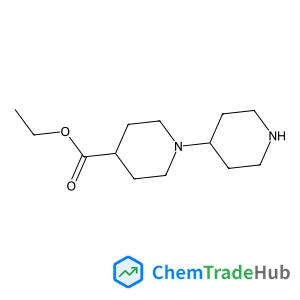
![Ethyl 4-[8-chloro(5,5,6,6,7-~2~H_5_)-5,6-dihydro-11H-benzo[5,6]cyclohepta[1,2-b]pyridin-11-ylidene]-1-piperidinecarboxylate structure](https://cnstatic.chemtradehub.com/structs/102/1020719-57-6-37e2.webp "Ethyl 4-[8-chloro(5,5,6,6,7-~2~H_5_)-5,6-dihydro-11H-benzo[5,6]cyclohepta[1,2-b]pyridin-11-ylidene]-1-piperidinecarboxylate structure")
推荐供应商




免责声明
本页面提供的学术期刊信息仅供参考和研究使用。我们与任何期刊出版商均无关联,也不处理投稿事宜。如有投稿相关咨询,请直接联系相关期刊出版商。
如发现页面信息有误,请发送邮件至 support@chemtradehub.com 联系我们。我们将及时核实并处理您的问题。