




![4-[(2-{2-[2-(2-Aminoethoxy)ethoxy]ethoxy}ethyl)amino]-2-(2,6-dioxo-3-piperidinyl)-1H-isoindole-1,3(2H)-dione structure](https://cnstatic.chemtradehub.com/structs/209/2093416-31-8-3162.webp "4-[(2-{2-[2-(2-Aminoethoxy)ethoxy]ethoxy}ethyl)amino]-2-(2,6-dioxo-3-piperidinyl)-1H-isoindole-1,3(2H)-dione structure")
Enhancing photocatalytic CO2 reduction to formate through one-pot self-assembly of a semiartificial cell
文献信息
发布日期
2023-10-24
DOI
10.1039/D3TA04556K
影响因子
12.732
作者
Yixin Hong, Jianyu Han, Zhi Wang, Xiaofei Gu, Tianyi Huang, Yafeng Wu, Songqin Liu
查看原文
摘要
Enzymatic CO2 conversion by photocatalysis that mimics natural photosystems offers an eco-friendly method for transforming CO2 into valuable chemicals or fuels at a low cost. However, the primary challenge in artificial enzymatic conversion arises from the high energy loss caused by low electron transfer efficiency and the instability of enzymes due to the incompatibility between enzyme catalysts and photocatalysts. Integrating natural enzymes, photoharvesting component and electron mediators to build a semiartificial photosynthetic cell surpasses the natural photosynthetic system in terms of simplicity, directed charge transfer, altered enzyme conformation and light utilization efficiency. Herein, a semiartificial cell is constructed by co-assembly of photoantennas and enzymes on stacked nanorods within microspheres. The microspheres, formed through L-cystine self-assembly with excellent biocompatibility, facilitates the alteration of FDH to a conformation with an open active site cleft, exposing more active sites. The electron mediator (1-ethylamino-4,4′-bipyridine) is connected to meso-tetra(4-carboxyphenyl) porphyrin via an amide bond to enhance electron transport efficiency. By leveraging these attributes, formate production reaches 1.24 mmol gcat−1, and the semiartificial cell exhibits long-term durability.
相关文献
The molecular mechanism of the inhibition effects of PVCaps on the growth of sI hydrate: an unstable adsorption mechanism
Jiafang Xu, Liwen Li, Jinxiang Liu, Xiaopu Wang, Youguo Yan, Jun Zhang
2018-02-09
Paper
DOI: 10.1039/C8CP00010G
On the distinct binding modes of expansin and carbohydrate-binding module proteins on crystalline and nanofibrous cellulose: implications for cellulose degradation by designer cellulosomes
Adam Orłowski, Lior Artzi, Pierre-Andre Cazade, Melissabye Gunnoo, Edward A. Bayer, Damien Thompson
2018-03-06
Paper
DOI: 10.1039/C7CP07764E
On the importance of non-covalent interactions for porous membranes: unraveling the role of pore size
Leonardo A. Cunha, Luiz F. A. Ferrão, Francisco B. C. Machado, Max Pinheiro, Jr
2018-07-12
Paper
DOI: 10.1039/C8CP03286F
Oxocarbon-functionalized graphene as a lithium-ion battery cathode: a first-principles investigation
Zicheng Wang, Shuzhou Li, Yaping Zhang, Huaizhe Xu
2018-02-16
Paper
DOI: 10.1039/C7CP07960E
Seawater desalination using pillared graphene as a novel nano-membrane in reverse osmosis process: nonequilibrium MD simulation study
Sayyed Jalil Mahdizadeh, Golnoosh Akhlamadi
2018-08-04
Paper
DOI: 10.1039/C8CP02820F
Interaction of gas phase copper(ii) acetylacetonate with slow electrons
Janina Kopyra
2018-03-05
Paper
DOI: 10.1039/C7CP08149A
Predictive modeling of intrinsic strengths for several groups of chemically related monolayers by a reference model
2018-02-08
Paper
DOI: 10.1039/C7CP06621J
Decoding the role of encapsulated ions in the electronic and magnetic properties of mixed-valence polyoxovanadate capsules {X@V22O54} (X = ClO4−, SCN−, VO2F2−): a combined theoretical approach
Almudena Notario-Estévez, Piotr Kozłowski, Oliver Linnenberg, Xavier López, Kirill Yu. Monakhov
2018-06-08
Paper
DOI: 10.1039/C8CP02669F
Non-covalent interactions for carbonaceous materials: impacts of doping, curving and their combination
Chang Zhu, Qian Wang, Jiena Yun, Qiaoli Hu, Gang Yang
2018-08-03
Paper
DOI: 10.1039/C8CP02286K
Improving the activity of gold nanoparticles for the water-gas shift reaction using TiO2–Y2O3: an example of catalyst design
Jose J. Plata, Francisca Romero-Sarria, Javier Amaya Suárez, Antonio M. Márquez, Óscar H. Laguna, José A. Odriozola, Javier Fdez Sanz
2018-08-03
Paper
DOI: 10.1039/C8CP03706J
您可能还喜欢
化合物问答
4-[[6-(3-苯基苯基)-7H-嘌呤-2-基]氨基]苯磺酰胺(CAS号:2079895-42-2)适用哪些法规指南?
该化合物需遵循REACH法规以确保其安全使用和管理。同时,根据其潜在的生物降解性和毒性,也需要符合GHS分类中的相应要求。此外,若用于医药或食品相关领域,则还需...
2079895-42-24-{[6-(3-Biphenylyl)...
化合物问答
反式-度骨化醇(CAS号:74007-20-8)的物理化学性质是什么?
反式-度骨化醇是一种脂溶性维生素D3的衍生物,呈无色或白色结晶性粉末,不溶于水,溶于乙醇、丙酮、氯仿等有机溶剂。其分子式为C28H44O,分子量为404.65。...
74007-20-8trans-Doxercalcifero...
化合物问答
莲花掌苷(CAS号:59282-56-3)的市场或研究趋势如何?
莲花掌苷作为一种天然产物,近年来在抗炎、抗癌等生物活性研究方面显示出一定的潜力,因此市场需求逐渐增长。市场动态方面,随着天然产物开发的深入,预计该化合物的研究会...
59282-56-3Lindleyin
化合物问答
2-溴-6-(吡咯烷-1-基)吡啶-4-硼酸频那醇酯(CAS号:1150271-64-9)应用于哪些行业?
2-溴-6-(吡咯烷-1-基)吡啶-4-硼酸频那醇酯在医药领域有着广泛的应用,它可以用作药物合成中的中间体。此外,它还可以用于有机合成,特别是在构建复杂杂环化合...
1150271-64-92-Bromo-6-(1-pyrroli...
化合物问答
什么是methyl 2-(4-bromophenyl)-3-methylbutanoate(CAS号:1061284-70-5)?
methyl 2-(4-溴苯基)-3-甲基丁酸甲酯是一种化学物质,分子式为C12H13BrO2。它是一种有机化合物,具有一定的挥发性和易燃性。
1061284-70-52-(4-Bromo-phenyl)-3...
化合物问答
CJC1-295(CAS号:863288-34-0)的物理化学性质是什么?
CJC1-295是一种具有复杂肽链结构的化合物,其分子量约为1875 Da。该化合物在水中具有一定的溶解性,但在有机溶剂中的溶解性不佳。它是一种反应活性化合物,...
863288-34-0L-tyrosyl-D-alanyl-L...
化合物问答
三正丁基锍碘(CAS号:18146-62-8)的市场或研究趋势如何?
三正丁基锍碘作为一种重要的有机硫化合物,主要用于有机合成中作为亲电试剂。近年来,由于其在合成中的广泛应用,市场对其需求持续增长。此外,随着绿色化学的发展,对其替...
18146-62-8Tributylsulfonium io...
化合物问答
雌二醇-[13C3]同位素内标(CAS号:1261254-48-1)通常如何合成?
雌二醇-[13C3]同位素内标通常通过在雌二醇分子中引入[13C3]同位素来合成。常见的方法是通过化学标记反应,如与[13C3]标记的甲基溴化物进行亲核取代反应...
1261254-48-117beta-Estradiol-2,3...
化合物问答
N1-(2-吡啶甲基)-N2-(2-甲基-1-萘基)草酰胺(CAS号:2611225-93-3)的物理化学性质是什么?
N1-(2-吡啶甲基)-N2-(2-甲基-1-萘基)草酰胺为固体化合物,具有良好的结晶形态,分子量为340.34 g/mol。该化合物在水中的溶解度较低,但在有...
2611225-93-3N-(2-Methyl-1-naphth...
化合物问答
如何处理含有十五碳烯酸甲酯(顺-10)(C15:1)标准品(CAS号:90176-52-6)的废料?
含有十五碳烯酸甲酯(顺-10)(C15:1)标准品的废料应首先进行适当收集和储存,避免与其他化学品混合。然后,可采用焚烧或交由专业废物处理公司进行处理。处理过程...
90176-52-6(Z)-10-Pentadecenoic...
来源期刊
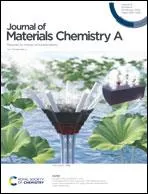
Journal of Materials Chemistry A
CiteScore:
19.5
自引率:
4.7%
年发文量:
2211
Journal of Materials Chemistry A, B & C cover high quality studies across all fields of materials chemistry. The journals focus on those theoretical or experimental studies that report new understanding, applications, properties and synthesis of materials. The journals have a strong history of publishing quality reports of interest to interdisciplinary communities and providing an efficient and rigorous service through peer review and publication. The journals are led by an international team of Editors-in-Chief and Associate Editors who are all active researchers in their fields. Journal of Materials Chemistry A, B & C are separated by the intended application of the material studied. Broadly, applications in energy and sustainability are of interest to Journal of Materials Chemistry A, applications in biology and medicine are of interest to Journal of Materials Chemistry B, and applications in optical, magnetic and electronic devices are of interest to Journal of Materials Chemistry C. More than one Journal of Materials Chemistry journal may be suitable for certain fields and researchers are encouraged to submit their paper to the journal that they feel best fits for their particular article. Example topic areas within the scope of Journal of Materials Chemistry A are listed below. This list is neither exhaustive nor exclusive. Artificial photosynthesis Batteries Carbon dioxide conversion Catalysis Fuel cells Gas capture/separation/storage Green/sustainable materials Hydrogen generation Hydrogen storage Photocatalysis Photovoltaics Self-cleaning materials Self-healing materials Sensors Supercapacitors Thermoelectrics Water splitting Water treatment
推荐化合物
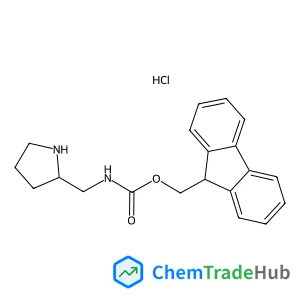
(S)-(9H-Fluoren-9-yl)methyl (pyrrolidin-2-ylmethyl)carbamate hydrochloride
CAS号:
1217813-15-4
分子式:
C20H23ClN2O2
![4-Chloro-2-{[(2-chlorophenoxy)acetyl]amino}benzoic acid structure](https://cnstatic.chemtradehub.com/structs/351/351424-20-9-9467.webp "4-Chloro-2-{[(2-chlorophenoxy)acetyl]amino}benzoic acid structure")
推荐供应商



免责声明
本页面提供的学术期刊信息仅供参考和研究使用。我们与任何期刊出版商均无关联,也不处理投稿事宜。如有投稿相关咨询,请直接联系相关期刊出版商。
如发现页面信息有误,请发送邮件至 support@chemtradehub.com 联系我们。我们将及时核实并处理您的问题。