


Expanding the horizons of covalent organic frameworks: sub-stoichiometric synthesis as an emerging toolkit for functional COFs
文献信息
发布日期
2023-11-15
DOI
10.1039/D3TA05715A
影响因子
12.732
作者
查看原文
摘要
Covalent organic frameworks (COFs) are a class of porous materials generated from organic molecules resulting in two-dimensional (2D) or three-dimensional (3D) networks. Multifunctional molecules with defined symmetry react to give all-linked-COFs with pre-determined topologies. COFs and COF-based materials have continuously evolved via the exploration of new linkages, synthesis, and processing methodologies over nearly two decades. Several studies have contributed to the understanding of the formation mechanism and the influence of solvent(s), catalysts, and the reaction environment in the crystallization process. Apart from all-linked COFs with a “fully formed” network, sub-stoichiometric synthesis has been a recent development, where the change in stoichiometry of monomers results in generating unconventional topologies along with active functional groups within the pores of these materials. Thus, the generation and utilization of these “functional” COFs is an interesting challenge for reticular chemists, particularly in terms of the vast possibilities of applications that are not likely to emerge from conventional synthesis.
期刊推荐

NDT & E International

Journal of the Indian Institute of Science

Medicinal Chemistry Research
Main Group Chemistry
Journal of Chemical Sciences

Critical Reviews in Solid State and Materials Sciences
Journal of Asian Natural Products Research

Topics in Catalysis
Bioorganic & Medicinal Chemistry
Electroanalysis
相关文献
Nitroreductase-responsive polymeric micelles based on 4-nitrobenzyl and AIE moieties for intracellular doxorubicin release
Xue-Yi Sun, Ya-Xuan Liang, Cheng-Yan Wu, Quan Tang, Rui Liu, Zhong-Lin Lu, Lan He
2021-04-05
Paper
DOI: 10.1039/D1PY00232E
Hierarchical ordering and multilayer structure of poly(ε-caprolactone) end-functionalized by a liquid crystalline unit: role of polymer crystallization
Wenqing Xu, Xing Li, Wenhua Yuan, Jian Zhou
2021-07-05
Paper
DOI: 10.1039/D1PY00702E
A dual stimuli responsive natural polymer based superabsorbent hydrogel engineered through a novel cross-linker
Safiya Nisar, Sonal Chauhan, Gurmeet Singh, Virender Singh, Sunita Rattan
2021-03-23
Paper
DOI: 10.1039/D0PY01729A
Intrinsic high-k–low-loss dielectric polyimides containing ortho-position aromatic nitrile moieties: reconsideration on Clausius–Mossotti equation
Tianwen Zhu, Qiaoxi Yu, Weiwen Zheng, Runxin Bei, Wenhui Wang, Minming Wu, Siwei Liu, Zhenguo Chi, Yi Zhang, Jiarui Xu
2021-03-24
Paper
DOI: 10.1039/D1PY00084E
Synthesis of thermo-sensitive polymers with super narrow molecular weight distributions: PET-RAFT polymerization of N-isopropyl acrylamide mediated by cross-linked zinc porphyrins with high active site loadings
Fanfan Li, Yi Yu, Hanyu Lv, Guiting Cai, Yanwu Zhang
2021-03-22
Paper
DOI: 10.1039/D0PY01643H
Well-defined hydrogen and organofunctional polysiloxanes with spiro-fused siloxane backbones
Takahiro Kawatsu, Keita Fuchise, Katsuhiko Takeuchi, Jun-Chul Choi, Kazuhiko Sato, Kazuhiro Matsumoto
2021-03-18
Paper
DOI: 10.1039/D0PY01503B
Detection and evaluation of polymer–polymer interactions in dilute solutions of associating polymers
Georges M. Pavlov, Anna A. Gosteva, Olga V. Okatova, Olga A. Dommes, Irina I. Gavrilova
2021-03-22
Paper
DOI: 10.1039/D0PY01725F
Enhancing and toughening plant oil-based polymeric materials through synergetic supramolecular and covalent interactions by introducing nucleobase-functionalized celluloses
Jianjun Li, Jiaqi Chen, Jiang Wu, Handan Lei, Yuting Tian
2021-05-24
Paper
DOI: 10.1039/D1PY00493J
Heterobimetallic Au(i)/Y(iii) single chain nanoparticles as recyclable homogenous catalysts
Josina L. Bohlen, Bragavie Kulendran, Hannah Rothfuss, Peter W. Roesky
2021-06-28
Paper
DOI: 10.1039/D1PY00552A
您可能还喜欢
化合物问答
如何处理含有顺-二(2,2'-联吡啶)二氯化钌(II)二水合物(CAS号:67776-38-9)的废料?
处理含有该化合物的废料时,应先收集并分类,然后根据其危险特性选择合适的处理方法。推荐采用焚烧或由专业机构进行安全处理,以确保符合环保法规的要求。处理过程中应佩戴...
67776-38-93-{[(2R,3R,4S,5R,6R)...
化合物问答
4-amino-2-bromo-3-iodopyridine(CAS号:1300750-77-9)的市场或研究趋势如何?
4-氨基-2-溴-3-碘吡啶主要应用于药物合成和研究领域,尤其是在抗病毒和抗癌药物的研发中。随着新型药物的需求增加,该化合物的研究趋势较好。市场方面,由于其特殊...
1300750-77-92-bromo-3-iodopyridi...
化合物问答
4-乙酰基氨基-2-氨基-苯甲酸(CAS号:43134-76-5)的市场或研究趋势如何?
当前,4-乙酰基氨基-2-氨基-苯甲酸(CAS号:43134-76-5)在医药和化工领域有一定的应用。随着药物研发的进展,该化合物在新型药物设计中的应用可能增加...
43134-76-54-Acetamido-2-aminob...
化合物问答
庚a氟-1-(1-碘-1,2,2,2-四氟乙氧基)丙烷(CAS号:107432-46-2)的市场或研究趋势如何?
该化合物目前主要用于特定的工业应用,如氟聚合物的合成。市场趋势显示,由于其独特的结构和性能,未来可能在新型氟材料和特种化学品领域有更多的应用。研究趋势方面,主要...
107432-46-21,1,1,2,2,3,3-Heptaf...
化合物问答
在合成中是否有Propargyl-PEG13-bromide(CAS号:2055105-25-2)的替代品?
可以考虑使用1,3-丁二烯-1-炔-3-基-聚乙二醇-13-溴化物作为Propargyl-PEG13-bromide的替代品,因为两者在结构上相似,均可用于合成...
2055105-25-2Propargyl-peg13-brom...
化合物问答
2-氨基-6-甲氧基嘌呤(CAS号:20535-83-5)安全吗?
2-氨基-6-甲氧基嘌呤在正常使用条件下相对安全,但在操作时仍需注意防护措施,如佩戴手套和护目镜,避免吸入或接触皮肤和眼睛。
20535-83-56-Methoxy-7H-purin-2...
化合物问答
2-甲基-3-溴苯乙酸乙酯(CAS号:1261862-72-9)适用哪些法规指南?
该化合物根据其化学性质和潜在危害,可能适用于GHS(全球化学品统一分类和标签制度)的分类标准。具体分类需依据其毒性和燃烧危险性进行评估。此外,欧洲化学品管理局(...
1261862-72-9Ethyl (3-bromo-2-met...
化合物问答
4,4-二甲基吡咯烷-3-羧酸盐酸盐(CAS号:1351343-41-3)应用于哪些行业?
4,4-二甲基吡咯烷-3-羧酸盐酸盐在医药、聚合物和传感器领域有应用。在医药领域,它可以作为某些药物的中间体;在聚合物领域,它可用作某些聚合物的稳定剂;在传感器...
1351343-41-34,4-Dimethyl-3-pyrro...
化合物问答
处理5-Hydroxy-7-methoxy-2-(4-methoxyphenyl)-4-oxo-4H-chromen-6-yl 2-O-beta-D-xylopyranosyl-beta-D-glucopyranoside(CAS号:149998-39-0)时应注意哪些实验室安全事项?
处理该化合物时应注意使用个人防护装备(如手套、护目镜和实验服),在通风橱中操作。避免直接接触皮肤和吸入,泄漏时应立即清理并使用适当的吸收材料。参考安全数据表(S...
149998-39-05-Hydroxy-7-methoxy-...
化合物问答
7-甲基-1,2,3,4-四氢-吖啶-9-甲酸(CAS号:345621-27-4)的市场或研究趋势如何?
该化合物在医药研究中具有潜在应用价值,特别是在抗癌药物研发方面。随着研究的深入,对其合成方法的优化和生物活性的进一步探索将成为研究热点。
345621-27-47-Methyl-1,2,3,4-tet...
来源期刊
Journal of Materials Chemistry A
CiteScore:
19.5
自引率:
4.7%
年发文量:
2211
Journal of Materials Chemistry A, B & C cover high quality studies across all fields of materials chemistry. The journals focus on those theoretical or experimental studies that report new understanding, applications, properties and synthesis of materials. The journals have a strong history of publishing quality reports of interest to interdisciplinary communities and providing an efficient and rigorous service through peer review and publication. The journals are led by an international team of Editors-in-Chief and Associate Editors who are all active researchers in their fields. Journal of Materials Chemistry A, B & C are separated by the intended application of the material studied. Broadly, applications in energy and sustainability are of interest to Journal of Materials Chemistry A, applications in biology and medicine are of interest to Journal of Materials Chemistry B, and applications in optical, magnetic and electronic devices are of interest to Journal of Materials Chemistry C. More than one Journal of Materials Chemistry journal may be suitable for certain fields and researchers are encouraged to submit their paper to the journal that they feel best fits for their particular article. Example topic areas within the scope of Journal of Materials Chemistry A are listed below. This list is neither exhaustive nor exclusive. Artificial photosynthesis Batteries Carbon dioxide conversion Catalysis Fuel cells Gas capture/separation/storage Green/sustainable materials Hydrogen generation Hydrogen storage Photocatalysis Photovoltaics Self-cleaning materials Self-healing materials Sensors Supercapacitors Thermoelectrics Water splitting Water treatment
推荐化合物
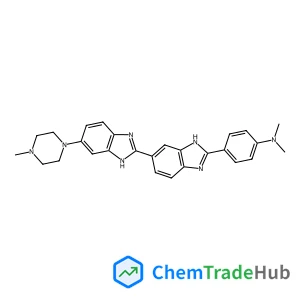
methanone structure](https://cnstatic.chemtradehub.com/structs/814/81449-01-6-786d.webp "[4-(Hydroxymethyl)phenyl](phenyl)methanone structure")
推荐供应商




免责声明
本页面提供的学术期刊信息仅供参考和研究使用。我们与任何期刊出版商均无关联,也不处理投稿事宜。如有投稿相关咨询,请直接联系相关期刊出版商。
如发现页面信息有误,请发送邮件至 support@chemtradehub.com 联系我们。我们将及时核实并处理您的问题。