


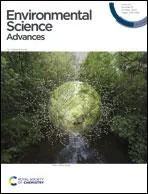
Management strategies for single-use plastics: lessons to learn from Indian approach of minimizing microplastic waste
文献信息
发布日期
2023-10-13
DOI
10.1039/D3VA00222E
影响因子
0
作者
Surya Singh, Mrinal Kanti Biswas
查看原文
摘要
Single-use plastics (SUPs) are significant contributors to the overall generation of plastic and microplastic waste. SUPs are the chief materials used for packaging and other such purposes resulting in immediate disposal after use. Recognizing the environmental burden posed by SUPs in the form of microplastics, many countries have banned these materials. However, addressing this issue requires a more diversified approach. The present article focuses on recent initiatives adopted by India for SUP management. Drawing lessons from the experiences of other countries, India has not only imposed ban but adopted an extended producer responsibility approach as well for managing the waste emanating from SUPs. For this, India took the interventions both at the supply side as well as the demand side. Nevertheless, assessment methodologies have been developed, including surveillance, grievance redressal, digital interventions, periodic monitoring, and auditing. While the outcome of this approach will be visible after a few years, an initial appraisal is deemed necessary. Therefore, this paper outlines India's approach, implementation strategy, assessment methodology, possible implications, and future prospects. This multi-faceted nature of the approach involves a number of stakeholders in the SUP chain making it suitable for adoption by other developing nations as well.
期刊推荐

Journal of Asian Natural Products Research
Polycyclic Aromatic Compounds

Acta Metallurgica Sinica-English Letters

Biocatalysis and Biotransformation

Bioorganic & Medicinal Chemistry Letters

NDT & E International

Medicinal Chemistry Research

Journal of Chemical Sciences

Herald of the Russian Academy of Sciences
Atomization and Sprays
相关文献
Water dissociation at MgO sub-monolayers on silver: a periodic model study
2007-03-07
Paper
DOI: 10.1039/B700526A
Hydrogen storage: the remaining scientific and technological challenges
Michael Felderhoff, Claudia Weidenthaler, Rittmar von Helmolt, Ulrich Eberle
2007-05-09
Invited Article
DOI: 10.1039/B701563C
On the theory of complex-forming chemical reactions: effect of parity conservation on the polarization of differential cross sections
L. Bonnet, P. Larrégaray, J.-C. Rayez
2007-05-17
Paper
DOI: 10.1039/B700906B
Phase field modeling of CH4hydrate conversion into CO2 hydrate in the presence of liquid CO2
B. Kvamme
2007-04-27
Paper
DOI: 10.1039/B700423K
A fulleropyrrolidine end-capped platinum-acetylide triad: the mechanism of photoinduced charge transfer in organometallic photovoltaic cells
Fengqi Guo, Katsu Ogawa, Young-Gi Kim, Evgeny O. Danilov, Felix N. Castellano, John R. Reynolds, Kirk S. Schanze
2007-04-03
Paper
DOI: 10.1039/B700379J
The rotational spectra of conformers of biomolecules: tryptamine
2004-03-05
Paper
DOI: 10.1039/B315707E
On the influence of ion exchange on the local structure of the titanosilicate ETS-10
Claudiu C. Pavel, Bodo Zibrowius, Elke Löffler, Wolfgang Schmidt
2007-05-22
Paper
DOI: 10.1039/B701773A
您可能还喜欢
化合物问答
4-[4-三氟甲基苯基]恶唑(CAS号:1126636-40-5)通常如何合成?
4-[4-三氟甲基苯基]恶唑通常通过将4-三氟甲基苯酚与异硫氰酸苯酯在有机溶剂中进行酯化反应合成。该反应可在无水条件下,使用适当的催化剂,如四丁基氢氧化铵,以提...
1126636-40-54-(4-(Trifluoromethy...
59729-32-71-[3-(Dimethylamino)...
化合物问答
RockPhos Pd G3(CAS号:2009020-38-4)通常如何合成?
RockPhos Pd G3 通常通过钯催化偶联反应合成,使用配体 (2'-Amino-2-biphenylyl)(methanesulfonato-kappa...
2009020-38-4(2'-Amino-2-biphenyl...
化合物问答
1-哌啶甲酰胺(CAS号:2158-03-4)的市场或研究趋势如何?
1-哌啶甲酰胺作为有机合成中的重要中间体,其市场需求主要受医药、农药、染料等行业推动。近年来,随着新药开发和绿色化学的发展,该化合物的研究趋势集中在开发更高效、...
2158-03-41-Piperidinecarboxam...
化合物问答
2-(二苯基膦基)乙胺(CAS号:4848-43-5)适用哪些法规指南?
2-(二苯基膦基)乙胺适用于多种法规指南,包括但不限于《全球化学品统一分类和标签制度》(GHS),欧盟《化学品注册、评估、授权和限制》法规(REACH),以及美...
4848-43-52-(Diphenylphosphino...
化合物问答
如何储存间苯二甲酸二烯丙酯(CAS号:1087-21-4)?
间苯二甲酸二烯丙酯应储存在阴凉、干燥、通风良好的地方,远离火源和热源。储存容器应密封,避免光照和高温。储存温度应控制在25℃以下,相对湿度应低于80%。避免与其...
1087-21-4Diallyl isophthalate
化合物问答
什么是间甲苯异硫代异氰酸酯(CAS号:621-30-7)?
间甲苯异硫代异氰酸酯是一种有机化合物,分子式为C7H7NO2S,具有刺激性气味。它是一种重要的有机合成中间体,在合成其他化合物时广泛应用。
621-30-71-Isothiocyanato-3-m...
化合物问答
在合成中是否有N-Boc-D-苯丙氨醇(CAS号:106454-69-7)的替代品?
在合成中,可以考虑使用N-Cbz-D-苯丙氨醇或N-Fmoc-D-苯丙氨醇作为替代品。这些化合物同样具有保护氨基的功能,且在合成过程中表现出良好的反应性能。
106454-69-72-Methyl-2-propanyl ...
化合物问答
3-羟甲基-2-氧异丙基吡啶(CAS号:954240-50-7)的主要用途是什么?
3-羟甲基-2-氧异丙基吡啶主要用于有机合成领域,可以作为合成其他药物、农药或精细化学品的中间体。此外,它还可能在实验室研究中作为特定反应的前体或溶剂。
954240-50-7(2-Isopropoxy-3-pyri...
化合物问答
6-氨基-9-甲基嘌呤(CAS号:700-00-5)应用于哪些行业?
6-氨基-9-甲基嘌呤目前主要应用于医药行业,作为某些药物的中间体。此外,它还可能用于聚合物、传感器和半导体的某些领域,作为功能性单体或掺杂剂。
700-00-59-Methyl-9H-purin-6-...
来源期刊
推荐化合物
推荐供应商






免责声明
本页面提供的学术期刊信息仅供参考和研究使用。我们与任何期刊出版商均无关联,也不处理投稿事宜。如有投稿相关咨询,请直接联系相关期刊出版商。
如发现页面信息有误,请发送邮件至 support@chemtradehub.com 联系我们。我们将及时核实并处理您的问题。