


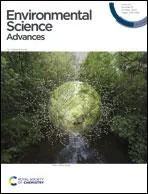
Assessing sources and fractions of metals associated with environmental plastics: a case study in Lake Como (Italy)
文献信息
发布日期
2023-11-06
DOI
10.1039/D3VA00254C
影响因子
0
作者
Stefano Carnati, Andrea Pozzi, Davide Spanu, Damiano Monticelli, Roberta Bettinetti, Ginevra Boldrocchi
查看原文
摘要
Understanding plastic–metal interactions is paramount to unveil the ecological risks of plastic pollution. Besides including a (variable) amount of metal-containing additives, plastic objects can adsorb metals on their surface in the environment. This work aims at measuring and assessing the possible origin of metals in environmental plastics deposited along the shores of Lake Como (Italy). Samples were characterized through Fourier-transformed infrared spectroscopy (FTIR), scanning electron microscopy (SEM) and water contact angle. Then, the total metal load was analysed by acid digestion. Surface extraction with nitric acid was also performed to detect labile metals and a three-step extraction scheme enabled the determination of physisorbed, carbonate-bonded and organic matter-bonded metals, respectively. Eighteen metals (Al, Ti, V, Cr, Mn, Fe, Co, Ni, Cu, Zn, As, Sr, Ag, Cd, Sn, Ba, Pb and U) were analysed in total. Newly produced plastic items were also analysed as a reference. Our findings revealed that environmental samples retained a higher concentration of metals compared to virgin ones, especially in the loosely bonded acid-extractable fractions, indicating their potential bioavailability. The source of metals on plastics was extremely variable: some metals were predominantly sorbed from the environment (e.g., Mn and Pb), and others were mainly leached from the plastic matrix (Ba, Cu and Ti) or had a mixed origin (Zn, Fe, Sn, Sr and Al). This work shed light on the changes in bioavailability of metals induced by plastic environmental ageing, set baseline values for a freshwater site, and provided insights into the potential bioavailability exerted by metals associated with plastic litter.
期刊推荐

Topics in Catalysis

Bioorganic & Medicinal Chemistry Letters
Acta Metallurgica Sinica-English Letters
Colloid Journal
Journal of the Indian Institute of Science
Herald of the Russian Academy of Sciences
Critical Reviews in Solid State and Materials Sciences
Main Group Chemistry
Journal of Chemical Sciences
Bioorganic & Medicinal Chemistry
相关文献
Fructose/dioxygen biofuel cell based on direct electron transfer-type bioelectrocatalysis
Yuji Kamitaka, Seiya Tsujimura, Norihiko Setoyama, Tsutomu Kajino, Kenji Kano
2007-02-06
Paper
DOI: 10.1039/B617650J
Calculations of the site specific stretching frequencies of CO adsorbed on Li+/ZSM-5
D. Nachtigallová, P. Nachtigall, O. Bludský
2004-11-05
Paper
DOI: 10.1039/B414296A
The interaction of n-nonyl-β-d-glucopyranoside and sodium dodecyl sulfate with DMPC and DMPG monolayers studied by infrared reflection absorption spectroscopy
Annette Meister, Andreas Kerth, Alfred Blume
2004-09-13
Paper
DOI: 10.1039/B410761F
Using Taylor dispersion profiles to characterize polymer molecular weight distributions
Brad Kelly, Derek G. Leaist
2004-11-11
Paper
DOI: 10.1039/B412659A
Orienting and aligning molecules for stereochemistry and photodynamics
Vincenzo Aquilanti, Massimiliano Bartolomei, Fernando Pirani, David Cappelletti, Franco Vecchiocattivi, Toshio Kasai
2004-11-22
Review Article
DOI: 10.1039/B415212C
A fulleropyrrolidine end-capped platinum-acetylide triad: the mechanism of photoinduced charge transfer in organometallic photovoltaic cells
Fengqi Guo, Katsu Ogawa, Young-Gi Kim, Evgeny O. Danilov, Felix N. Castellano, John R. Reynolds, Kirk S. Schanze
2007-04-03
Paper
DOI: 10.1039/B700379J
Semi-empirical molecular orbital methods including dispersion corrections for the accurate prediction of the full range of intermolecular interactions in biomolecules
Jonathan P. McNamara, Ian H. Hillier
2007-03-22
Paper
DOI: 10.1039/B701890H
Preparation and characterisation of hydroxide stabilised ZnO(0001)–Zn–OH surfaces
Markus Valtiner, Sergiy Borodin, Guido Grundmeier
2007-03-19
Paper
DOI: 10.1039/B617600C
The rotational spectra of conformers of biomolecules: tryptamine
2004-03-05
Paper
DOI: 10.1039/B315707E
Electroactivity of a starburst hole-transport material in Langmuir–Blodgett films. Solid state effects and intervalence charge transfer
Vicente Parra, Teodosio Del Caño, María L. Rodríguez-Méndez, José A. De Saja, Marcel Bouvet, Yasuhiko Shirota
2007-03-09
Paper
DOI: 10.1039/B618509F
您可能还喜欢
化合物问答
4-[4-三氟甲基苯基]恶唑(CAS号:1126636-40-5)通常如何合成?
4-[4-三氟甲基苯基]恶唑通常通过将4-三氟甲基苯酚与异硫氰酸苯酯在有机溶剂中进行酯化反应合成。该反应可在无水条件下,使用适当的催化剂,如四丁基氢氧化铵,以提...
1126636-40-54-(4-(Trifluoromethy...
59729-32-71-[3-(Dimethylamino)...
化合物问答
RockPhos Pd G3(CAS号:2009020-38-4)通常如何合成?
RockPhos Pd G3 通常通过钯催化偶联反应合成,使用配体 (2'-Amino-2-biphenylyl)(methanesulfonato-kappa...
2009020-38-4(2'-Amino-2-biphenyl...
化合物问答
1-哌啶甲酰胺(CAS号:2158-03-4)的市场或研究趋势如何?
1-哌啶甲酰胺作为有机合成中的重要中间体,其市场需求主要受医药、农药、染料等行业推动。近年来,随着新药开发和绿色化学的发展,该化合物的研究趋势集中在开发更高效、...
2158-03-41-Piperidinecarboxam...
化合物问答
2-(二苯基膦基)乙胺(CAS号:4848-43-5)适用哪些法规指南?
2-(二苯基膦基)乙胺适用于多种法规指南,包括但不限于《全球化学品统一分类和标签制度》(GHS),欧盟《化学品注册、评估、授权和限制》法规(REACH),以及美...
4848-43-52-(Diphenylphosphino...
化合物问答
如何储存间苯二甲酸二烯丙酯(CAS号:1087-21-4)?
间苯二甲酸二烯丙酯应储存在阴凉、干燥、通风良好的地方,远离火源和热源。储存容器应密封,避免光照和高温。储存温度应控制在25℃以下,相对湿度应低于80%。避免与其...
1087-21-4Diallyl isophthalate
化合物问答
什么是间甲苯异硫代异氰酸酯(CAS号:621-30-7)?
间甲苯异硫代异氰酸酯是一种有机化合物,分子式为C7H7NO2S,具有刺激性气味。它是一种重要的有机合成中间体,在合成其他化合物时广泛应用。
621-30-71-Isothiocyanato-3-m...
化合物问答
在合成中是否有N-Boc-D-苯丙氨醇(CAS号:106454-69-7)的替代品?
在合成中,可以考虑使用N-Cbz-D-苯丙氨醇或N-Fmoc-D-苯丙氨醇作为替代品。这些化合物同样具有保护氨基的功能,且在合成过程中表现出良好的反应性能。
106454-69-72-Methyl-2-propanyl ...
化合物问答
3-羟甲基-2-氧异丙基吡啶(CAS号:954240-50-7)的主要用途是什么?
3-羟甲基-2-氧异丙基吡啶主要用于有机合成领域,可以作为合成其他药物、农药或精细化学品的中间体。此外,它还可能在实验室研究中作为特定反应的前体或溶剂。
954240-50-7(2-Isopropoxy-3-pyri...
化合物问答
6-氨基-9-甲基嘌呤(CAS号:700-00-5)应用于哪些行业?
6-氨基-9-甲基嘌呤目前主要应用于医药行业,作为某些药物的中间体。此外,它还可能用于聚合物、传感器和半导体的某些领域,作为功能性单体或掺杂剂。
700-00-59-Methyl-9H-purin-6-...
来源期刊
推荐化合物
![[2',6'-bis(propan-2-yloxy)-[1,1'-biphenyl]-3-yl]dicyclohexylphosphane structure](https://cnstatic.chemtradehub.com/structs/787/787618-22-8-dda2.webp "[2',6'-bis(propan-2-yloxy)-[1,1'-biphenyl]-3-yl]dicyclohexylphosphane structure")
[2',6'-bis(propan-2-yloxy)-[1,1'-biphenyl]-3-yl]dicyclohexylphosphane
CAS号:
787618-22-8
分子式:
C30H43O2P
推荐供应商




免责声明
本页面提供的学术期刊信息仅供参考和研究使用。我们与任何期刊出版商均无关联,也不处理投稿事宜。如有投稿相关咨询,请直接联系相关期刊出版商。
如发现页面信息有误,请发送邮件至 support@chemtradehub.com 联系我们。我们将及时核实并处理您的问题。