


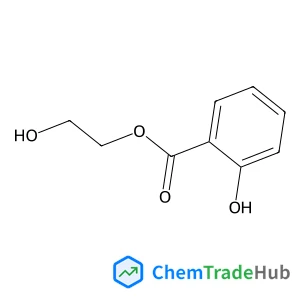
Contents list
文献信息
发布日期
2024-01-02
DOI
10.1039/D4FO90003K
影响因子
5.396
作者
查看原文
摘要
The first page of this article is displayed as the abstract.
相关文献
Fluorescent method for platinum detection in buffers and serums for cancer medicine and occupational hazards
Amanda L. Garner, Kazunori Koide
2008-11-17
Communication
DOI: 10.1039/B817220J
“Everything is surface”: tunable polymer organic frameworks with ultrahigh dye sorption capacity
Pierre Kuhn, Kathleen Krüger, Arne Thomas, Markus Antonietti
2008-10-02
Communication
DOI: 10.1039/B814254H
Highly regioselective ring-opening of trisubstituted aziridines by sulfur-stabilised carbanions
Santiago Carballares, Donald Craig, Christopher J. T. Hyland, Pengfei Lu, Tanya Mathie, Andrew J. P. White
2008-11-26
Communication
DOI: 10.1039/B815971H
A cavitand with a fluorous rim acts as an amine receptor
Richard J. Hooley, Per Restorp, Julius Rebek Jr
2008-11-06
Communication
DOI: 10.1039/B814069C
A palladium-mediated cascade cyclisation approach to the CDE cores of rubriflordilactone A and lancifodilactone G‡
Marie-Caroline A. Cordonnier, S. B. Jennifer Kan
2008-10-02
Communication
DOI: 10.1039/B814360A
Light-activation of gene function in mammalian cells viaribozymes
Douglas D. Young, R. Aaron Garner, Jeffrey A. Yoder, Alexander Deiters
2008-12-02
Communication
DOI: 10.1039/B819375D
Silver-enhanced fluorescence emission of single quantum dot nanocomposites
Yi Fu, Jian Zhang, Joseph R. Lakowicz
2008-11-19
Communication
DOI: 10.1039/B816736B
A snapshot of a coordination polymerself-assembly process: the crystallization of a metastable 3D network followed by the spontaneous transformation in water to a 2D pseudopolymorphic phase
Thierry Bataille, Ferdinando Costantino, Andrea Ienco, Annalisa Guerri, Fabio Marmottini, Stefano Midollini
2008-11-04
Communication
DOI: 10.1039/B813222D
Morphological changes in the self-assembly of a radial oligo-phenylene ethynylene amphiphilic system
Gustavo Fernández, Fátima García, Luis Sánchez
2008-11-12
Communication
DOI: 10.1039/B818378C
2-Phenylpyrimidine skeleton-based electron-transport materials for extremely efficient green organic light-emitting devices
Hisahiro Sasabe, Takayuki Chiba, Shi-Jian Su, Yong-Jin Pu, Ken-ichi Nakayama, Junji Kido
2008-10-03
Communication
DOI: 10.1039/B812270A
您可能还喜欢
化合物问答
4-[4-三氟甲基苯基]恶唑(CAS号:1126636-40-5)通常如何合成?
4-[4-三氟甲基苯基]恶唑通常通过将4-三氟甲基苯酚与异硫氰酸苯酯在有机溶剂中进行酯化反应合成。该反应可在无水条件下,使用适当的催化剂,如四丁基氢氧化铵,以提...
1126636-40-54-(4-(Trifluoromethy...
59729-32-71-[3-(Dimethylamino)...
化合物问答
RockPhos Pd G3(CAS号:2009020-38-4)通常如何合成?
RockPhos Pd G3 通常通过钯催化偶联反应合成,使用配体 (2'-Amino-2-biphenylyl)(methanesulfonato-kappa...
2009020-38-4(2'-Amino-2-biphenyl...
化合物问答
1-哌啶甲酰胺(CAS号:2158-03-4)的市场或研究趋势如何?
1-哌啶甲酰胺作为有机合成中的重要中间体,其市场需求主要受医药、农药、染料等行业推动。近年来,随着新药开发和绿色化学的发展,该化合物的研究趋势集中在开发更高效、...
2158-03-41-Piperidinecarboxam...
化合物问答
2-(二苯基膦基)乙胺(CAS号:4848-43-5)适用哪些法规指南?
2-(二苯基膦基)乙胺适用于多种法规指南,包括但不限于《全球化学品统一分类和标签制度》(GHS),欧盟《化学品注册、评估、授权和限制》法规(REACH),以及美...
4848-43-52-(Diphenylphosphino...
化合物问答
如何储存间苯二甲酸二烯丙酯(CAS号:1087-21-4)?
间苯二甲酸二烯丙酯应储存在阴凉、干燥、通风良好的地方,远离火源和热源。储存容器应密封,避免光照和高温。储存温度应控制在25℃以下,相对湿度应低于80%。避免与其...
1087-21-4Diallyl isophthalate
化合物问答
什么是间甲苯异硫代异氰酸酯(CAS号:621-30-7)?
间甲苯异硫代异氰酸酯是一种有机化合物,分子式为C7H7NO2S,具有刺激性气味。它是一种重要的有机合成中间体,在合成其他化合物时广泛应用。
621-30-71-Isothiocyanato-3-m...
化合物问答
在合成中是否有N-Boc-D-苯丙氨醇(CAS号:106454-69-7)的替代品?
在合成中,可以考虑使用N-Cbz-D-苯丙氨醇或N-Fmoc-D-苯丙氨醇作为替代品。这些化合物同样具有保护氨基的功能,且在合成过程中表现出良好的反应性能。
106454-69-72-Methyl-2-propanyl ...
化合物问答
3-羟甲基-2-氧异丙基吡啶(CAS号:954240-50-7)的主要用途是什么?
3-羟甲基-2-氧异丙基吡啶主要用于有机合成领域,可以作为合成其他药物、农药或精细化学品的中间体。此外,它还可能在实验室研究中作为特定反应的前体或溶剂。
954240-50-7(2-Isopropoxy-3-pyri...
化合物问答
6-氨基-9-甲基嘌呤(CAS号:700-00-5)应用于哪些行业?
6-氨基-9-甲基嘌呤目前主要应用于医药行业,作为某些药物的中间体。此外,它还可能用于聚合物、传感器和半导体的某些领域,作为功能性单体或掺杂剂。
700-00-59-Methyl-9H-purin-6-...
来源期刊
Food & Function
CiteScore:
10.1
自引率:
3.9%
年发文量:
758
Food & Function provides a unique venue for physicists, chemists, biochemists, nutritionists and other food scientists to publish novel, cutting-edge, original research focussing on food, its nutrients and their relation to human health and nutrition. We welcome research describing the: Physical properties and structure of food and how this relates to sensory perception and human health Biochemical and physiological actions of food components Interactions between foods, gut microbiota and human physiology Nutritional and biological evaluation of food Clinical and population studies using food or food components Development of biomarkers of food intake and effects on human health We also welcome systematic reviews and meta-analyses of existing studies in the literature, provided these are objective and scientifically valid Food in this context is defined as materials of plant, animal or mineral origin, which are consumed orally (by humans) for pleasure and to sustain growth and vital processes. Examples of research topics that are of interest to be published in Food & Function are: Chemistry and physics of food components and digestion processes Relationship between the physical properties/structure of food and nutrition and human health - for example, impact of food matrix or processing on nutrient release and uptake Molecular properties and physiological effects of food components (nutrients, fibres, essential micronutrients, phytochemicals, bioactives, food substitutes, novel ingredients, allergens, flavours and fragrances) Nutritional and health effects of food including bioavailability and metabolism assessment of food components (nutrients, micronutrients and other microconstituents) Efficacy and mechanisms of food constituents in the body - including biomarkers of intakes, exposure and effects Impacts of foods/food components on gut microorganisms and human physiology - For example impact of fermented foods Role of nutrition and diet in human disease prevention and development Cellular and molecular effects/mechanisms of food/food components image block The following types of research are not within the scope of Food & Function: Research relating to traditional herbal medicines, medicinal plants or active compounds extracted from such plants (materials that are primarily consumed as medicine, i.e. the intended purpose is primarily to treat, cure or prevent a non-deficiency disease) or relating to foods not recognised as human diet contributors Animal nutrition research that is not primarily designed as a model to benefit human nutrition (for example, studies of growth/accretion, heat stress, weaning, ruminant digestion, meat quality, etc.) Treatments administered by non-oral routes such as injection (subcutaneous, intramuscular, intraperitoneal, etc.), dermal/transdermal, rectal, inhalation, nasal, etc. Exceptions are when such routes of administration are used for mechanistic/control purposes in the experimental design Pharmacological/pharmaceutical approaches: Encapsulation, emulsification and/or pure controlled release of compounds or bioactives that do not come directly from edible foods, such as dietary supplements - these are better suited to a pharmaceutical journal In vitro or in vivo studies with poorly defined (insufficiently characterised) extracts and studies without appropriate controls will not be considered Cells studies not considering the metabolism of food components ingested – for example, irrelevant exposure of cells to compounds not present in the body after absorption Manuscripts with only a fully theoretical/bioinformatic approach and without appropriate support from analytical evidence will not be considered for publication Studies focussing solely on food engineering, preservation and sustainable technologies – these can be published in our companion journal Sustainable Food Technology Pure food analysis - these can be published in Analytical Methods
推荐化合物

推荐供应商





免责声明
本页面提供的学术期刊信息仅供参考和研究使用。我们与任何期刊出版商均无关联,也不处理投稿事宜。如有投稿相关咨询,请直接联系相关期刊出版商。
如发现页面信息有误,请发送邮件至 support@chemtradehub.com 联系我们。我们将及时核实并处理您的问题。