



Contents list
文献信息
发布日期
2024-01-16
DOI
10.1039/D4SE90007C
影响因子
6.367
作者
查看原文
摘要
The first page of this article is displayed as the abstract.
期刊推荐
CrystEngComm
Photochemical & Photobiological Sciences
Advanced Engineering Materials

Physical Chemistry Chemical Physics
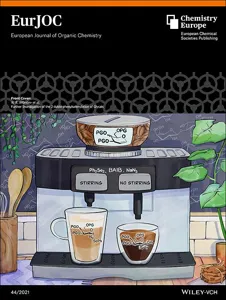
European Journal of Organic Chemistry
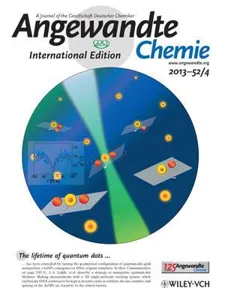
Angewandte Chemie International Edition
Contact Lens & Anterior Eye
Journal of Enzyme inhibition and Medicinal Chemistry
Journal of Medical Biochemistry
Molecules
相关文献
A colorimetric and fluorescent turn-on sensor for pyrophosphate anion based on a dicyanomethylene-4H-chromene framework
Xiaomei Huang, Zhiqian Guo, Weihong Zhu, Yongshu Xie, He Tian
2008-09-09
Communication
DOI: 10.1039/B809983A
Encapsulation of charge-diffuse peralkylated onium cations in the cavity of cucurbit[7]uril
Antony D. St-Jacques, Ian W. Wyman, Donal H. Macartney
2008-09-16
Communication
DOI: 10.1039/B811823J
Self-organization of a new fluorous porphyrin and C60 films on indium-tin-oxide electrode
Alessandro Varotto, Louis Todaro, Mikki Vinodu, Gang-yu Liu
2008-09-19
Communication
DOI: 10.1039/B806795C
Detoxification system for inorganic arsenic: transformation of As2O3 into TMAO by vitamin B12 derivatives and conversion of TMAO into arsenobetaine
Koichiro Nakamura, Yoshio Hisaeda, Ling Pan, Hiroshi Yamauchi
2008-09-25
Communication
DOI: 10.1039/B808937J
Phosphorus–olefin chelation in coordinated atropisomeric chiral auxiliaries
Paul S. Pregosin
2008-08-04
Feature Article
DOI: 10.1039/B807655C
Electron transfer through a stable phenanthrenyl pair in DNA
Nikolay A. Grigorenko, Christian J. Leumann
2008-09-12
Communication
DOI: 10.1039/B810751C
Electrochemical catalytic reforming of oxygenated-organic compounds: a highly efficient method for production of hydrogen from bio-oil
Lixia Yuan, Yaqiong Chen, Chongfu Song, Tongqi Ye, Qingxiang Guo, Qingshi Zhu, Youshifumi Torimoto, Quanxin Li
2008-09-10
Communication
DOI: 10.1039/B810851J
Asymmetric synthesis of either diastereomer of trifluoromethylated allylic amines by the selective reduction of trifluoromethyl α,β-unsaturated N-tert-butanesulfinyl ketoimines
Zhen-Jiang Liu, Jin-Tao Liu
2008-09-12
Communication
DOI: 10.1039/B810459J
Tristriazolotriazines: a core for luminescent discotic liquid crystals
Rodrigo Cristiano, Hugo Gallardo, Adailton J. Bortoluzzi, Ivan H. Bechtold, Carlos E. M. Campos, Ricardo L. Longo
2008-09-03
Communication
DOI: 10.1039/B810680K
您可能还喜欢
化合物问答
3 - (二氟甲基)-1 -氟苯(CAS号:26029-52-7)适用哪些法规指南?
3 - (二氟甲基)-1 -氟苯需遵循联合国全球化学品统一分类和标签制度(GHS),包括急性毒性、皮肤腐蚀/刺激、严重眼损伤/眼刺激等分类。同时,该化合物还需符...
26029-52-71-(Difluoromethyl)-3...
化合物问答
3,5-二甲基苯胺(CAS号:108-69-0)通常如何合成?
3,5-二甲基苯胺通常通过乙苯的氨解反应合成。反应中使用硫酸作为催化剂,反应温度为120-130°C。乙苯在硫酸存在下与氨反应,生成3,5-二甲基苯胺和苯胺副产...
108-69-03,5-Dimethylaniline
化合物问答
3-甲基异噻唑-5-胺(CAS号:24340-76-9)安全吗?
3-甲基异噻唑-5-胺在适当使用和储存条件下是相对安全的,但在操作时应注意防护措施。应避免吸入粉尘,避免与皮肤和眼睛直接接触。在操作过程中,应穿戴适当的防护装备...
24340-76-93-Methyl-1,2-thiazol...
化合物问答
3-(1,3-Thiazol-2-yl)-1H-indole(CAS号:135531-86-1)通常如何合成?
3-(1,3-噻唑-2-基)-1H-吲哚通常通过多步合成方法制备。首先,由噻唑-2-基溴化物和吲哚进行偶联反应,得到中间体。然后,通过还原反应将中间体转化为所需...
135531-86-13-(1,3-Thiazol-2-yl)...
化合物问答
4-溴-2-氟苯甲基氯(CAS号:85510-82-3)的主要用途是什么?
4-溴-2-氟苯甲基氯主要用于有机合成中间体,特别是在医药、农药和染料等领域。作为一种具有特定结构的化合物,它在合成复杂有机分子时扮演重要角色。
85510-82-34-Bromo-1-(chloromet...
化合物问答
处理Fmoc-β-(3-噻吩基)-D-Ala-OH(CAS号:220497-90-5)时应注意哪些实验室安全事项?
处理Fmoc-β-(3-噻吩基)-D-Ala-OH时,应佩戴防护手套、护目镜和实验服。操作应在通风橱内进行。如发生泄露,应立即用大量水冲洗,并通知实验室管理人员...
220497-90-5N-[(9H-Fluoren-9-ylm...
化合物问答
氮化硅(CAS号:12033-89-5)通常如何合成?
氮化硅通常通过氮化硅的直接反应合成,即在高温下将四氯化硅与氨气反应。具体步骤是将四氯化硅和氨气混合并加热至1300-1700℃,在该条件下,四氯化硅与氨气反应生...
12033-89-5Trisilicon tetranitr...
化合物问答
Cetirizine EP Impurity B DiHCl(CAS号:1000690-91-4)通常如何合成?
Cetirizine EP Impurity B DiHCl通常通过一锅法合成,首先将4-氯苯基-苯甲基氯甲酸酯与1-哌嗪乙酸反应,生成相应的酸,然后与盐酸反应...
1000690-91-4{4-[(4-Chlorophenyl)...
化合物问答
如何储存1-哌啶-4-基丁-1-酮(CAS号:3509-15-7)?
1-哌啶-4-基丁-1-酮应储存在阴凉、干燥的地方,避免阳光直射。存储容器应密封,并确保通风良好。建议储存温度不超过25℃,湿度保持在相对较低的水平。
3509-15-71-Piperidin-4-ylbuta...
化合物问答
如何处理含有VORUCICLIB(CAS号:1000023-04-0)的废料?
含有VORUCICLIB的废料应进行专业的收集和处理,包括使用适当的容器进行隔离,避免与其他化学品接触。处理方法通常包括化学中和、沉淀反应或吸附过程,随后进行焚...
1000023-04-02-[2-Chloro-4-(trifl...
来源期刊
推荐化合物
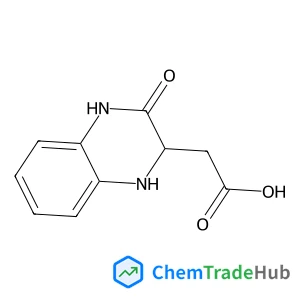
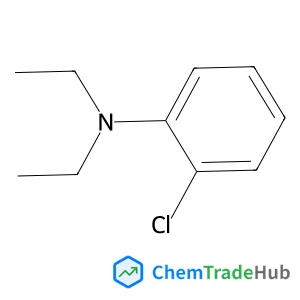
推荐供应商





免责声明
本页面提供的学术期刊信息仅供参考和研究使用。我们与任何期刊出版商均无关联,也不处理投稿事宜。如有投稿相关咨询,请直接联系相关期刊出版商。
如发现页面信息有误,请发送邮件至 support@chemtradehub.com 联系我们。我们将及时核实并处理您的问题。