



![3-[(4-Nitrobenzyl)oxy]-3-oxopropanoic Acid structure](https://cnstatic.chemtradehub.com/structs/773/77359-11-6-0d04.webp "3-[(4-Nitrobenzyl)oxy]-3-oxopropanoic Acid structure")
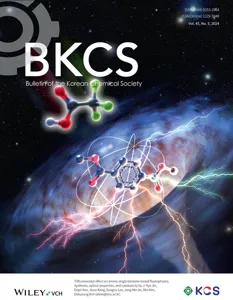
ACS Nano
基本信息
期刊简写:
ACS Nano
影响因子:
15.8
ISSN:
1936-0851
研究领域:
ENGINEERING TECHNOLOGY
h-index:
310
自引率:
3.8%
年发文量:
2049
SCI收录来源:
Science Citation Index Expanded
期刊官网:
https://pubs.acs.org/journal/ancac3
期刊介绍:
ACS Nano is a forum for the communication of comprehensive articles on nanoscience and nanotechnology research at the interfaces of chemistry, materials science, biology, medicine, physics, and engineering. In addition to comprehensive, original research articles, ACS Nano offers thorough reviews and perspectives on cutting-edge research, and discussions of topics that provide distinctive views about the future of nanoscience and nanotechnology, including, but not limited to: Synthesis and assembly of nanomaterials and nanostructures Molecular nanotechnology and nanosystems Nanofabrication and nanomanufacturing Energy conversion and storage Nanobiotechnology and nanomedicine Catalysis Nanodevices and systems, nanorobotics Single-molecule, single-atom methods and measurements Nanometrology, nanoscopy, and characterization Theory, simulations & modeling for nanotechnology AI and machine learning for nanotechnology Nanophotonics and plasmonics Nanoelectronics and nano-optoelectronics Quantum materials and technology Interfacial and surface science Carbon capture, hydrogen, and clean electrification Sustainable development through nanotechnology Mechanistic understanding of nano-bio interactions Biomaterials and nano-enhanced bioengineering Environmental health and safety, nanotoxicology Community impact of nanotechnology innovations
CiteScore
CiteScore
26
SJR
4.593
SNIP
2.267
| 学科 | 排名 | 百分位 |
|---|---|---|
EngineeringGeneral Engineering |
1 / 307 | 99% |
期刊统计
Monthly
期/年
Submission to First Editorial Decision (Median Days): 4.6
Submission to First Decision with Peer Review (Median Days): 31
Submission to Accept (Median Days): 92
Accept to ASAP Publication (Median Days): 5
审稿周期
论文处理费
投稿信息
投稿网址:
https://acs.manuscriptcentral.com/acs收录体裁:
Articles
Reviews
Perspectives
Conversations
Nano Focus
Letters to the editors
Reviews
Perspectives
Conversations
Nano Focus
Letters to the editors
相关文献
Mechanical properties and stabilities of α-boron monolayers
Qing Peng, Liang Han, Sheng Liu, Zhongfang Chen, Jie Lian, Suvranu De
2014-11-25
Paper
DOI: 10.1039/C4CP04050C
Magnetic and geometric anisotropy in particle-crosslinked ferrohydrogels
Lisa Roeder, Philipp Bender, Matthias Kundt, Andreas Tschöpe, Annette M. Schmidt
2014-11-17
Paper
DOI: 10.1039/C4CP04493B
Bimodal crystallization at polymer–fullerene interfaces
Dyfrig Môn, Anthony M. Higgins, David James, Mark Hampton, J. Emyr Macdonald, Michael B. Ward, Philipp Gutfreund, Samuele Lilliu, Jonathan Rawle
2014-11-26
Paper
DOI: 10.1039/C4CP04253K
Using beryllium bonds to change halogen bonds from traditional to chlorine-shared to ion-pair bonds
Ibon Alkorta, José Elguero, Otilia Mó, Manuel Yáñez, Janet E. Del Bene
2014-11-28
Paper
DOI: 10.1039/C4CP04574B
Measurement and PC-SAFT modelling of three-phase behaviour
Iago Rodríguez-Palmeiro, Oscar Rodríguez, Ana Soto, Christoph Held
2014-11-24
Paper
DOI: 10.1039/C4CP04336G
Electronic and optical properties of polypyridylruthenium derivatized polystyrenes: multi-level computational analysis of metallo-polymeric chromophore assemblies
Zoe Watson, Shahar Keinan
2014-11-25
Paper
DOI: 10.1039/C4CP04043K
Ligand(s)-to-metal charge transfer as a factor controlling the equilibrium constants of late first-row transition metal complexes: revealing the Irving–Williams thermodynamical series
Pradeep R. Varadwaj, Arpita Varadwaj, Bih-Yaw Jin
2014-10-27
Communication
DOI: 10.1039/C4CP03953J
Re-visiting the O/Cu(111) system – when metastable surface oxides could become an issue!
Norina A. Richter, Chang-Eun Kim, Catherine Stampfl, Aloysius Soon
2014-10-28
Paper
DOI: 10.1039/C4CP04473H
您可能还喜欢
化合物问答
4-[4-三氟甲基苯基]恶唑(CAS号:1126636-40-5)通常如何合成?
4-[4-三氟甲基苯基]恶唑通常通过将4-三氟甲基苯酚与异硫氰酸苯酯在有机溶剂中进行酯化反应合成。该反应可在无水条件下,使用适当的催化剂,如四丁基氢氧化铵,以提...
1126636-40-54-(4-(Trifluoromethy...
59729-32-71-[3-(Dimethylamino)...
化合物问答
RockPhos Pd G3(CAS号:2009020-38-4)通常如何合成?
RockPhos Pd G3 通常通过钯催化偶联反应合成,使用配体 (2'-Amino-2-biphenylyl)(methanesulfonato-kappa...
2009020-38-4(2'-Amino-2-biphenyl...
化合物问答
1-哌啶甲酰胺(CAS号:2158-03-4)的市场或研究趋势如何?
1-哌啶甲酰胺作为有机合成中的重要中间体,其市场需求主要受医药、农药、染料等行业推动。近年来,随着新药开发和绿色化学的发展,该化合物的研究趋势集中在开发更高效、...
2158-03-41-Piperidinecarboxam...
化合物问答
2-(二苯基膦基)乙胺(CAS号:4848-43-5)适用哪些法规指南?
2-(二苯基膦基)乙胺适用于多种法规指南,包括但不限于《全球化学品统一分类和标签制度》(GHS),欧盟《化学品注册、评估、授权和限制》法规(REACH),以及美...
4848-43-52-(Diphenylphosphino...
化合物问答
如何储存间苯二甲酸二烯丙酯(CAS号:1087-21-4)?
间苯二甲酸二烯丙酯应储存在阴凉、干燥、通风良好的地方,远离火源和热源。储存容器应密封,避免光照和高温。储存温度应控制在25℃以下,相对湿度应低于80%。避免与其...
1087-21-4Diallyl isophthalate
化合物问答
什么是间甲苯异硫代异氰酸酯(CAS号:621-30-7)?
间甲苯异硫代异氰酸酯是一种有机化合物,分子式为C7H7NO2S,具有刺激性气味。它是一种重要的有机合成中间体,在合成其他化合物时广泛应用。
621-30-71-Isothiocyanato-3-m...
化合物问答
在合成中是否有N-Boc-D-苯丙氨醇(CAS号:106454-69-7)的替代品?
在合成中,可以考虑使用N-Cbz-D-苯丙氨醇或N-Fmoc-D-苯丙氨醇作为替代品。这些化合物同样具有保护氨基的功能,且在合成过程中表现出良好的反应性能。
106454-69-72-Methyl-2-propanyl ...
化合物问答
3-羟甲基-2-氧异丙基吡啶(CAS号:954240-50-7)的主要用途是什么?
3-羟甲基-2-氧异丙基吡啶主要用于有机合成领域,可以作为合成其他药物、农药或精细化学品的中间体。此外,它还可能在实验室研究中作为特定反应的前体或溶剂。
954240-50-7(2-Isopropoxy-3-pyri...
化合物问答
6-氨基-9-甲基嘌呤(CAS号:700-00-5)应用于哪些行业?
6-氨基-9-甲基嘌呤目前主要应用于医药行业,作为某些药物的中间体。此外,它还可能用于聚合物、传感器和半导体的某些领域,作为功能性单体或掺杂剂。
700-00-59-Methyl-9H-purin-6-...
推荐化合物
![[2',6'-bis(propan-2-yloxy)-[1,1'-biphenyl]-3-yl]dicyclohexylphosphane structure](https://cnstatic.chemtradehub.com/structs/787/787618-22-8-dda2.webp "[2',6'-bis(propan-2-yloxy)-[1,1'-biphenyl]-3-yl]dicyclohexylphosphane structure")
[2',6'-bis(propan-2-yloxy)-[1,1'-biphenyl]-3-yl]dicyclohexylphosphane
CAS号:
787618-22-8
分子式:
C30H43O2P
![2-Bromodibenzo[b,d]furan structure](https://cnstatic.chemtradehub.com/structs/86-/86-76-0-1814.webp "2-Bromodibenzo[b,d]furan structure")
推荐供应商





免责声明
本页面提供的学术期刊信息仅供参考和研究使用。我们与任何期刊出版商均无关联,也不处理投稿事宜。如有投稿相关咨询,请直接联系相关期刊出版商。
如发现页面信息有误,请发送邮件至 support@chemtradehub.com 联系我们。我们将及时核实并处理您的问题。