









Journal of Superconductivity and Novel Magnetism
基本信息
期刊简写:
J SUPERCOND NOV MAGN
影响因子:
1.6
ISSN:
1557-1939
研究领域:
PHYSICAL
h-index:
39
自引率:
6.2%
年发文量:
191
SCI收录来源:
Science Citation Index Expanded
期刊官网:
https://www.springer.com/10948
期刊介绍:
The Journal of Superconductivity and Novel Magnetism serves as the international forum for the most current research and ideas in these fields. Magnetism and superconductivity have many similarities, both being quantum macroscopic phenomena. The journal covers all aspects of the science and technology of superconductivity and magnetism, including new materials, new mechanisms, basic and technological properties, new phenomena, and small- and large-scale applications. Modern magnetism, which is a rapidly-expanding field, is also featured in the journal. The journal provides a forum for original research papers on such areas as novel magnetism, magnetic properties and structures of bulk materials, spintronics, magnetic semiconductors, properties of magnetic multilayers, magnetoresistive materials and structures, magnetic oxides, nanomaterials, and related materials. New quantum macroscopic and topological states of matter involving superconductivity and magnetism are also of interest for the journal. In addition, the journal publishes articles related to all aspects of magneto-superconducting materials, such as sample preparation, spectroscopy, and transport properties as well as their various applications. This highly acclaimed journal publishes peer-reviewed original papers, selected conference proceedings, and invited review articles, and follows a single-blind peer review process.
CiteScore
CiteScore
3.7
SJR
0.355
SNIP
0.598
| 学科 | 排名 | 百分位 |
|---|---|---|
Physics and AstronomyCondensed Matter Physics |
200 / 434 | 54% |
期刊统计
Bimonthly
期/年
Submission to first decision (median): 16 days
审稿周期
£2590/$3890/€2990
论文处理费
投稿信息
投稿网址:
https://www.editorialmanager.com/josc相关文献
Facile synthesis of continuous Pt island networks and their electrochemical properties for methanol electrooxidation
Jitendra N. Tiwari, Fu-Ming Pan, Rajanish N . Tiwari, S.K . Nandi
2008-11-06
Communication
DOI: 10.1039/B813935K
Selective dimerization of 1,6-diynes catalyzed by ionic liquid-supported nickel complexes in an ionic liquid/toluene biphasic system
Avijit Goswami, Taichi Ito, Naoko Saino, Kouki Kase, Chikashi Matsuno, Sentaro Okamoto
2008-11-18
Communication
DOI: 10.1039/B816850D
Fluorescent method for platinum detection in buffers and serums for cancer medicine and occupational hazards
Amanda L. Garner, Kazunori Koide
2008-11-17
Communication
DOI: 10.1039/B817220J
Titanocene-catalyzed alkylative dimerization of vinylGrignard reagent using alkyl halides
Yuuki Fujii, Jun Terao, Yuichiro Kato, Nobuaki Kambe
2008-10-06
Communication
DOI: 10.1039/B813596G
Enzyme-mediated sol–gel processing of alkoxysilanes
Mark Frampton, Ateeya Vawda, Jackie Fletcher, Paul M. Zelisko
2008-09-23
Communication
DOI: 10.1039/B812389F
Formation of dodecaphenylporphodimethenevia facile protonation of saddle-distorted dodecaphenylporphyrin
Takahiko Kojima, Kakeru Hanabusa, Kei Ohkubo, Motoo Shiro, Shunichi Fukuzumi
2008-11-05
Communication
DOI: 10.1039/B816063E
Amplified fluorescence determination of microRNAs in homogeneous solution with cationic conjugated polymers
Zhengping Li, Yongqiang Cheng
2008-11-13
Communication
DOI: 10.1039/B816614E
Modular synthesis of multivalent glycoarchitectures and their unique selectin binding behavior
Ilona Papp, Jens Dernedde, Sven Enders, Rainer Haag
2008-10-03
Communication
DOI: 10.1039/B813414F
Noncovalent insertion of ferrocenes into the protein shell of apo-ferritin
Jochen Niemeyer, Satoshi Abe, Tatsuo Hikage, Gerhard Erker, Yoshihito Watanabe
2008-11-06
Communication
DOI: 10.1039/B813181C
您可能还喜欢
化合物问答
4-[4-三氟甲基苯基]恶唑(CAS号:1126636-40-5)通常如何合成?
4-[4-三氟甲基苯基]恶唑通常通过将4-三氟甲基苯酚与异硫氰酸苯酯在有机溶剂中进行酯化反应合成。该反应可在无水条件下,使用适当的催化剂,如四丁基氢氧化铵,以提...
1126636-40-54-(4-(Trifluoromethy...
59729-32-71-[3-(Dimethylamino)...
化合物问答
RockPhos Pd G3(CAS号:2009020-38-4)通常如何合成?
RockPhos Pd G3 通常通过钯催化偶联反应合成,使用配体 (2'-Amino-2-biphenylyl)(methanesulfonato-kappa...
2009020-38-4(2'-Amino-2-biphenyl...
化合物问答
1-哌啶甲酰胺(CAS号:2158-03-4)的市场或研究趋势如何?
1-哌啶甲酰胺作为有机合成中的重要中间体,其市场需求主要受医药、农药、染料等行业推动。近年来,随着新药开发和绿色化学的发展,该化合物的研究趋势集中在开发更高效、...
2158-03-41-Piperidinecarboxam...
化合物问答
2-(二苯基膦基)乙胺(CAS号:4848-43-5)适用哪些法规指南?
2-(二苯基膦基)乙胺适用于多种法规指南,包括但不限于《全球化学品统一分类和标签制度》(GHS),欧盟《化学品注册、评估、授权和限制》法规(REACH),以及美...
4848-43-52-(Diphenylphosphino...
化合物问答
如何储存间苯二甲酸二烯丙酯(CAS号:1087-21-4)?
间苯二甲酸二烯丙酯应储存在阴凉、干燥、通风良好的地方,远离火源和热源。储存容器应密封,避免光照和高温。储存温度应控制在25℃以下,相对湿度应低于80%。避免与其...
1087-21-4Diallyl isophthalate
化合物问答
什么是间甲苯异硫代异氰酸酯(CAS号:621-30-7)?
间甲苯异硫代异氰酸酯是一种有机化合物,分子式为C7H7NO2S,具有刺激性气味。它是一种重要的有机合成中间体,在合成其他化合物时广泛应用。
621-30-71-Isothiocyanato-3-m...
化合物问答
在合成中是否有N-Boc-D-苯丙氨醇(CAS号:106454-69-7)的替代品?
在合成中,可以考虑使用N-Cbz-D-苯丙氨醇或N-Fmoc-D-苯丙氨醇作为替代品。这些化合物同样具有保护氨基的功能,且在合成过程中表现出良好的反应性能。
106454-69-72-Methyl-2-propanyl ...
化合物问答
3-羟甲基-2-氧异丙基吡啶(CAS号:954240-50-7)的主要用途是什么?
3-羟甲基-2-氧异丙基吡啶主要用于有机合成领域,可以作为合成其他药物、农药或精细化学品的中间体。此外,它还可能在实验室研究中作为特定反应的前体或溶剂。
954240-50-7(2-Isopropoxy-3-pyri...
化合物问答
6-氨基-9-甲基嘌呤(CAS号:700-00-5)应用于哪些行业?
6-氨基-9-甲基嘌呤目前主要应用于医药行业,作为某些药物的中间体。此外,它还可能用于聚合物、传感器和半导体的某些领域,作为功能性单体或掺杂剂。
700-00-59-Methyl-9H-purin-6-...
推荐化合物
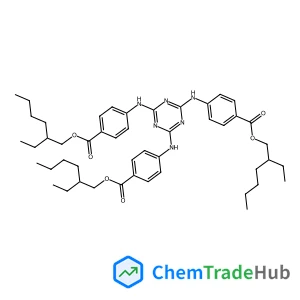
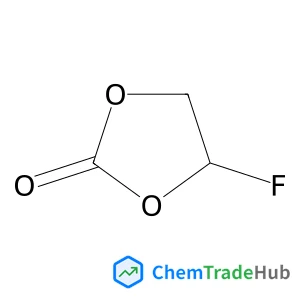
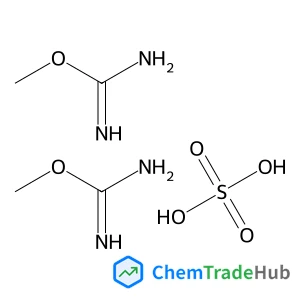
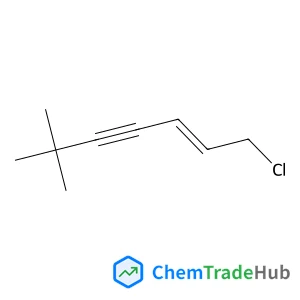
![3-[(4-Nitrobenzyl)oxy]-3-oxopropanoic Acid structure](https://cnstatic.chemtradehub.com/structs/773/77359-11-6-0d04.webp "3-[(4-Nitrobenzyl)oxy]-3-oxopropanoic Acid structure")
推荐供应商




免责声明
本页面提供的学术期刊信息仅供参考和研究使用。我们与任何期刊出版商均无关联,也不处理投稿事宜。如有投稿相关咨询,请直接联系相关期刊出版商。
如发现页面信息有误,请发送邮件至 support@chemtradehub.com 联系我们。我们将及时核实并处理您的问题。