




![1-(Hexopyranosyloxy)-4a,5-dihydroxy-7-methyl-1,4a,5,6,7,7a-hexahydrocyclopenta[c]pyran-7-yl 3-phenylacrylate structure](https://cnstatic.chemtradehub.com/structs/192/19210-12-9-ecae.webp "1-(Hexopyranosyloxy)-4a,5-dihydroxy-7-methyl-1,4a,5,6,7,7a-hexahydrocyclopenta[c]pyran-7-yl 3-phenylacrylate structure")
Nanophotonics
基本信息
期刊简写:
NANOPHOTONICS
影响因子:
6.5
ISSN:
2192-8606
研究领域:
ENGINEERING TECHNOLOGY
h-index:
37
自引率:
4.6%
年发文量:
353
SCI收录来源:
Science Citation Index Expanded
期刊官网:
https://www.degruyter.com/journal/key/nanoph/html
期刊介绍:
Nanophotonics covers recent international research results, specific developments in the field and novel applications and is published in partnership with Sciencewise. It belongs to the top journals in the field and publishes research articles, reviews (by invitation only), letters, and perspectives. Aims and Scope Nanophotonics focuses on the interaction of photons with nano-structures, such as carbon nano-tubes, nano metal particles, nano crystals, semiconductor nano dots, photonic crystals, tissue and DNA. The journal covers the latest developments for physicists, engineers and material scientists, working in fields related to: Plasmonics: metallic nanostructures and their optical properties Meta materials, fundamentals and applications Nanophotonic concepts and devices for solar energy harvesting and conversion Near-field optical microscopy Nanowaveguides and devices Nano Lasers Nanostructures, nanoparticles, nanotubes, nanowires, nanofibers Photonic crystals Integrated silicon photonics Semiconductor quantum dots Quantum optics & Quantum information Ultrafast and nonlinear pulse propagation in nano materials and structures Light-matter interaction, optical manipulation techniques Nano-biophotonics Optofluidics Optomechanics System applications based on nanophotonic devices Nanofabrication techniques, thin film processing, self-assembly
CiteScore
CiteScore
13.5
SJR
1.999
SNIP
1.64
| 学科 | 排名 | 百分位 |
|---|---|---|
EngineeringElectrical and Electronic Engineering |
47 / 797 | 94% |
期刊统计
24 issues per year
期/年
Average time from submission to initial editorial manager assessment: 5 days
Average time from submission to first decision: 22 days
Average time from submission to final decision: 57 days
Average time from acceptance to publication: 13 days
审稿周期
€2500 EUR
论文处理费
投稿信息
投稿网址:
https://mc.manuscriptcentral.com/nanoph相关文献
Elucidating the effect of copper as a redox additive and dopant on the performance of a PANI based supercapacitor
Kavita Pandey, Pankaj Yadav, Indrajit Mukhopadhyay
2014-11-07
Paper
DOI: 10.1039/C4CP04321A
Intra-residue interactions in proteins: interplay between serine or cysteine side chains and backbone conformations, revealed by laser spectroscopy of isolated model peptides
Himansu S. Biswal
2014-11-27
Paper
DOI: 10.1039/C4CP04449E
Can metal-free silicon-doped hexagonal boron nitride nanosheets and nanotubes exhibit activity toward CO oxidation?
Sen Lin, Xinxin Ye, Jing Huang
2014-11-03
Paper
DOI: 10.1039/C4CP05007J
Exploring the complexity of quantum control optimization trajectories
Arun Nanduri, Ofer M. Shir, Ashley Donovan, Tak-San Ho, Herschel Rabitz
2014-11-07
Paper
DOI: 10.1039/C4CP03853C
Re-visiting the O/Cu(111) system – when metastable surface oxides could become an issue!
Norina A. Richter, Chang-Eun Kim, Catherine Stampfl, Aloysius Soon
2014-10-28
Paper
DOI: 10.1039/C4CP04473H
Optimal top electrodes for inverted polymer solar cells
Hye Rim Yeom, Jungwoo Heo, Gi-Hwan Kim, Seo-Jin Ko, Seyeong Song, Yimhyun Jo, Dong Suk Kim, Bright Walker, Jin Young Kim
2014-11-27
Paper
DOI: 10.1039/C4CP04788E
Modulation of physical properties of supramolecular hydrogels based on a hydrophobic core
Masashi Ohno, Shun Fujita, Kowichiro Saruhashi, Nobuhide Miyachi, Katsuaki Miyaji
2014-11-26
Paper
DOI: 10.1039/C4CP04395B
Ab initio quantum dynamical analysis of ultrafast nonradiative transitions via conical intersections in pyrazine
Manabu Kanno, Yuta Ito, Noriyuki Shimakura, Shiro Koseki, Hirohiko Kono
2014-11-26
Paper
DOI: 10.1039/C4CP04807E
Dirac fermions in silicene on Pb(111) surface
Agata Podsiadły-Paszkowska, Mariusz Krawiec
2014-12-01
Paper
DOI: 10.1039/C4CP05104A
您可能还喜欢
化合物问答
4-[4-三氟甲基苯基]恶唑(CAS号:1126636-40-5)通常如何合成?
4-[4-三氟甲基苯基]恶唑通常通过将4-三氟甲基苯酚与异硫氰酸苯酯在有机溶剂中进行酯化反应合成。该反应可在无水条件下,使用适当的催化剂,如四丁基氢氧化铵,以提...
1126636-40-54-(4-(Trifluoromethy...
59729-32-71-[3-(Dimethylamino)...
化合物问答
RockPhos Pd G3(CAS号:2009020-38-4)通常如何合成?
RockPhos Pd G3 通常通过钯催化偶联反应合成,使用配体 (2'-Amino-2-biphenylyl)(methanesulfonato-kappa...
2009020-38-4(2'-Amino-2-biphenyl...
化合物问答
1-哌啶甲酰胺(CAS号:2158-03-4)的市场或研究趋势如何?
1-哌啶甲酰胺作为有机合成中的重要中间体,其市场需求主要受医药、农药、染料等行业推动。近年来,随着新药开发和绿色化学的发展,该化合物的研究趋势集中在开发更高效、...
2158-03-41-Piperidinecarboxam...
化合物问答
2-(二苯基膦基)乙胺(CAS号:4848-43-5)适用哪些法规指南?
2-(二苯基膦基)乙胺适用于多种法规指南,包括但不限于《全球化学品统一分类和标签制度》(GHS),欧盟《化学品注册、评估、授权和限制》法规(REACH),以及美...
4848-43-52-(Diphenylphosphino...
化合物问答
如何储存间苯二甲酸二烯丙酯(CAS号:1087-21-4)?
间苯二甲酸二烯丙酯应储存在阴凉、干燥、通风良好的地方,远离火源和热源。储存容器应密封,避免光照和高温。储存温度应控制在25℃以下,相对湿度应低于80%。避免与其...
1087-21-4Diallyl isophthalate
化合物问答
什么是间甲苯异硫代异氰酸酯(CAS号:621-30-7)?
间甲苯异硫代异氰酸酯是一种有机化合物,分子式为C7H7NO2S,具有刺激性气味。它是一种重要的有机合成中间体,在合成其他化合物时广泛应用。
621-30-71-Isothiocyanato-3-m...
化合物问答
在合成中是否有N-Boc-D-苯丙氨醇(CAS号:106454-69-7)的替代品?
在合成中,可以考虑使用N-Cbz-D-苯丙氨醇或N-Fmoc-D-苯丙氨醇作为替代品。这些化合物同样具有保护氨基的功能,且在合成过程中表现出良好的反应性能。
106454-69-72-Methyl-2-propanyl ...
化合物问答
3-羟甲基-2-氧异丙基吡啶(CAS号:954240-50-7)的主要用途是什么?
3-羟甲基-2-氧异丙基吡啶主要用于有机合成领域,可以作为合成其他药物、农药或精细化学品的中间体。此外,它还可能在实验室研究中作为特定反应的前体或溶剂。
954240-50-7(2-Isopropoxy-3-pyri...
化合物问答
6-氨基-9-甲基嘌呤(CAS号:700-00-5)应用于哪些行业?
6-氨基-9-甲基嘌呤目前主要应用于医药行业,作为某些药物的中间体。此外,它还可能用于聚合物、传感器和半导体的某些领域,作为功能性单体或掺杂剂。
700-00-59-Methyl-9H-purin-6-...
推荐化合物
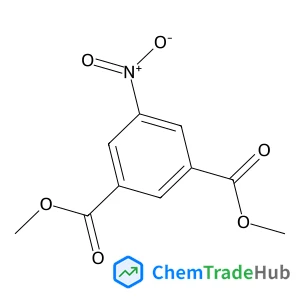
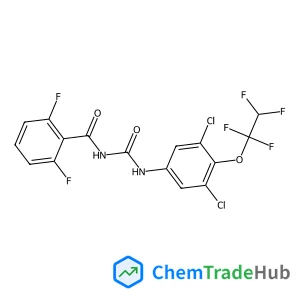
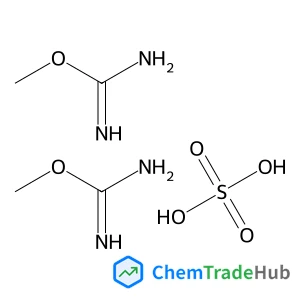
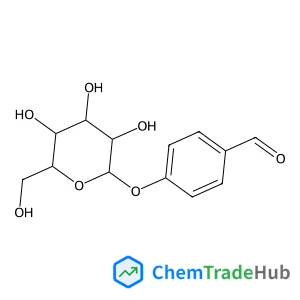
推荐供应商




免责声明
本页面提供的学术期刊信息仅供参考和研究使用。我们与任何期刊出版商均无关联,也不处理投稿事宜。如有投稿相关咨询,请直接联系相关期刊出版商。
如发现页面信息有误,请发送邮件至 support@chemtradehub.com 联系我们。我们将及时核实并处理您的问题。