






![tert-butyl 8-benzyl-2,8-diazaspiro[4.5]decane-2-carboxylate structure](https://cnstatic.chemtradehub.com/structs/336/336191-16-3-bb55.webp "tert-butyl 8-benzyl-2,8-diazaspiro[4.5]decane-2-carboxylate structure")
Tutorial Review. Electrochemical analysis of clinicalblood-gases, gases and vapours
文献信息
发布日期
DOI
10.1039/A708951A
影响因子
4.616
作者
查看原文
摘要
This tutorial review charts the development of electrochemical sensors for the analysis of blood-gases, gases and vapours in clinical medicine over the past four decades. The development of each sensor is set in its historical and clinical context, and the first part of the review concentrates on aqueous electrolyte electrochemistry and on those sensors which have made a major impact on the clinical measurement of the partial pressures of oxygen and carbon dioxide in the blood. The electrochemical interference effects of anaesthetic agents on these measurements are also described. Those electrochemical sensors which have failed, in the past, to make a clear impact in this area are not considered, but the few attempts to devise aqueous electrolyte electrochemical sensors for anaesthetic agent measurement are reviewed. The second part of the review describes the chequered history of the development of non-aqueous solvent electrochemical sensors to measure the partial pressures of oxygen and carbon dioxide, in both the presence and absence of each other, in the gas phase. The last part of the review examines various attempts, using non-aqueous solvent electrochemistry, to measure the concentration of inhalational anaesthetic vapours in the gas phase. These sensors have yet to make an impact on clinical practice. Throughout this tutorial review, theoretical models of membrane-covered electrochemical sensors are described where appropriate. This review represents a personal view of the development of electrochemical sensors for clinical measurement, and it is therefore necessarily selective in its approach and emphasis.
相关文献
High throughput screening arrays of rhodium and iridium complexes as catalysts for intramolecular hydroamination using parallel factor analysis‡
Diako Ebrahimi, Danielle F. Kennedy, Barbara A. Messerle, D. Brynn Hibbert
2008-03-13
Paper
DOI: 10.1039/B719501J
Imprinted polymers for chiral resolution of (±)-ephedrine. Part 2: probing pre-polymerisation equilibria in different solvents by NMR‡
Richard J. Ansell, Dongyao Wang, Janice K. L. Kuah
2008-09-03
Paper
DOI: 10.1039/B806376A
Electrochemical behavior of lactate dehydrogenase immobilized on “silica sol–gel/nanometre-sized tridecameric aluminium polycation” modified gold electrode and its application
Jiongjia Cheng, Deqian Huang, Jing Zhang, Wenjing Yang, Na Wang, Yongbo Sun, Keyu Wang, Xiangyin Mo, Shuping Bi
2009-03-24
Paper
DOI: 10.1039/B823096J
Microchip-based integration of cell immobilization, electrophoresis, post-column derivatization, and fluorescence detection for monitoring the release of dopamine from PC 12 cells
Michelle W. Li, R. Scott Martin
2008-07-08
Paper
DOI: 10.1039/B807093H
Rapid and quantitative detection of the microbial spoilage in milk using Fourier transform infrared spectroscopy and chemometrics
Nicoletta Nicolaou, Royston Goodacre
2008-07-11
Paper
DOI: 10.1039/B804439B
Immunoassay for P38 MAPK using surface enhanced resonance Raman spectroscopy (SERRS)
Phil Douglas, Robert J. Stokes, Duncan Graham, W. Ewen Smith
2008-04-04
Paper
DOI: 10.1039/B715824F
Hydroxylamine-amplified gold nanoparticles for the naked eye and chemiluminescent detection of sequence-specific DNA with notable potential for single-nucleotide polymorphism discrimination
Aiping Fan, Choiwan Lau, Jianzhong Lu
2008-12-17
Paper
DOI: 10.1039/B817047A
Determination of total bile acid levels using a thick-film screen-printed Ir/C sensor for the detection of liver disease
Brandon Bartling, Lu Li, Chung-Chiun Liu
2009-03-02
Paper
DOI: 10.1039/B900266A
New tools for rapid clinical and bioagent diagnostics: microwaves and plasmonic nanostructures
Kadir Aslan, Chris D. Geddes
2008-09-18
Highlight
DOI: 10.1039/B808292H
Electrochemical impedance spectroscopy and surface plasmon resonance studies of DNA hybridization on gold/SiOx interfaces
Maël Manesse, Valerie Stambouli, Rabah Boukherroub
2008-07-01
Paper
DOI: 10.1039/B804825H
您可能还喜欢
化合物问答
什么是2,6-二溴-4,8-双[(2-乙基己基)氧基]苯并[1,2-b:4,5-b']二噻吩(CAS号:1226782-13-3)?
2,6-二溴-4,8-双[(2-乙基己基)氧基]苯并[1,2-b:4,5-b']二噻吩是一种有机化合物,分子式为C23H32Br2O2S2。该化合物具有芳香性和...
1226782-13-32,6-Dibromo-4,8-bis[...
化合物问答
木聚硫钠(CAS号:37319-17-8)的物理化学性质是什么?
木聚硫钠通常为无色或白色结晶性粉末,具有吸湿性。其分子量约为121.11 g/mol。木聚硫钠易溶于水,不溶于醇类和其他非极性溶剂。在酸性或碱性溶液中,木聚硫钠...
37319-17-8Pentosan
化合物问答
2-甲氧基-4-(三氟甲基)苄溴, JRD(CAS号:886500-59-0)适用哪些法规指南?
该化合物在合成、储存和运输过程中需遵循《全球化学品统一分类和标签制度》(GHS)的健康、环境和物理危险分类。在欧洲还需符合《化学品注册、评估、授权和限制》(RE...
886500-59-02-Methoxy-4-(trifluo...
化合物问答
1,4-Diazoniabicyclo[2.2.2]octane-1,4-disulfinate(CAS号:119752-83-9)的主要用途是什么?
1,4-二氮杂双环[2.2.2]辛烷-1,4-二硫酸二酯主要用于有机合成中的保护基团,特别是在保护胺基和硫醇基方面具有广泛应用。此外,它还用于一些特殊化学反应的...
119752-83-91,4-Diazabicyclo[2.2...
化合物问答
如何处理含有4-(Bromomethyl)-2-fluorobenzenesulphonamide(CAS号:1645275-47-3)的废料?
含有4-(Bromomethyl)-2-fluorobenzenesulphonamide的废液应首先进行中和处理,以降低pH值,避免对环境造成腐蚀性影响。随后...
1645275-47-34-(Bromomethyl)-2-fl...
化合物问答
Loureiriol(CAS号:479195-44-3)的物理化学性质是什么?
Loureiriol是一种天然化合物,其分子式为C15H22O4。Loureiriol为无色结晶性粉末,具有较高的熔点和良好的热稳定性。其相对分子质量为262....
479195-44-3Loureiriol
化合物问答
在合成中是否有3-氨基苯甲酰苯胺(CAS号:14315-16-3)的替代品?
在合成过程中,可以考虑使用类似结构的化合物作为3-氨基苯甲酰苯胺的替代品,例如N-苯基-3-氰基苯胺或N-苯基-3-硝基苯胺等,这些化合物具有相似的化学性质,可...
14315-16-33-Amino-N-phenylbenz...
化合物问答
4-异氰酰苯基硼酸频哪醇酯(CAS号:380430-64-8)的市场或研究趋势如何?
4-异氰酰苯基硼酸频哪醇酯主要应用于有机合成、药物化学和材料科学领域。随着绿色化学的发展,该化合物因其高效的官能团转化能力和环境友好性而受到越来越多的关注。近年...
380430-64-82-(4-Isocyanatopheny...
化合物问答
如何储存3β-乙酰氧基-7,25-甘遂二烯-24(R)-醇(CAS号:1352001-09-2)?
3β-乙酰氧基-7,25-甘遂二烯-24(R)-醇应储存在阴凉、干燥、通风良好的地方,避免直接光照。储存容器应密封,防止空气中的水分和氧气影响化合物的稳定性。建...
1352001-09-23β-acetoxy-eupha- 7,...
化合物问答
如何储存4-氟-2-甲基-1H-吲哚(CAS号:1260383-51-4)?
应将4-氟-2-甲基-1H-吲哚存放在阴凉、干燥、通风良好的地方,避免直接暴露在光照下。容器应密封,避免与空气中的水蒸气接触。建议在避光、温度不超过25℃的环境...
1260383-51-44-Fluoro-2-methyl-1H...
来源期刊
Analyst

CiteScore:
7.8
自引率:
5.6%
年发文量:
653
Analyst publishes analytical and bioanalytical research that reports premier fundamental discoveries and inventions, and the applications of those discoveries, unconfined by traditional discipline barriers.
推荐化合物
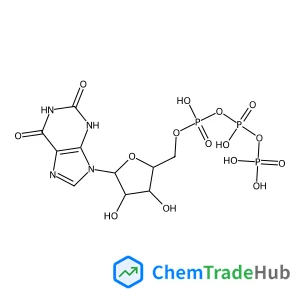
![6-(Benzyloxy)-8-(2-bromoacetyl)-2H-benzo[b][1,4]oxazin-3(4H)-one structure](https://cnstatic.chemtradehub.com/structs/926/926319-53-1-2287.webp "6-(Benzyloxy)-8-(2-bromoacetyl)-2H-benzo[b][1,4]oxazin-3(4H)-one structure")
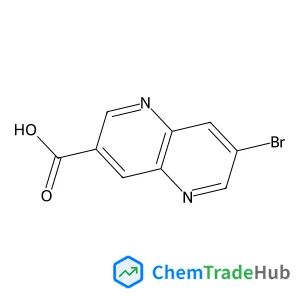
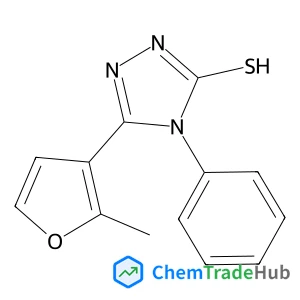
5-(2-Methyl-3-furyl)-4-phenyl-2,4-dihydro-3H-1,2,4-triazole-3-thione
CAS号:
346464-59-3
分子式:
C13H11N3OS
推荐供应商




免责声明
本页面提供的学术期刊信息仅供参考和研究使用。我们与任何期刊出版商均无关联,也不处理投稿事宜。如有投稿相关咨询,请直接联系相关期刊出版商。
如发现页面信息有误,请发送邮件至 support@chemtradehub.com 联系我们。我们将及时核实并处理您的问题。