




Atomic Spectrometry Update–Atomic emission spectrometry
文献信息
发布日期
DOI
10.1039/A803768J
影响因子
4.023
作者
查看原文
摘要
This Atomic Spectrometry Update is the latest in an annual series appearing under the title 'Atomic Emission Spectrometry'. The review describes developments in all aspects of atomic emission spectrometry, including fundamental processes and instrumentation.The renaissance of atomic emission spectrometry, brought about by the commercial introduction of the ICP about a quarter of a century ago, continues to flower. The major stimulus to research in recent years has undoubtedly come from another step change in technology, this time in the form of array detectors. There can be few areas of atomic emission spectrometry which have not been influenced by improvements in detector technology, as evidenced by the wide range of applications described in this year's Update. The ability to achieve simultaneous multi-element analysis across the full wavelength range is perhaps the most obvious advantage of these new detectors. However, the opportunities to interrogate multivariate data in a way not previously possible has spawned an entire research field devoted to the application of chemometrics. Examples of the use of principal component analysis, multiple least squares, multilinear regression, wavelets and neural networks have been published. The fact that measurements can be now made both rapidly and simultaneously has allowed the exploitation of transient signal measurement from sources, such as the single spark or laser ablation. The specific exploitation of this feature in terms of time-resolved analysis has been much in evidence. The use of CCD camera systems for spatial imaging of spectral sources has also been the subject of attention.In terms of source design, two areas stand out as being particularly active. The glow discharge is clearly the source of the moment, and developments in fundamental understanding are progressing in tandem with the design of new instrumentation. Supplementary excitation using rf, microwave, magnetic fields and pulsing of the basic dc discharge has remained a major field of research activity. This offers a great deal of scope for plasma diagnostic approaches, and the use of modelling and mathematical simulation has also been a recurrent theme in glow discharge research. The use of the laser as a primary emission source is undoubtedly on the increase, in part due to the development of rapid data acquisition signals to discriminate against non-specific background in the time domain. The compact nature and reliability of modern lasers also makes them attractive as portable analysers, particularly if the possibility of operation at atmospheric pressure in air is realised. The possibilities for practical depth profiling by LA-AES has moved closer with the recognition of the role of beam optics on ablation control.
相关文献
Roles of the scalar and vector components of the solvation effects on the vibrational properties of hydrogen- or halogen-bond accepting stretching modes
Saori Noge
2016-03-09
Paper
DOI: 10.1039/C5CP08008H
Biexponential photon antibunching: recombination kinetics within the Förster-cycle in DMSO
Michael Vester, Andreas Grueter, Björn Finkler, Robert Becker, Gregor Jung
2016-03-11
Paper
DOI: 10.1039/C6CP00718J
Saturn-like charge-transfer complexes Li4&B36, Li5&B36+, and Li6&B362+: exohedral metalloborospherenes with a perfect cage-like B364− core
Wen-Juan Tian, Qiang Chen, Hai-Ru Li, Miao Yan, Yue-Wen Mu, Hai-Gang Lu, Hua-Jin Zhai, Si-Dian Li
2016-03-21
Communication
DOI: 10.1039/C6CP01279E
Fine-tuning of microsolvation and hydrogen bond interaction regulates substrate channelling in the course of flavonoid biosynthesis
Julien Diharce, Jérôme Golebiowski, Sébastien Fiorucci, Serge Antonczak
2016-03-14
Paper
DOI: 10.1039/C5CP05059F
A designed lipopeptide with a leucine zipper as an imbedded on/off switch for lipid bilayers
Sijia Wang, Yinxing Shen, Junqi Zhang, Shouhong Xu, Honglai Liu
2016-03-11
Paper
DOI: 10.1039/C6CP00378H
A diminutive modification in arylamine electron donors: synthesis, photophysics and solvatochromic analysis – towards the understanding of dye sensitized solar cell performances
Venkatesan Srinivasan, Murugesan Panneer, Madhavan Jaccob, Nagaraj Pavithra, Sambandam Anandan, Arunkumar Kathiravan
2015-09-25
Paper
DOI: 10.1039/C5CP05338B
A new insight into the nanostructure of alkylammonium alkanoates based ionic liquids in water
Umme Salma, Paolo Ballirano, Marianna Usula, Ruggero Caminiti, Natalia V. Plechkova, Kenneth R. Seddon, Lorenzo Gontrani
2016-03-21
Paper
DOI: 10.1039/C5CP07953E
Sulfur antisite-induced intrinsic high-temperature ferromagnetism in Ag2S:Y nanocrystals
Pan Wang, Tianye Yang, Rui Zhao, Mingzhe Zhang
2016-03-10
Paper
DOI: 10.1039/C5CP07690K
Remarkable enhancement in the Kapitza resistance and electron potential barrier of chemically modified In2O3(ZnO)9 natural superlattice interfaces
2015-10-08
Paper
DOI: 10.1039/C5CP05076F
Are the three hydroxyphenyl radical isomers created equal? – The role of the phenoxy radical –
P. Hemberger, G. da Silva, A. J. Trevitt, T. Gerber, A. Bodi
2015-10-21
Paper
DOI: 10.1039/C5CP05346C
您可能还喜欢
化合物问答
2-Bromo-4-chloro-1-(difluoromethyl)benzene(CAS号:1261476-50-9)的市场或研究趋势如何?
随着环保要求的提高和安全意识的增强,该化合物的研究和应用趋势正逐渐转向更安全、更环境友好的替代品。市场关注点主要集中在开发新型合成方法和绿色化学路径,以减少有害...
1261476-50-92-Bromo-4-chloro-1-(...
化合物问答
如何处理含有2,9 - 二苯基-1,10 - 菲罗啉(CAS号:25677-69-4)的废料?
处理含有2,9 - 二苯基 - 1,10 - 菲罗啉的废料时,应先将其收集在适当的容器中,避免与其他化学品混合。随后,可以通过水解或氧化等方法进行处理,直至达到...
25677-69-42,9-Diphenyl-1,10-ph...
化合物问答
处理(6-氯-吡嗪-3-基)-(4-乙基-哌嗪-1-基)-甲酮(CAS号:1178836-15-1)时应注意哪些实验室安全事项?
处理(6-氯-吡嗪-3-基)-(4-乙基-哌嗪-1-基)-甲酮时,应穿戴适当的个人防护装备(PPE),包括手套、护目镜和实验室外套。在通风橱中操作以确保良好的通...
1178836-15-1(6-Chloro-3-pyridazi...
化合物问答
处理(R)-2-氯-1-(2,4-二氯苯基)乙醇(CAS号:114446-57-0)时应注意哪些实验室安全事项?
在处理(R)-2-氯-1-(2,4-二氯苯基)乙醇时,应佩戴防护眼镜、实验室外套和手套,确保通风橱开启以减少接触和吸入的风险。避免直接接触皮肤和眼睛。处理过程中...
114446-57-0(1R)-2-Chloro-1-(2,4...
化合物问答
在合成中是否有3-氯-6-(3-氯哌啶-1-基)吡嗪(CAS号:1185310-37-5)的替代品?
可考虑使用类似结构的化合物作为替代品,如3-氯-6-(哌啶-1-基)吡嗪或3-氯-6-(2-氯哌啶-1-基)吡嗪,这些化合物在结构上与目标化合物相似,可能具有相...
1185310-37-53-Chloro-6-(3-chloro...
化合物问答
苯并三氮唑-5-甲酸乙酯(CAS号:73605-91-1)通常如何合成?
该化合物可以通过乙酸乙酯与5-溴-1H-苯并三氮唑的反应合成,通常在无水条件下进行。合成过程中,需要使用适当的溶剂如乙酸乙酯,并在适当的温度下反应。该反应具有较...
73605-91-1Ethyl 1H-benzotriazo...
化合物问答
什么是一水硫酸镁(CAS号:14168-73-1)?
一水硫酸镁是一种无机化合物,化学式为MgSO₄·H₂O,CAS号为14168-73-1。它由镁离子、硫酸根离子和一个结晶水分子组成,通常呈现为白色粉末或颗粒状固...
14168-73-1Magnesium sulfate hy...
化合物问答
氘代-1,3-二氯-2-丙醇(CAS号:1173020-20-6)应用于哪些行业?
氘代-1,3-二氯-2-丙醇主要应用于医药和有机合成领域,作为研究化合物的氘代替代品,用于标记和追踪反应过程。此外,在聚合物和半导体生产中也有一定的应用潜力。
1173020-20-61,3-Dichloro-2-(~2~H...
化合物问答
如何储存氰乙酸环己酯(CAS号:52688-11-6)?
氰乙酸环己酯应储存在阴凉、干燥、通风良好的环境中,远离火源和热源,防止阳光直射。储存容器应密封良好,避免与空气接触,防止发生不必要的反应。
52688-11-6Cyclohexyl cyanoacet...
化合物问答
2-碘-4-硝基苯胺(CAS号:6293-83-0)的市场或研究趋势如何?
目前,2-碘-4-硝基苯胺在医药和农药领域有一定的研究和应用,尤其是在开发新型药物和农药产品方面。然而,由于其潜在的环境和健康风险,行业正趋向于寻找更为安全和环...
6293-83-02-iodo-4-nitroanilin...
来源期刊
Journal of Analytical Atomic Spectrometry
CiteScore:
6.2
自引率:
25.8%
年发文量:
254
The Journal of Analytical Atomic Spectrometry (JAAS) is the central journal for publishing innovative research on fundamentals, instrumentation, and methods in the determination, speciation and isotopic analysis of (trace) elements within all fields of application. This includes, but is not restricted to, the most recent progress, developments and achievements in all forms of atomic and elemental detection, isotope ratio determination, molecular analysis, plasma-based analysis and X-ray techniques. The journal welcomes full papers, communications, technical notes, critical and tutorial review articles, editorials, and comments, in addition to the Atomic Spectrometry Updates (ASU) literature reviews that are prepared by an expert panel. Submissions are welcome in the following areas, but note this list reflects the current scope and authors are strongly encouraged to contact the Editorial team if they believe that their work offers potentially new and emerging research relevant to the journal remit: Fundamental studies in the following. New and existing sources for atomic emission, absorption, fluorescence and mass spectrometry and those that provide both atomic and molecular information Sample introduction techniques for solids, liquids, gases Improvements in sensitivity, selectivity, precision, accuracy and/or robustness Isotope ratio measurements, including techniques for improving precision and mass bias correction Single channel and multichannel simultaneous detection systems Chemometrics, statistics, calibration techniques and internal standardisation Theoretical and numerical modelling of fundamental processes related to all of the above methodologies Novel or improved methodologies in areas of application including, but not limited to the following. Biosciences, including elemental, speciation and isotopic analysis in biological systems, immunoassays based on metal-labeled antibodies, bio-imaging, and nanoparticle toxicology Geochemistry Environmental science Materials science, including engineered nanoparticles and quantum dots Metrology, including reference materials Forensic analysis Food and agricultural sciences Energy Archaeometry Molecular analysis. Molecular sources for elemental and isotopic analysis Atomic sources for molecular analysis Atomic and molecular techniques simultaneously used for complementary chemical information All contributions are judged on originality and quality of scientific content, and appropriateness of length to content of new science.
推荐化合物

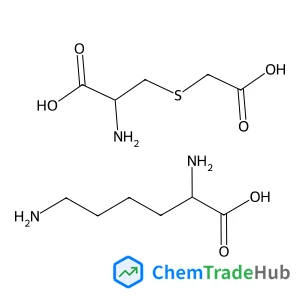

![2-Hydroxy-4-[({[(4-methylphenyl)sulfonyl]oxy}acetyl)amino]benzoic acid structure](https://cnstatic.chemtradehub.com/structs/501/501919-59-1-579f.webp "2-Hydroxy-4-[({[(4-methylphenyl)sulfonyl]oxy}acetyl)amino]benzoic acid structure")
2-Hydroxy-4-[({[(4-methylphenyl)sulfonyl]oxy}acetyl)amino]benzoic acid
CAS号:
501919-59-1
分子式:
C16H15NO7S
推荐供应商






免责声明
本页面提供的学术期刊信息仅供参考和研究使用。我们与任何期刊出版商均无关联,也不处理投稿事宜。如有投稿相关咨询,请直接联系相关期刊出版商。
如发现页面信息有误,请发送邮件至 support@chemtradehub.com 联系我们。我们将及时核实并处理您的问题。