






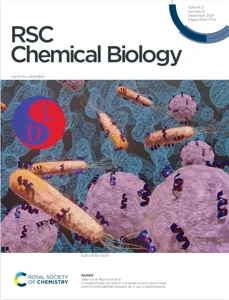


Proton solvated by noble-gas atoms: simplest case of a solvated ion
文献信息
发布日期
DOI
10.1039/A809480B
影响因子
3.676
作者
查看原文
摘要
The solvation of a proton by up to six rare-gas atoms He, Ne, Ar, Kr, and Xe is investigated by B3LYP density functional theory with large basis sets, forming the first systematic study of all rare gases, He through Xe, on the same high level of theory. The solvation energy for regular two-fold, trigonal planar, tetrahedral and octahedral coordination shows, as known previously, that the protonated rare gas dimer is the most stable configuration in every case. Solvation of a point charge by hard polarizable spheres yields the same preference for two-fold coordination. Two rare gas atoms shield the proton efficiently, and additional rare gas atoms may be coordinated in an equatorial plane or along the axis of the central protonated rare gas dimer, with binding energies and bond lengths comparable to those of the corresponding rare gas solids. The influence of additional solvent atoms on the harmonic stretching frequencies is minor and cannot explain the large shift observed in low temperature matrices. Proton diffusion is examined by calculating the transition state for isomerization of Rg3H+ species, which yields barrier heights of 8.8, 11.5, 29.7, 32.3, and 35.5 kJ mol-1 for He, Ne, Ar, Kr, and Xe, respectively. Geometries, harmonic frequencies, bond dissociation energies and partial charges of mixed protonated rare gas dimers reveal a consistently smooth trend of these properties with size and polarizability of the rare gas atoms. Based on these findings, the assignment of spectral lines attributed to the mixed ArH+Kr, ArH+Xe, and KrH+Xe species is questioned. The stabilization of positive charge centers in solid Xe in the presence of hydrogen atoms is also discussed.
相关文献
Continuous flow synthesis of ordered porous materials: from zeolites to metal–organic frameworks and mesoporous silica
Zhendong Liu, Jie Zhu, Ce Peng, Toru Wakihara, Tatsuya Okubo
2019-06-17
Review Article
DOI: 10.1039/C9RE00142E
Microfluidic approaches for accessing thermophysical properties of fluid systems
Nicolas Pannacci, Ghislain Bergeot, Claire Marliere, Samuel Marre
2019-06-19
Review Article
DOI: 10.1039/C9RE00130A
A membrane-based electrochemical flow reactor for generation of ferrates at near neutral pH conditions
Macarena A. Cataldo-Hernández, Arman Bonakdarpour, Joseph T. English, Madjid Mohseni, David P. Wilkinson
2019-03-11
Paper
DOI: 10.1039/C8RE00306H
Continuous microfluidic synthesis of colloidal ultrasmall gold nanoparticles: in situ study of the early reaction stages and application for catalysis
Ghazal Tofighi, Jan Pesek, Wu Wang, Ludger Schöttner, Günter Rinke, Roland Dittmeyer
2017-09-13
Paper
DOI: 10.1039/C7RE00114B
Design and 3D printing of a stainless steel reactor for continuous difluoromethylations using fluoroform
Tania Ciaglia, Eyke Slama, Matej Zadravec, Stefan Pfanner
2017-11-09
Paper
DOI: 10.1039/C7RE00176B
Inter-particle migration of Cu ions in physically mixed Cu-SSZ-13 and H-SSZ-13 treated by hydrothermal aging
Hwangho Lee, Inhak Song, Se Won Jeon, Do Heui Kim
2019-02-05
Paper
DOI: 10.1039/C8RE00281A
Reaction-volume dependent chemistry of highly selective photocatalytic reduction of nitrobenzene
Seungwook Jang, Bum-Joon Jung, Mi-Jeong Kim, Dong-Pyo Kim
2019-08-02
Communication
DOI: 10.1039/C9RE00251K
Hydrogen and steam injected tandem μ-reactor GC/FID system: phenol recovery from bisphenol A and alkylphenols using Ni/Y zeolite
S. Kumagai, M. Asakawa, T. Kameda, Y. Saito, A. Watanabe, C. Watanabe, T. Yoshioka
2019-10-03
Paper
DOI: 10.1039/C9RE00299E
An autonomous self-optimizing flow machine for the synthesis of pyridine–oxazoline (PyOX) ligands
Eric Wimmer, Daniel Cortés-Borda, Solène Brochard, Elvina Barré, Charlotte Truchet, François-Xavier Felpin
2019-03-22
Paper
DOI: 10.1039/C9RE00096H
Microfluidic synthesis of α-ketoesters via oxidative coupling of acetophenones with alcohols under metal-free conditions
Shiyu Guo, Zhongxue Dai, Jiawei Hua, Zhao Yang, Zheng Fang
2017-08-10
Paper
DOI: 10.1039/C7RE00107J
您可能还喜欢
化合物问答
2-(甲基磺酰基)嘧啶-5-胺(CAS号:56621-92-2)适用哪些法规指南?
该化合物适用的法规指南包括GHS(全球化学品统一分类和标签制度)分类为特定目标器官毒性-单次接触类别3;根据欧盟REACH法规,该化合物需要进行注册和评估;在美...
56621-92-22-(Methylsulfonyl)py...
化合物问答
在合成中是否有4-(4-氯苯基)-1H-咪唑(CAS号:35512-29-9)的替代品?
在合成中,可以考虑使用一些类似的化合物作为4-(4-氯苯基)-1H-咪唑的替代品,如4-(4-溴苯基)-1H-咪唑或4-(4-甲氧基苯基)-1H-咪唑。这些化合...
35512-29-94-(4-Chlorophenyl)-1...
化合物问答
什么是N~2~-甲基丙氨酸酰胺(CAS号:32012-16-1)?
N~2~-甲基丙氨酸酰胺是一种有机化合物,其化学名为2-(Methylamino)propanamide。它是一种酰胺类化合物,分子式为C4H10N2O,相对分...
32012-16-12-(Methylamino)propa...
化合物问答
如何处理含有N-苄基-3-氨基氧杂环丁烷草酸盐(CAS号:1956341-96-0)的废料?
处理含有N-苄基-3-氨基氧杂环丁烷草酸盐(CAS号:1956341-96-0)的废料时,应首先确保遵循相关法规要求,如GHS和REACH等。通常,废液应先进行...
1956341-96-0N-Benzyloxetan-3-ami...
化合物问答
4-bromo-2-chloro-6-methylbenzoic acid(CAS号:877149-07-0)的物理化学性质是什么?
4-溴-2-氯-6-甲基苯甲酸是一种固体化合物,具有较高的熔点和较低的沸点。它的分子量为261.03 g/mol。该化合物在水中几乎不溶,在有机溶剂中溶解度适中...
877149-07-04-Bromo-2-chloro-6-m...
化合物问答
2-[(2,5-二氯-4-嘧啶)氨基]-N-甲基苯甲酰胺(CAS号:761440-08-8)通常如何合成?
该化合物通常通过缩合反应合成,典型的方法是将2,5-二氯嘧啶与N-甲基苯甲酰胺在碱性条件下进行偶联反应。常用的碱包括NaH、LDA等强碱。该合成路线具有较高的选...
761440-08-82-[(2,5-dichloropyri...
4752-10-71,4-Dichlorophthalaz...
化合物问答
在合成中是否有3,5-二溴-4-甲基苯胺(CAS号:13194-73-5)的替代品?
3,5-二溴-4-甲基苯胺在某些合成路线中可能没有直接替代品。然而,在某些应用场景下,可以考虑使用其他类似结构的化合物如3,5-二溴-4-硝基苯胺或3,5-二碘...
13194-73-53,5-Dibromo-4-methyl...
化合物问答
2-氯喹啉-4-羧酸甲酯(CAS号:62482-26-2)的主要用途是什么?
2-氯喹啉-4-羧酸甲酯主要用于有机合成和药物合成领域,作为中间体或原料。它在合成某些药物和染料时具有重要作用。此外,该化合物还可能用于某些特定的化学研究中。
62482-26-2Methyl 2-chloro-4-qu...
化合物问答
i>]吡啶(CAS号:474708-88-8)安全吗?
6-溴-8-氯咪唑[1,2-a]吡啶在操作过程中需要谨慎以确保安全。该化合物具有一定的毒性,吸入其蒸气或粉尘可能导致呼吸道刺激。处理时应佩戴适当的防护装备,如手...
474708-88-86-Bromo-8-chloroimid...
来源期刊
Physical Chemistry Chemical Physics

CiteScore:
5.5
自引率:
10.3%
年发文量:
3036
Physical Chemistry Chemical Physics (PCCP) is an international journal co-owned by 19 physical chemistry and physics societies from around the world. This journal publishes original, cutting-edge research in physical chemistry, chemical physics and biophysical chemistry. To be suitable for publication in PCCP, articles must include significant innovation and/or insight into physical chemistry; this is the most important criterion that reviewers and Editors will judge against when evaluating submissions. The journal has a broad scope and welcomes contributions spanning experiment, theory, computation and data science. Topical coverage includes spectroscopy, dynamics, kinetics, statistical mechanics, thermodynamics, electrochemistry, catalysis, surface science, quantum mechanics, quantum computing and machine learning. Interdisciplinary research areas such as polymers and soft matter, materials, nanoscience, energy, surfaces/interfaces, and biophysical chemistry are welcomed if they demonstrate significant innovation and/or insight into physical chemistry. Joined experimental/theoretical studies are particularly appreciated when complementary and based on up-to-date approaches.
推荐化合物
推荐供应商





免责声明
本页面提供的学术期刊信息仅供参考和研究使用。我们与任何期刊出版商均无关联,也不处理投稿事宜。如有投稿相关咨询,请直接联系相关期刊出版商。
如发现页面信息有误,请发送邮件至 support@chemtradehub.com 联系我们。我们将及时核实并处理您的问题。