




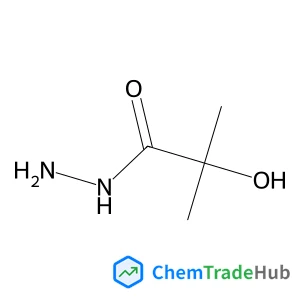
The low temperature crystalline and glassy states of methyl α-hydroxy-isobutyrate
文献信息
发布日期
2001-01-15
DOI
10.1039/B007722O
影响因子
3.676
作者
Susana Jarmelo, Teresa M. R. Maria, Maria Luísa P. Leitão, Rui Fausto
查看原文
摘要
The low temperature crystalline and glassy phases of methyl α-hydroxy-isobutyrate (MHib) were identified and characterized structurally by differential scanning calorimetry, IR and Raman spectroscopy and molecular modeling. Within the temperature range 13–171 K, MHib exists as a glassy state, where individual molecules may assume the two conformational states previously observed for this compound isolated in an argon matrix and in the liquid phase [S. Jarmelo and R. Fausto, J. Mol. Struct., 1999, 509, 193]. At ca. 171 K, devitrification occurs and a crystalline phase may then be formed [T(onset)≈213 K], the enthalpy of crystallization being ca. 5 kJ mol−1. The crystalline phase was found to exhibit conformational selectivity—in this phase all individual molecules assume a conformation analogous to the most stable conformer found for the isolated molecule and in the liquid (the Syn-syn s-cis conformer, where the H–O–C–C, O–C–CO and OC–O–C dihedrals are ca. 0°). Molecular modeling and Raman data are consistent with a structural unit within the crystal where two MHib molecules form a centrosymmetrical hydrogen bonded dimer. The observed temperature of fusion [Tf(peak)] for the crystal is 240 K.
相关文献
Mechanocatalysis: forcing latent catalysts into action
Ramon Groote, Robert T. M. Jakobs, Rint P. Sijbesma
2013-03-07
Review Article
DOI: 10.1039/C3PY00071K
Efficient Ni-based catalysts for the hydrotreatment of lignin dimer model compounds to cycloalkanes/cycloalkanols
Minghao Zhou
2021-01-04
Paper
DOI: 10.1039/D0RE00379D
Continuous flow Buchwald–Hartwig amination of a pharmaceutical intermediate
Polina Yaseneva, Paul Hodgson, Jacek Zakrzewski, Sebastian Falß, Rebecca E. Meadows, Alexei A. Lapkin
2015-11-23
Paper
DOI: 10.1039/C5RE00048C
Unprecedented scissor effect of macromolecular cross-linkers on the glass transition temperature of poly(N-vinylimidazole), crystallinity suppression of poly(tetrahydrofuran) and molecular mobility by solid state NMR in poly(N-vinylimidazole)-l-poly(tetrahydrofuran) conetworks
Csaba Fodor, Attila Domján, Béla Iván
2013-04-03
Paper
DOI: 10.1039/C3PY00299C
Revisiting the long-chain branch formation mechanism in metallocene catalyzed polyethylenes
Vahid Karimkhani, Faramarz Afshar-Taromi, Florian J. Stadler
2013-04-22
Paper
DOI: 10.1039/C3PY00319A
1-Butyl-3-methylimidazolium bromide functionalized zeolites: nature of interactions and catalytic activity for carbohydrate conversion to platform chemicals
Santosh Kumar Yedla, Bharath Velaga, Souradip Choudhury, Ashutosh Namdeo, Animes Kumar Golder, Nageswara Rao Peela
2020-07-14
Paper
DOI: 10.1039/D0RE00277A
Numerical analysis of mixing chamber non-uniformities and feed conditions for optimal performance of urea SCR
Risha Raju, Jishnu Chandran R, A. Salih, Kuruvilla Joseph
2020-09-10
Paper
DOI: 10.1039/D0RE00269K
Data fusion by joint non-negative matrix factorization for hypothesizing pseudo-chemistry using Bayesian networks
Anjana Puliyanda, Kaushik Sivaramakrishnan, Zukui Li, Arno de Klerk, Vinay Prasad
2020-07-07
Paper
DOI: 10.1039/D0RE00147C
Pretreatment and fermentation of lignocellulosic biomass: reaction mechanisms and process engineering
William Doherty, Luqman Atanda, Lalehvash Moghaddam
2020-09-17
Review Article
DOI: 10.1039/D0RE00241K
Kinetic modelling of reactions for the synthesis of 2-methyl-5-ethyl pyridine
Leo Schmid, Peter Wasserscheid, Hannsjörg Freund
2021-05-04
Paper
DOI: 10.1039/D1RE00085C
您可能还喜欢
化合物问答
4-[4-三氟甲基苯基]恶唑(CAS号:1126636-40-5)通常如何合成?
4-[4-三氟甲基苯基]恶唑通常通过将4-三氟甲基苯酚与异硫氰酸苯酯在有机溶剂中进行酯化反应合成。该反应可在无水条件下,使用适当的催化剂,如四丁基氢氧化铵,以提...
1126636-40-54-(4-(Trifluoromethy...
59729-32-71-[3-(Dimethylamino)...
化合物问答
RockPhos Pd G3(CAS号:2009020-38-4)通常如何合成?
RockPhos Pd G3 通常通过钯催化偶联反应合成,使用配体 (2'-Amino-2-biphenylyl)(methanesulfonato-kappa...
2009020-38-4(2'-Amino-2-biphenyl...
化合物问答
1-哌啶甲酰胺(CAS号:2158-03-4)的市场或研究趋势如何?
1-哌啶甲酰胺作为有机合成中的重要中间体,其市场需求主要受医药、农药、染料等行业推动。近年来,随着新药开发和绿色化学的发展,该化合物的研究趋势集中在开发更高效、...
2158-03-41-Piperidinecarboxam...
化合物问答
2-(二苯基膦基)乙胺(CAS号:4848-43-5)适用哪些法规指南?
2-(二苯基膦基)乙胺适用于多种法规指南,包括但不限于《全球化学品统一分类和标签制度》(GHS),欧盟《化学品注册、评估、授权和限制》法规(REACH),以及美...
4848-43-52-(Diphenylphosphino...
化合物问答
如何储存间苯二甲酸二烯丙酯(CAS号:1087-21-4)?
间苯二甲酸二烯丙酯应储存在阴凉、干燥、通风良好的地方,远离火源和热源。储存容器应密封,避免光照和高温。储存温度应控制在25℃以下,相对湿度应低于80%。避免与其...
1087-21-4Diallyl isophthalate
化合物问答
什么是间甲苯异硫代异氰酸酯(CAS号:621-30-7)?
间甲苯异硫代异氰酸酯是一种有机化合物,分子式为C7H7NO2S,具有刺激性气味。它是一种重要的有机合成中间体,在合成其他化合物时广泛应用。
621-30-71-Isothiocyanato-3-m...
化合物问答
在合成中是否有N-Boc-D-苯丙氨醇(CAS号:106454-69-7)的替代品?
在合成中,可以考虑使用N-Cbz-D-苯丙氨醇或N-Fmoc-D-苯丙氨醇作为替代品。这些化合物同样具有保护氨基的功能,且在合成过程中表现出良好的反应性能。
106454-69-72-Methyl-2-propanyl ...
化合物问答
3-羟甲基-2-氧异丙基吡啶(CAS号:954240-50-7)的主要用途是什么?
3-羟甲基-2-氧异丙基吡啶主要用于有机合成领域,可以作为合成其他药物、农药或精细化学品的中间体。此外,它还可能在实验室研究中作为特定反应的前体或溶剂。
954240-50-7(2-Isopropoxy-3-pyri...
化合物问答
6-氨基-9-甲基嘌呤(CAS号:700-00-5)应用于哪些行业?
6-氨基-9-甲基嘌呤目前主要应用于医药行业,作为某些药物的中间体。此外,它还可能用于聚合物、传感器和半导体的某些领域,作为功能性单体或掺杂剂。
700-00-59-Methyl-9H-purin-6-...
来源期刊
Physical Chemistry Chemical Physics

CiteScore:
5.5
自引率:
10.3%
年发文量:
3036
Physical Chemistry Chemical Physics (PCCP) is an international journal co-owned by 19 physical chemistry and physics societies from around the world. This journal publishes original, cutting-edge research in physical chemistry, chemical physics and biophysical chemistry. To be suitable for publication in PCCP, articles must include significant innovation and/or insight into physical chemistry; this is the most important criterion that reviewers and Editors will judge against when evaluating submissions. The journal has a broad scope and welcomes contributions spanning experiment, theory, computation and data science. Topical coverage includes spectroscopy, dynamics, kinetics, statistical mechanics, thermodynamics, electrochemistry, catalysis, surface science, quantum mechanics, quantum computing and machine learning. Interdisciplinary research areas such as polymers and soft matter, materials, nanoscience, energy, surfaces/interfaces, and biophysical chemistry are welcomed if they demonstrate significant innovation and/or insight into physical chemistry. Joined experimental/theoretical studies are particularly appreciated when complementary and based on up-to-date approaches.
推荐化合物
![(4-{[(2-Methyl-2-propanyl)oxy]methyl}phenyl)boronic acid structure](https://cnstatic.chemtradehub.com/structs/102/1024017-53-5-41c0.webp "(4-{[(2-Methyl-2-propanyl)oxy]methyl}phenyl)boronic acid structure")
推荐供应商






免责声明
本页面提供的学术期刊信息仅供参考和研究使用。我们与任何期刊出版商均无关联,也不处理投稿事宜。如有投稿相关咨询,请直接联系相关期刊出版商。
如发现页面信息有误,请发送邮件至 support@chemtradehub.com 联系我们。我们将及时核实并处理您的问题。