


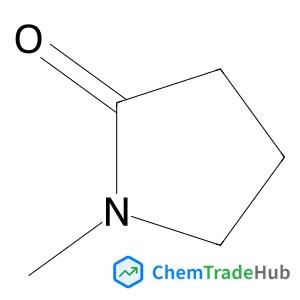
A more efficient copper-ion-exchanged ZSM-5 zeolite for N2 adsorption at room temperature: Ion-exchange in an aqueous solution of Cu(CH3COO)2
文献信息
发布日期
2001-02-27
DOI
10.1039/B009942M
影响因子
3.676
作者
Yasushige Kuroda, Ryotaro Kumashiro, Atsushi Itadani, Mahiko Nagao, Hisayoshi Kobayashi
查看原文
摘要
The copper-ion-exchanged ZSM-5 type zeolite, prepared by ion-exchange in an aqueous solution of Cu(CH3COO)2 and evacuation at 873 K, gives a distinctive IR band at 2151 cm−1 due to the adsorbed CO species. More efficient adsorption of N2 was exhibited by this sample, compared with samples prepared by other methods, implying site-selective ion-exchange in the preparation process. On the basis of X-ray absorption near-edge structure (XANES) spectra the exchanged copper ion was proved to be in a monovalent state; one of the splitting strong bands, due to the 1s–4pz transition of the monovalent copper ion, loses its intensity on N2 adsorption. The extended X-ray absorption fine structure (EXAFS) spectral pattern around the copper ion also changed on N2 adsorption and a shoulder appeared at around 1.5 Å (no phase-shift correction), in addition to the strong band at around 1.65 Å (no phase-shift correction). It was concluded that the monovalent copper-ion-exchanged site giving the 2151 cm−1 band due to the adsorbed CO species is the active site for specific N2 adsorption. A first principles calculation was carried out with the object of finding the most appropriate model for the CO species adsorbed on the exchanged copper ions in ZSM-5. The data obtained suggest that a three-coordinate copper ion bonded to three lattice oxygen atoms adsorbs CO to give the 2151 cm−1 band. A pseudo-planar structure including the monovalent copper ion bound to three oxygen atoms is assumed to change to a pseudo-tetrahedral arrangement on N2 adsorption. Such a site-selectively ion-exchanged substance has potential for the development of materials for N2 separation or fixation and activation catalysts, as well as for the analysis of NO-decomposition sites.
期刊推荐

Chinese Journal of Chemistry

Journal of Chemical Sciences

Heteroatom Chemistry
Critical Reviews in Solid State and Materials Sciences

Medicinal Chemistry Research

Electroanalysis

Herald of the Russian Academy of Sciences

Bioorganic & Medicinal Chemistry
Bioorganic & Medicinal Chemistry Letters
NDT & E International
相关文献
Self-thermophoretic motion of controlled assembled micro-/nanomotors
Xiankun Lin, Tieyan Si, Zhiguang Wu, Qiang He
2017-05-22
Perspective
DOI: 10.1039/C7CP02561K
Different natures of surface electronic transitions of carbon nanoparticles
A. Cayuela, M. L. Soriano, F. M. Gelardi, M. Cannas, M. Valcárcel, F. Messina
2017-07-28
Paper
DOI: 10.1039/C7CP04548D
Atomic structure of Mg-based metallic glasses from molecular dynamics and neutron diffraction
Anastasia Gulenko, Louis Forto Chungong, Junheng Gao, Iain Todd, Alex C. Hannon, Richard A. Martin
2017-03-03
Paper
DOI: 10.1039/C6CP03261C
Defluorination and covalent grafting of fluorinated graphene with TEMPO in a radical mechanism
Wenchuan Lai, Dazhou Xu, Xu Wang, Zaoming Wang, Yang Liu, Xiaojiao Zhang, Yulong Li, Xiangyang Liu
2017-08-07
Paper
DOI: 10.1039/C7CP04439A
Experimental and theoretical studies on fluvastatin primary photoproduct formation
Dorota Jarmużek, Marcin Hoffmann, Tomasz Siodła, Kinga Salus, Donata Pluskota-Karwatka
2017-06-16
Paper
DOI: 10.1039/C7CP01094J
Optical properties and magnetic flux-induced electronic band tuning of a T-graphene sheet and nanoribbon
Arka Bandyopadhyay, Atanu Nandy, Arunava Chakrabarti, Debnarayan Jana
2017-07-24
Paper
DOI: 10.1039/C7CP03983B
Structural insights into the multinuclear speciation of tetravalent cerium in the tri-n-butyl phosphate–n-dodecane solvent extraction system
Mark R. Antonio, Ross J. Ellis, Shanna L. Estes, Mrinal K. Bera
2017-07-05
Paper
DOI: 10.1039/C7CP03350H
Does the endohedral borospherene supersalt FLi2@B39 maintain the “super” properties of its subunits?
A. J. Stasyuk, M. Solà
2017-07-24
Communication
DOI: 10.1039/C7CP02550E
Coexistence of ice clusters and liquid-like water clusters on the Ru(0001) surface
Feng Liu, J. M. Sturm, Chris J. Lee, Fred Bijkerk
2017-02-24
Paper
DOI: 10.1039/C6CP07369G
Photoluminescence from vibrational excited-states for organic molecules adsorbed on Si nanoparticles
M. Maeda, T. Matsumoto, H. Kobayashi
2017-07-24
Paper
DOI: 10.1039/C7CP01836C
您可能还喜欢
化合物问答
如何储存1,2-环己二酮环乙缩醛(CAS号:4746-96-7)?
1,2-环己二酮环乙缩醛应储存在阴凉、干燥、通风良好的地方,避免阳光直射。建议使用密封容器保存,并保持环境温度在室温范围内,远离火源和热源。
4746-96-71,4-Dioxaspiro[4.5]d...
化合物问答
Ecopladib(CAS号:381683-92-7)的市场或研究趋势如何?
Ecopladib作为一种新型的药物,主要应用于治疗高胆固醇等疾病。目前,市场和研究趋势显示,Ecopladib因其独特的药理作用而受到关注。随着对心血管疾病治...
381683-92-7Ecopladib
化合物问答
2,3-Dimethyl-3H-imidazo[4,5-c]pyridine(CAS号:52538-09-7)通常如何合成?
2,3-二甲基-3H-咪唑[4,5-c]吡啶通常通过咪唑和2,3-二甲基吡啶的缩合反应合成。具体来说,将咪唑和2,3-二甲基吡啶在适当的溶剂中进行加热或加压反应...
52538-09-72,3-Dimethyl-3H-imid...
化合物问答
2,3,4,5-tetrahydro-1H-3-苯并氮杂环;盐酸盐(CAS号:17379-01-0)的市场或研究趋势如何?
该化合物在药物化学和有机合成中有一定的应用。近年来,随着对新型药物化合物的需求增加,该化合物的研究趋势主要集中在探索其生物活性,尤其是其在神经系统疾病治疗中的潜...
17379-01-02,3,4,5-Tetrahydro-1...
68-90-6(2-Ethyl-1-benzofura...
化合物问答
如何储存盐酸甘氨酸丁酯(CAS号:13048-99-2)?
盐酸甘氨酸丁酯应储存在阴凉、干燥、通风良好的地方,避免阳光直射和高温环境,温度应控制在25℃以下。储存容器应密封,避免与空气中的水分和酸性物质接触,以防发生水解...
13048-99-2Butyl glycinate hydr...
化合物问答
什么是2-Iodo-N,N-dimethylbenzamide(CAS号:54616-46-5)?
2-碘-N,N-二甲基苯胺是一种有机化合物,化学名为2-Iodo-N,N-dimethylbenzamide。其分子式为C<sub>9</sub>H<sub>1...
54616-46-52-Iodo-N,N-dimethylb...
16817-90-6N-Cyclohexylglycinam...
化合物问答
5-溴-2-(4H-1,2,4-三唑-4-基)吡啶(CAS号:959240-99-4)的市场或研究趋势如何?
随着医药、农药和新材料领域的发展,该化合物作为关键中间体的应用日益增多。特别是在药物合成中,由于其独特的化学性质,可以用于合成多种药物分子。未来的研究趋势可能集...
959240-99-45-Bromo-2-(4H-1,2,4-...
化合物问答
2,4-二溴-6-三氟甲基嘧啶(CAS号:785778-00-9)通常如何合成?
2,4-二溴-6-三氟甲基嘧啶通常通过溴化反应合成。首先,将6-三氟甲基嘧啶与溴化剂(如液溴)在适当的溶剂(如二氯甲烷、四氢呋喃)中反应,加入适当的催化剂(如四...
785778-00-92,4-Dibromo-6-(trifl...
来源期刊
Physical Chemistry Chemical Physics

CiteScore:
5.5
自引率:
10.3%
年发文量:
3036
Physical Chemistry Chemical Physics (PCCP) is an international journal co-owned by 19 physical chemistry and physics societies from around the world. This journal publishes original, cutting-edge research in physical chemistry, chemical physics and biophysical chemistry. To be suitable for publication in PCCP, articles must include significant innovation and/or insight into physical chemistry; this is the most important criterion that reviewers and Editors will judge against when evaluating submissions. The journal has a broad scope and welcomes contributions spanning experiment, theory, computation and data science. Topical coverage includes spectroscopy, dynamics, kinetics, statistical mechanics, thermodynamics, electrochemistry, catalysis, surface science, quantum mechanics, quantum computing and machine learning. Interdisciplinary research areas such as polymers and soft matter, materials, nanoscience, energy, surfaces/interfaces, and biophysical chemistry are welcomed if they demonstrate significant innovation and/or insight into physical chemistry. Joined experimental/theoretical studies are particularly appreciated when complementary and based on up-to-date approaches.
推荐化合物

推荐供应商




免责声明
本页面提供的学术期刊信息仅供参考和研究使用。我们与任何期刊出版商均无关联,也不处理投稿事宜。如有投稿相关咨询,请直接联系相关期刊出版商。
如发现页面信息有误,请发送邮件至 support@chemtradehub.com 联系我们。我们将及时核实并处理您的问题。