


Syntheses of various symmetrical naphthalenophanes and anthracenophanes via a Diels–Alder reaction between syn-[2.2](5,8)phthalazinophane derivatives and some selected dienophiles as well as the synthesis of other symmetrical heterophanes
文献信息
发布日期
2003-01-30
DOI
10.1039/B211150K
影响因子
3.876
作者
查看原文
摘要
The syntheses of various classes of unreported naphthalenophanes, anthracenophanes and heterophanes are herein reported. The key to their successful preparation depends on the synthesis of syn-4,7,14,17-tetra(phenyl and chloro)[2.2](5,8)phthalazinophanes as well as syn-4,5,6,7,14,15,16,17-octahydro[2.2](5,8)phthalazinophane-4,7,14,17-tetraone and 4,5,12,13-tetrakis(methoxycarbonyl)-[2.2]paracyclophane.
相关文献
Energy decomposition analysis based on a block-localized wavefunction and multistate density functional theory
Yirong Mo, Peng Bao, Jiali Gao
2011-03-02
Perspective
DOI: 10.1039/C0CP02206C
VUV state-selected photoionization of thermally-desorbed biomolecules by coupling an aerosol source to an imaging photoelectron/photoion coincidence spectrometer: case of the amino acids tryptophan and phenylalanine
François Gaie-Levrel, Gustavo A. Garcia, Martin Schwell, Laurent Nahon
2011-03-11
Paper
DOI: 10.1039/C0CP02798G
Iodineoxidation by hydrogen peroxide and Bray–Liebhafsky oscillating reaction: effect of the temperature
Guy Schmitz
2011-03-14
Paper
DOI: 10.1039/C1CP00006C
Solvent-assisted conformational isomerization and the conformationally-pure REMPI spectrum of 3-aminophenol
Woon Yong Sohn, Minho Kim, Sang-Su Kim, Young Dong Park, Hyuk Kang
2011-03-11
Paper
DOI: 10.1039/C0CP02592E
In situ growth of epitaxial cerium tungstate (100) thin films
Tomáš Skála, Nataliya Tsud, Tevfik Onur Menteş, Andrea Locatelli, Kevin Charles Prince, Vladimír Matolín
2011-03-11
Paper
DOI: 10.1039/C0CP03012K
Coupling microscopic and mesoscopic scales to simulate chemical equilibrium between a nanometric carboncluster and detonation products fluid
Emeric Bourasseau, Jean-Bernard Maillet
2011-03-11
Paper
DOI: 10.1039/C0CP02622K
Multiple hydrogen-bonding interactions between macrocyclic triurea and F−, Cl−, Br−, I− and NO3−: a theoretical investigation
Xulin Pan, Ninghua Tan
2011-03-21
Paper
DOI: 10.1039/C0CP02749A
Solvation studies of a zinc finger protein in hydrated ionic liquids
2011-03-09
Paper
DOI: 10.1039/C0CP02487B
Revealing time bunching effect in single-molecule enzyme conformational dynamics
H. Peter Lu
2011-03-15
Perspective
DOI: 10.1039/C0CP02860F
您可能还喜欢
化合物问答
N-2,2-丙烯基-2-丙烯酰胺(CAS号:2555-13-7)通常如何合成?
N-2,2-丙烯基-2-丙烯酰胺通常通过丙烯酰胺与丙烯基卤化物的缩合反应合成。该反应通常在温和的条件下进行,使用适量的碱如吡啶作为催化剂。反应的选择性良好,产率...
2555-13-7N-Allylacrylamide
化合物问答
什么是1,2-二碘四氟代乙烷(CAS号:354-65-4)?
1,2-二碘四氟代乙烷是一种有机化合物,化学式为C2F4I2,CAS号为354-65-4。它是一种无色透明液体,具有特殊的化学性质和物理性质,包括高沸点、低挥发...
354-65-41,1,2,2-Tetrafluoro-...
化合物问答
3-溴-1H-吡咯[3,2-c]吡啶-4-碳腈(CAS号:1000341-71-8)适用哪些法规指南?
根据GHS(全球化学品统一分类和标签制度),3-溴-1H-吡咯[3,2-c]吡啶-4-碳腈被归类为第2类易燃液体。在欧盟,该化合物需要符合REACH法规的要求,...
1000341-71-83-Bromo-1H-pyrrolo[3...
化合物问答
1-氯甲基萘磺酸(CAS号:87491-79-0)安全吗?
1-氯甲基萘磺酸在使用时需要谨慎,因为它具有一定的刺激性和腐蚀性。操作时应佩戴适当的防护装备,如防化服、手套、护目镜等,避免直接接触皮肤和吸入其蒸汽。
87491-79-01-((Chloromethyl)sul...
化合物问答
二氯(二环戊二烯)铂(CAS号:12083-92-0)的主要用途是什么?
该化合物主要用于催化剂领域,特别是在有机合成中的催化氧化反应以及作为某些药物合成的中间体。此外,它还被研究用于纳米材料的制备。
12083-92-0(1S,7R)-Tricyclo[5.2...
化合物问答
3-溴-7-氯噻吩并[3,2-b]吡啶-6-甲腈(CAS号:798574-82-0)安全吗?
3-溴-7-氯噻吩并[3,2-b]吡啶-6-甲腈在处理时需要谨慎,因其含有溴和氯等强卤素,可能具有一定的刺激性和腐蚀性。使用时应佩戴适当的个人防护装备,避免皮肤...
798574-82-03-Bromo-7-chlorothie...
化合物问答
(R)-1-((R)-2-(2’-二环己基膦苯基)三戊铁基]乙基(双-3,5-三氟甲基苯基)膦(CAS号:494227-32-6)的主要用途是什么?
该化合物主要用于有机合成领域,特别是作为催化剂或配体,在有机合成反应中发挥重要作用。此外,它还可能应用于催化加氢反应、偶联反应等。
494227-32-6Walphos SL-W008-1
化合物问答
3-[6-(Diphenylphosphoryl)-2-naphthyl]-1,10-phenanthroline(CAS号:1480371-38-7)安全吗?
3-[6-(Diphenylphosphoryl)-2-naphthyl]-1,10-phenanthroline在正常使用条件下相对安全,但在操作时应穿戴适当...
1480371-38-73-[6-(Diphenylphosph...
化合物问答
在合成中是否有ETHYL 2-(4-(4,4,5,5-TETRAMETHYL-1,3,2-DIOXABOROLAN-2-YL)CYCLOHEX-3-ENYL)ACETATE(CAS号:1166829-70-4)的替代品?
可以考虑使用类似结构的化合物作为替代品,如2-(4-环戊基环己烯基)乙酸酯,这种化合物在结构上相似,可能在某些合成路径中作为替代品。
1166829-70-4Ethyl [4-(4,4,5,5-te...
化合物问答
如何处理含有3-(3-氨基丙基)丙酮缩甘油(CAS号:131606-42-3)的废料?
处理含有3-(3-氨基丙基)丙酮缩甘油的废料时,首先应确保遵守当地的环保法规。对于危险废物,应进行分类收集,然后送至专业的废物处理设施进行焚烧或安全填埋。在处理...
131606-42-33-[(2,2-Dimethyl-1,3...
来源期刊
Organic & Biomolecular Chemistry

CiteScore:
3.4
自引率:
10.3%
年发文量:
1041
Organic & Biomolecular Chemistry (OBC) publishes original and high impact research and reviews in organic chemistry. We welcome research that shows new or significantly improved protocols or methodologies in total synthesis, synthetic methodology or physical and theoretical organic chemistry as well as research that shows a significant advance in the organic chemistry or molecular design aspects of chemical biology, catalysis, supramolecular and macromolecular chemistry, theoretical chemistry, mechanism-oriented physical organic chemistry, medicinal chemistry or natural products. Articles published in the journal should report new work which makes a highly-significant impact in the field. Routine and incremental work is generally not suitable for publication in the journal. More details about key areas of our scope are below. In all cases authors should include in their article clear rationale for why their research has been carried out.
推荐化合物
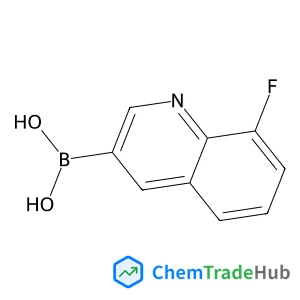
![5-Bromo-3-isopropyl-1H-pyrrolo[2,3-b]pyridine structure](https://cnstatic.chemtradehub.com/structs/125/1256819-54-1-8620.webp "5-Bromo-3-isopropyl-1H-pyrrolo[2,3-b]pyridine structure")
![[1-(5-Methyl-2-pyridinyl)-1H-pyrazol-4-yl]methanol structure](https://cnstatic.chemtradehub.com/structs/143/1439822-99-7-6cc9.webp "[1-(5-Methyl-2-pyridinyl)-1H-pyrazol-4-yl]methanol structure")
推荐供应商



免责声明
本页面提供的学术期刊信息仅供参考和研究使用。我们与任何期刊出版商均无关联,也不处理投稿事宜。如有投稿相关咨询,请直接联系相关期刊出版商。
如发现页面信息有误,请发送邮件至 support@chemtradehub.com 联系我们。我们将及时核实并处理您的问题。