


Heterogeneous lithium diffusion in nanocrystalline Li2O:Al2O3 composites
文献信息
发布日期
2003-05-06
DOI
10.1039/B300908D
影响因子
3.676
作者
Martin Wilkening, Sylvio Indris, Paul Heitjans
查看原文
摘要
Li diffusion in the nanocrystalline composite system (1 − x)Li2O:xAl2O3 was studied by NMR measurements. Heterogeneous, biexponential 7Li NMR relaxation is found and two Li species with different dynamic behaviour can be discriminated via their individual spin–spin and spin–lattice relaxation times. The heterogeneous dynamics of the two Li species which also shows up in the 7Li NMR spectra reflects the heterogeneous structure of the nanocrystalline composites consisting of crystalline grains and a high volume fraction of interfacial regions. The number fraction of fast Li ions located in the interfacial regions increases with temperature and insulator content x. Accordingly biexponential relaxation becomes more pronounced. From the temperature dependence of the two spin–lattice relaxation rates activation energies of about 0.3 eV for both the fast and the slow Li species are obtained, independent of the composition of the composites.
相关文献
Universality in surface mixing rule of adsorption strength for small adsorbates on binary transition metal alloys
Jeonghyun Ko, Hyunguk Kwon, Hyejin Kang, Byung-Kook Kim, Jeong Woo Han
2014-12-04
Paper
DOI: 10.1039/C4CP04770B
Fundamental frequency from classical molecular dynamics
Tomonori Yamada, Misako Aida
2014-12-03
Paper
DOI: 10.1039/C4CP04068F
How is the AIE mechanism profoundly changed in an ESIPT family: the novel introduction of a tetraphenylethene group onto (Z)-3-(quinolin-2-ylmethylene)-3,4-dihydroquinoxalin-2(1H)-one
Ding-Er Wu, Qi-Chao Yao, Min Xia
2014-12-19
Paper
DOI: 10.1039/C4CP03963G
Accurate calibration and control of relative humidity close to 100% by X-raying a DOPC multilayer
Yicong Ma, Sajal K. Ghosh, Sambhunath Bera, Zhang Jiang, Stephanie Tristram-Nagle, Laurence B. Lurio, Sunil K. Sinha
2014-12-15
Paper
DOI: 10.1039/C4CP04407J
Moderate band-gap-broadening induced high separation of electron–hole pairs in Br substituted BiOI: a combined experimental and theoretical investigation
Hongwei Huang, Xiaowei Li, Xu Han, Na Tian, Yihe Zhang, Tierui Zhang
2014-12-15
Paper
DOI: 10.1039/C4CP04842C
The role of oxygen vacancies and their location in the magnetic properties of Ce1−xCuxO2−δ nanorods
M. I. B. Bernardi, A. Mesquita, F. Béron, K. R. Pirota, A. O. de Zevallos, A. C. Doriguetto, H. B. de Carvalho
2014-12-02
Paper
DOI: 10.1039/C4CP04879B
Reporter-encapsulated liposomes on graphene field effect transistors for signal enhanced detection of physiological enzymes
Mark Platt
2014-12-11
Paper
DOI: 10.1039/C4CP04644G
Controlled direct growth of Al2O3-doped HfO2 films on graphene by H2O-based atomic layer deposition
Li Zheng, Xinhong Cheng, Yuehui Yu, Yahong Xie, Xiaolong Li, Zhongjian Wang
2014-12-11
Paper
DOI: 10.1039/C4CP04957H
Structural heterogeneity and dynamics of dyes on TiO2: implications for charge transfer across organic–inorganic interfaces
Jeffrey R. Christianson, J. R. Schmidt
2014-12-18
Paper
DOI: 10.1039/C4CP04814H
Ion association in aqueous and non-aqueous solutions probed by diffusion and electrophoretic NMR
Marianne Giesecke, Fredrik Hallberg, Yuan Fang, Peter Stilbs, István Furó
2014-12-10
Paper
DOI: 10.1039/C4CP04446K
您可能还喜欢
化合物问答
6-氯-2H-1,4-苯并噁嗪-3(4H)-酮(CAS号:7652-29-1)应用于哪些行业?
6-氯-2H-1,4-苯并噁嗪-3(4H)-酮主要应用于医药、农药和聚合物等领域。在医药领域,该化合物可用于合成抗菌药物;在农药领域,可用作杀虫剂的中间体;在聚...
7652-29-16-Chloro-2H-1,4-benz...
化合物问答
活性氧化铝(CAS号:1302-74-5)应用于哪些行业?
活性氧化铝广泛应用于医药、聚合物、传感器、半导体和催化等领域。在医药行业,活性氧化铝用作吸附剂和干燥剂,有助于去除杂质和水分。在聚合物行业,它用作增白剂和抗结块...
1302-74-5aluminum;trihydrate
化合物问答
什么是硅胶(CAS号:112926-00-8)?
硅胶(Silica gel, pptd.,cryst.-free)是一种无定形、多孔的硅酸盐材料,主要成分为二氧化硅(SiO₂)。其结构由硅氧四面体构成,通过酸...
112926-00-8Silica gel, pptd.,cr...
化合物问答
二乙基甲基一氢硅烷(CAS号:760-32-7)的主要用途是什么?
二乙基甲基一氢硅烷主要用于有机合成、表面处理以及作为溶剂。它还被用作合成其他硅烷化合物的原料,以及在涂料、粘合剂和密封剂中的应用。
760-32-7Diethyl(methyl)silan...
化合物问答
在合成中是否有N-花生四烯酰基甘氨酸(CAS号:179113-91-8)的替代品?
在合成过程中,可以考虑使用类似结构的化合物作为替代品,例如N-亚油酰基甘氨酸或N-花生二烯酰基甘氨酸。这些替代品在结构上有类似的双键位置,但可能具有不同的物理化...
179113-91-8Glycine, N-[(5Z,8Z,1...
化合物问答
在合成中是否有1-(4-甲氧基苯基)丙烷-1,2-二酮(CAS号:10557-27-4)的替代品?
在合成过程中,可以考虑使用类似结构的化合物作为替代品,例如1-(3-甲氧基苯基)丙烷-1,2-二酮或1-(4-羟基苯基)丙烷-1,2-二酮。这些替代品具有相似的...
10557-27-41-(4-Methoxyphenyl)p...
化合物问答
N-(4-氨基-1-苄基-3-羟基-5-苯基戊基)-3-甲基-2-(2-氧代四氢嘧啶-1-基)-丁酰胺 5-氧代吡咯烷-2-甲酸(CAS号:192726-06-0)通常如何合成?
该化合物通常通过一系列复杂的有机合成步骤获得。首先,通过芳香族化合物的羟基化反应获得羟基化产物,然后通过酰化反应形成酰胺中间体,最后通过环化反应得到目标产物。常...
192726-06-05-Oxo-L-proline - (2...
化合物问答
(S)-2-氨基-3-喹啉-2-丙酸(CAS号:161513-46-8)的市场或研究趋势如何?
该化合物作为生物活性化合物,尤其是在药物化学领域表现出色。近年来,随着对新型抗炎、抗病毒和抗癌药物的研究增加,其市场和研究趋势持续增长。此外,其在神经科学领域的...
161513-46-8(S)-2-Amino-3-quinol...
化合物问答
核黄素磷酸钠(CAS号:130-40-5)安全吗?
核黄素磷酸钠在常规使用条件下安全,但高剂量可能引起刺激性反应。操作时需佩戴防护手套和护目镜,避免吸入粉尘。若接触皮肤或眼睛,应立即用大量清水冲洗。急救时需根据接...
130-40-5Sodium 1-deoxy-1-(7,...
化合物问答
盐酸丙胺卡因杂质A(EP) 标准品(CAS号:19281-31-3)通常如何合成?
盐酸丙胺卡因杂质A(EP) 标准品可通过重氮化反应和随后的酰胺化反应合成。首先,利用氯化反应将苯环上的氢原子转化为氯原子,然后通过芳香族重氮化反应引入氨基,最后...
19281-31-32-Chloro-N-(2-methyl...
来源期刊
Physical Chemistry Chemical Physics

CiteScore:
5.5
自引率:
10.3%
年发文量:
3036
Physical Chemistry Chemical Physics (PCCP) is an international journal co-owned by 19 physical chemistry and physics societies from around the world. This journal publishes original, cutting-edge research in physical chemistry, chemical physics and biophysical chemistry. To be suitable for publication in PCCP, articles must include significant innovation and/or insight into physical chemistry; this is the most important criterion that reviewers and Editors will judge against when evaluating submissions. The journal has a broad scope and welcomes contributions spanning experiment, theory, computation and data science. Topical coverage includes spectroscopy, dynamics, kinetics, statistical mechanics, thermodynamics, electrochemistry, catalysis, surface science, quantum mechanics, quantum computing and machine learning. Interdisciplinary research areas such as polymers and soft matter, materials, nanoscience, energy, surfaces/interfaces, and biophysical chemistry are welcomed if they demonstrate significant innovation and/or insight into physical chemistry. Joined experimental/theoretical studies are particularly appreciated when complementary and based on up-to-date approaches.
推荐化合物
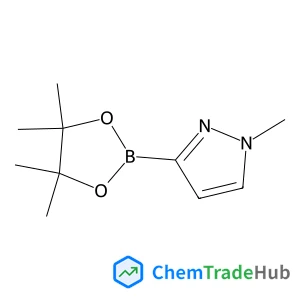
1-Methyl-3-(4,4,5,5-tetramethyl-1,3,2-dioxaborolan-2-yl)-1H-pyrazole
CAS号:
1020174-04-2
分子式:
C10H17BN2O2
![1-Naphthalenesulfonic acid, 2-[(2-hydroxy-1-naphthalenyl)azo]-, bariumsalt (2:1) structure](https://cnstatic.chemtradehub.com/structs/110/1103-38-4-0b33.webp "1-Naphthalenesulfonic acid, 2-[(2-hydroxy-1-naphthalenyl)azo]-, bariumsalt (2:1) structure")
1-Naphthalenesulfonic acid, 2-[(2-hydroxy-1-naphthalenyl)azo]-, bariumsalt (2:1)
CAS号:
1103-38-4
分子式:
C20H14BaN2O4S
推荐供应商






免责声明
本页面提供的学术期刊信息仅供参考和研究使用。我们与任何期刊出版商均无关联,也不处理投稿事宜。如有投稿相关咨询,请直接联系相关期刊出版商。
如发现页面信息有误,请发送邮件至 support@chemtradehub.com 联系我们。我们将及时核实并处理您的问题。