


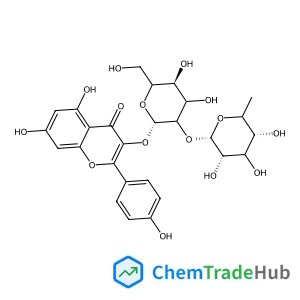
Highlights
文献信息
发布日期
2003-06-03
DOI
10.1039/B305230N
影响因子
10.182
作者
查看原文
摘要
The first page of this article is displayed as the abstract.
期刊推荐

European Journal of Wood and Wood Products

Organic Preparations and Procedures International
Journal of Physics and Chemistry of Solids
Pure and Applied Chemistry

Nature
Journal of Medicinal Chemistry
Science Progress
Proceedings of the National Academy of Sciences of the United States of America

Kinetics and Catalysis
Pharmacological Reviews
相关文献
Book review: Noncontact atomic force microscopy (nanoscience and technology)
2004-04-21
Book Review
DOI: 10.1039/B405513F
您可能还喜欢
化合物问答
2-Bromo-4-chloro-1-(difluoromethyl)benzene(CAS号:1261476-50-9)的市场或研究趋势如何?
随着环保要求的提高和安全意识的增强,该化合物的研究和应用趋势正逐渐转向更安全、更环境友好的替代品。市场关注点主要集中在开发新型合成方法和绿色化学路径,以减少有害...
1261476-50-92-Bromo-4-chloro-1-(...
化合物问答
如何处理含有2,9 - 二苯基-1,10 - 菲罗啉(CAS号:25677-69-4)的废料?
处理含有2,9 - 二苯基 - 1,10 - 菲罗啉的废料时,应先将其收集在适当的容器中,避免与其他化学品混合。随后,可以通过水解或氧化等方法进行处理,直至达到...
25677-69-42,9-Diphenyl-1,10-ph...
化合物问答
处理(6-氯-吡嗪-3-基)-(4-乙基-哌嗪-1-基)-甲酮(CAS号:1178836-15-1)时应注意哪些实验室安全事项?
处理(6-氯-吡嗪-3-基)-(4-乙基-哌嗪-1-基)-甲酮时,应穿戴适当的个人防护装备(PPE),包括手套、护目镜和实验室外套。在通风橱中操作以确保良好的通...
1178836-15-1(6-Chloro-3-pyridazi...
化合物问答
处理(R)-2-氯-1-(2,4-二氯苯基)乙醇(CAS号:114446-57-0)时应注意哪些实验室安全事项?
在处理(R)-2-氯-1-(2,4-二氯苯基)乙醇时,应佩戴防护眼镜、实验室外套和手套,确保通风橱开启以减少接触和吸入的风险。避免直接接触皮肤和眼睛。处理过程中...
114446-57-0(1R)-2-Chloro-1-(2,4...
化合物问答
在合成中是否有3-氯-6-(3-氯哌啶-1-基)吡嗪(CAS号:1185310-37-5)的替代品?
可考虑使用类似结构的化合物作为替代品,如3-氯-6-(哌啶-1-基)吡嗪或3-氯-6-(2-氯哌啶-1-基)吡嗪,这些化合物在结构上与目标化合物相似,可能具有相...
1185310-37-53-Chloro-6-(3-chloro...
化合物问答
苯并三氮唑-5-甲酸乙酯(CAS号:73605-91-1)通常如何合成?
该化合物可以通过乙酸乙酯与5-溴-1H-苯并三氮唑的反应合成,通常在无水条件下进行。合成过程中,需要使用适当的溶剂如乙酸乙酯,并在适当的温度下反应。该反应具有较...
73605-91-1Ethyl 1H-benzotriazo...
化合物问答
什么是一水硫酸镁(CAS号:14168-73-1)?
一水硫酸镁是一种无机化合物,化学式为MgSO₄·H₂O,CAS号为14168-73-1。它由镁离子、硫酸根离子和一个结晶水分子组成,通常呈现为白色粉末或颗粒状固...
14168-73-1Magnesium sulfate hy...
化合物问答
氘代-1,3-二氯-2-丙醇(CAS号:1173020-20-6)应用于哪些行业?
氘代-1,3-二氯-2-丙醇主要应用于医药和有机合成领域,作为研究化合物的氘代替代品,用于标记和追踪反应过程。此外,在聚合物和半导体生产中也有一定的应用潜力。
1173020-20-61,3-Dichloro-2-(~2~H...
化合物问答
如何储存氰乙酸环己酯(CAS号:52688-11-6)?
氰乙酸环己酯应储存在阴凉、干燥、通风良好的环境中,远离火源和热源,防止阳光直射。储存容器应密封良好,避免与空气接触,防止发生不必要的反应。
52688-11-6Cyclohexyl cyanoacet...
化合物问答
2-碘-4-硝基苯胺(CAS号:6293-83-0)的市场或研究趋势如何?
目前,2-碘-4-硝基苯胺在医药和农药领域有一定的研究和应用,尤其是在开发新型药物和农药产品方面。然而,由于其潜在的环境和健康风险,行业正趋向于寻找更为安全和环...
6293-83-02-iodo-4-nitroanilin...
来源期刊
Green Chemistry
CiteScore:
16.1
自引率:
7.5%
年发文量:
944
Green Chemistry provides a unique forum for the publication of innovative research on the development of alternative green and sustainable technologies. The scope of Green Chemistry is based on, but not limited to, the definition proposed by Anastas and Warner (Green Chemistry: Theory and Practice, P T Anastas and J C Warner, Oxford University Press, Oxford, 1998). Green chemistry is the utilisation of a set of principles that reduces or eliminates the use or generation of hazardous substances in the design, manufacture and application of chemical products. Green Chemistry is at the frontiers of this continuously-evolving interdisciplinary science and publishes research that attempts to reduce the environmental impact of the chemical enterprise by developing a technology base that is inherently non-toxic to living things and the environment. Submissions on all aspects of research relating to the endeavour are welcome. The journal publishes original and significant cutting-edge research that is likely to be of wide general appeal. To be published, work must present a significant advance in green chemistry. Papers must contain a comparison with existing methods and demonstrate advantages over those methods before publication can be considered. For more information please see this Editorial. Coverage includes the following, but is not limited to: Design (e.g. biomimicry, design for degradation/recycling/reduced toxicity…) Reagents & Feedstocks (e.g. renewables, CO2, solvents, auxiliary agents, waste utilization…) Synthesis (e.g. organic, inorganic, synthetic biology…) Catalysis (e.g. homogeneous, heterogeneous, enzyme, whole cell…) Process (e.g. process design, intensification, separations, recycling, efficiency…) Energy (e.g. renewable energy, fuels, photovoltaics, fuel cells, energy storage, energy carriers…) Applications (e.g. electronics, dyes, consumer products, coatings, pharmaceuticals, preservatives, building materials, chemicals for industry/agriculture/mining…) Impact (e.g. safety, metrics, LCA, sustainability, (eco)toxicology…) Green chemistry is, by definition, a continuously-evolving frontier. Therefore, the inclusion of a particular material or technology does not, of itself, guarantee that a paper is suitable for the journal. To be suitable, the novel advance should have the potential for reduced environmental impact relative to the state of the art. Green Chemistry does not normally deal with research associated with 'end-of-pipe' or remediation issues.
推荐化合物
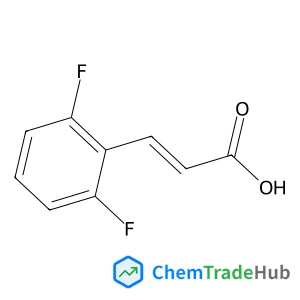
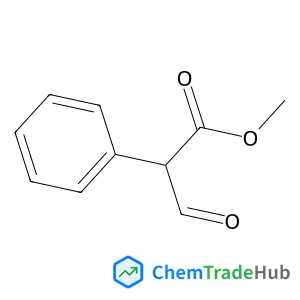
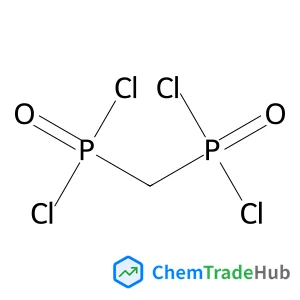
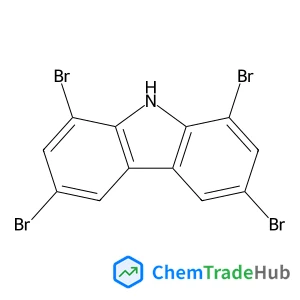
推荐供应商


免责声明
本页面提供的学术期刊信息仅供参考和研究使用。我们与任何期刊出版商均无关联,也不处理投稿事宜。如有投稿相关咨询,请直接联系相关期刊出版商。
如发现页面信息有误,请发送邮件至 support@chemtradehub.com 联系我们。我们将及时核实并处理您的问题。