









![[4-Chloro-3-(diethylcarbamoyl)phenyl]boronic acid structure](https://cnstatic.chemtradehub.com/structs/871/871332-68-2-0e3b.webp "[4-Chloro-3-(diethylcarbamoyl)phenyl]boronic acid structure")
Emulsifying properties of neutral and ionic polymersurfactants based on dextran
文献信息
发布日期
2004-01-20
DOI
10.1039/B314454M
影响因子
3.676
作者
E. Rotureau, M. Leonard, E. Dellacherie, A. Durand
查看原文
摘要
The emulsifying properties of neutral and anionic polymer surfactants derived from dextran (a neutral polysaccharide) are described. The kinetics of interfacial tension lowering by the amphiphilic polymers is first characterized by the use of semi-empirical equations. These equations allow the determination of the equilibrium value of surface tension by extrapolation to infinite time. Oil-in-water emulsions are prepared by sonication in the presence of the polymers previously dissolved in the aqueous phase. The average droplet size of the emulsions is determined immediately after preparation and followed during several weeks. Ageing of the emulsions is shown to result from molecular diffusion in accordance with previous work. The increase of droplet size with time is correctly depicted by the theoretical equation derived by Lifshitz, Slyozov and Wagner (LSW). It seems that creaming has no real effect on emulsion ageing up to 1 μm. The influence of oil nature is clearly related to the physical properties of the oil (solubility in water, diffusion coefficient, interfacial tension), a typical consequence of molecular diffusion. An increase in the amount of hydrophobic groups fixed on the polymer leads to slower ageing. An increase in the anionic group content of the polymer has the reverse effect. Ionic strength has a significant effect on ageing of emulsions stabilized by dextran derivatives bearing ionic groups. Increasing ionic strength in the continuous phase gives rise to slower emulsion ageing. An attempt is made to rationalise all these facts by relating emulsion ageing to the data of interfacial tension measurements. The results follow approximately the tendency predicted by the LSW equation.
相关文献
Concerted orientation induced unidirectional water transport through nanochannels
Rongzheng Wan, Jingdong Bao, Jun Hu, Haiping Fang
2009-08-26
Paper
DOI: 10.1039/B907926M
Bis(terpyridine)-based surface template structures on graphite: a force field and DFT study
Daniela Künzel, Thomas Markert, Axel Groß, David M. Benoit
2009-08-04
Paper
DOI: 10.1039/B907443K
Detection of complex formation and determination of intermolecular geometry through electrical anharmonic coupling of molecular vibrations using electron-vibration–vibration two-dimensional infrared spectroscopy
Rui Guo, Elizabeth M. Gardner, Ian R. Gould
2009-07-22
Communication
DOI: 10.1039/B910804A
Energetic and electron density analysis of hydrogen dissociation of protonated benzene
Marco García-Revilla, Jesús Hernández-Trujillo
2009-07-21
Paper
DOI: 10.1039/B906961E
Cooperativity in noncovalent interactions of biologically relevant molecules
Jens Antony, Björn Brüske, Stefan Grimme
2009-07-27
Paper
DOI: 10.1039/B907260H
Protein–DNA binding specificity: a grid-enabled computational approach applied to single and multiple proteinassemblies
Krystyna Zakrzewska, Benjamin Bouvier, Alexis Michon, Christophe Blanchet, Richard Lavery
2009-10-07
Paper
DOI: 10.1039/B910888M
Resolutions of the Coulomb operator Part III. Reduced-rank Schrödinger equations‡
Taweetham Limpanuparb, Peter M. W. Gill
2009-08-14
Paper
DOI: 10.1039/B910613H
Thermodynamic and FTIR studies of supercooled water confined to exterior and interior of mesoporous MCM-41
Shigeharu Kittaka, Kalyan Sou, Toshio Yamaguchi, Ken-ichi Tozaki
2009-07-10
Paper
DOI: 10.1039/B905258E
您可能还喜欢
化合物问答
(3-氨苯基)环丙基甲酮(CAS号:162174-75-6)的主要用途是什么?
(3-氨苯基)环丙基甲酮主要用于合成化学中间体,特别是在药物化学领域作为原料。它还可以用于有机合成反应中,作为催化剂或反应物。
162174-75-6(3-Aminophenyl)(cycl...
化合物问答
如何储存亚胺菌(CAS号:136470-79-6)?
亚胺菌应储存在干燥、阴凉处,避免直接暴露于光线下。建议使用密封容器储存,防止吸潮和污染。具体的储存条件应参考产品的安全数据表(MSDS)或药品说明书。
136470-79-6Abacavir EP Impurity...
化合物问答
2-氯-2,2-二氟乙酰胺(CAS号:354-28-9)应用于哪些行业?
2-氯-2,2-二氟乙酰胺在医药、聚合物、传感器、半导体等领域有广泛应用。在医药领域,它作为中间体用于合成其他药物;在聚合物领域,用作聚合引发剂或稳定剂;在传感...
354-28-92-Chloro-2,2-difluor...
化合物问答
处理4-甲基-3-硝基-1,1-联苯(CAS号:53812-68-3)时应注意哪些实验室安全事项?
在处理4-甲基-3-硝基-1,1-联苯时,应佩戴手套、护目镜和实验室外套等个人防护装备(PPE),确保在通风橱中操作以减少吸入风险。若发生泄露,应立即使用沙子或...
53812-68-34'-Methyl-3-nitro-1,...
化合物问答
(2S)-羟基(苯基)乙酸 (2R)-N-苄基-1-(4-甲氧基苯基)丙-2-胺盐(CAS号:188690-84-8)应用于哪些行业?
该化合物广泛应用于医药、聚合物和半导体行业。在医药领域,它是某些药物中间体的重要组成部分;在聚合物领域,可用作增塑剂;在半导体行业,可用于制造光刻胶。
188690-84-8Benzeneacetic acid, ...
化合物问答
在合成中是否有芬苯哒唑砜-D3标准品(CAS号:1228182-49-7)的替代品?
芬苯哒唑砜-D3标准品的替代品可能包括类似的苯并咪唑类化合物,如芬苯哒唑本身或其非同位素标记版本。这些替代品在结构上与芬苯哒唑砜-D3相似,但在具体应用中需进行...
1228182-49-7(~2~H_3_)Methyl [5-(...
化合物问答
2-氟-4-硝基苯乙酸(CAS号:315228-19-4)通常如何合成?
2-氟-4-硝基苯乙酸可以通过一系列化学反应合成,通常是从4-氟苯胺开始,首先进行硝化反应生成4-氟-2-硝基苯胺,然后进行乙酰化反应得到目标产物。具体的合成步...
315228-19-42-(2-fluoro-4-nitrop...
化合物问答
2-氟-4-甲氧基苯乙酸(CAS号:883531-28-0)通常如何合成?
2-氟-4-甲氧基苯乙酸通常通过将4-甲氧基苯乙酸与氟化试剂(如氟化氰)反应来合成。反应通常在无水条件下进行,使用催化剂如六氟磷酸锂或四氟硼酸锂以提高选择性和产...
883531-28-02-Fluoro-4-methoxyph...
化合物问答
什么是4SC 202;4SC202(CAS号:1186222-89-8)?
4SC 202;4SC202是一种化学化合物,其化学名称为(2E)-N-(2-氨基苯基)-3-(1-{[4-(1-甲基-1H-吡唑-4-基)苯基]磺酰基}-1H...
1186222-89-8(2E)-N-(2-Aminopheny...
132980-99-53,5-Difluorobenzamid...
来源期刊
Physical Chemistry Chemical Physics

CiteScore:
5.5
自引率:
10.3%
年发文量:
3036
Physical Chemistry Chemical Physics (PCCP) is an international journal co-owned by 19 physical chemistry and physics societies from around the world. This journal publishes original, cutting-edge research in physical chemistry, chemical physics and biophysical chemistry. To be suitable for publication in PCCP, articles must include significant innovation and/or insight into physical chemistry; this is the most important criterion that reviewers and Editors will judge against when evaluating submissions. The journal has a broad scope and welcomes contributions spanning experiment, theory, computation and data science. Topical coverage includes spectroscopy, dynamics, kinetics, statistical mechanics, thermodynamics, electrochemistry, catalysis, surface science, quantum mechanics, quantum computing and machine learning. Interdisciplinary research areas such as polymers and soft matter, materials, nanoscience, energy, surfaces/interfaces, and biophysical chemistry are welcomed if they demonstrate significant innovation and/or insight into physical chemistry. Joined experimental/theoretical studies are particularly appreciated when complementary and based on up-to-date approaches.
推荐化合物
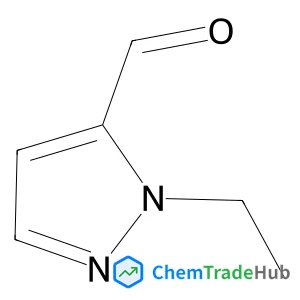
![Benzyl spiro[indole-3,4'-piperidine]-1(2H)-carboxylate hydrochloride (1:1) structure](https://cnstatic.chemtradehub.com/structs/159/159635-46-8-8de0.webp "Benzyl spiro[indole-3,4'-piperidine]-1(2H)-carboxylate hydrochloride (1:1) structure")
Benzyl spiro[indole-3,4'-piperidine]-1(2H)-carboxylate hydrochloride (1:1)
CAS号:
159635-46-8
分子式:
C20H23ClN2O2
推荐供应商



免责声明
本页面提供的学术期刊信息仅供参考和研究使用。我们与任何期刊出版商均无关联,也不处理投稿事宜。如有投稿相关咨询,请直接联系相关期刊出版商。
如发现页面信息有误,请发送邮件至 support@chemtradehub.com 联系我们。我们将及时核实并处理您的问题。