


![Methyl 4-({[(2-methyl-2-propanyl)oxy]carbonyl}amino)bicyclo[2.2.2]octane-1-carboxylate structure](https://cnstatic.chemtradehub.com/structs/943/943845-74-7-b7e5.webp "Methyl 4-({[(2-methyl-2-propanyl)oxy]carbonyl}amino)bicyclo[2.2.2]octane-1-carboxylate structure")
Rate coefficients and production of vibrationally excited HCl from the reactions of chlorine atoms with methanol, ethanol, acetaldehyde and formaldehyde
文献信息
发布日期
2004-03-26
DOI
10.1039/B402167C
影响因子
3.676
作者
Paul W. Seakins, John J. Orlando, Geoffrey S. Tyndall
查看原文
摘要
Room temperature rate coefficients have been determined for the reactions of Cl (2P3/2) atoms with methanol, ethanol, formaldehyde and acetaldehyde. Cl atoms were produced by laser flash photolysis of molecular chlorine, in the presence of oxygen to prevent chain chemistry. IR emission from vibrationally excited HCl was observed for all reagents. For the reactions with methanol and acetaldehyde the kinetics have been determined by both IR diode laser absorption spectroscopy (kCl+CH3OH = (5.83 ± 0.77) × 10−11 cm3 molecule−1 s−1kCl+CH3CHO = (7.7 ± 1.1) × 10−11 cm3 molecule−1 s−1) and IR chemiluminescence (kCl+CH3OH = (5.38 ± 0.25) × 10−11 cm3 molecule−1 s−1, kCl+CH3CHO = (8.8 ± 1.5) × 10−11 cm3 molecule−1 s−1. For ethanol and formaldehyde IR chemiluminescence measurements gave kCl+HCHO = (6.98 ± 0.69) × 10−11 cm3 molecule−1 s−1 and kCl+C2H5OH = (1.02 ± 0.19) × 10−10 cm3 molecule−1 s−1. The fraction of vibrationally excited HCl was determined relative to that of acetaldehyde and when put on an absolute scale the values for methanol, ethanol and formaldehyde were: 0.25 ± 0.04, 0.21 ± 0.03 and 0.91 ± 0.14 respectively.
期刊推荐
Molecular Pharmacology

Pharmacological Reviews
Journal of Catalysis

Nature

Organic Preparations and Procedures International

Proceedings of the National Academy of Sciences of the United States of America

Science Progress
Russian Chemical Reviews

European Journal of Wood and Wood Products

Journal of Physics and Chemistry of Solids
相关文献
[MLn]2+ doubly charged systems: modeling, bonding, life times and unimolecular reactivity
2011-07-18
Perspective
DOI: 10.1039/C1CP20622B
Multiscale quantum mechanics/electromagnetics simulation for electronic devices
ChiYung Yam, Lingyi Meng, GuanHua Chen, Quan Chen, Ngai Wong
2011-06-10
Paper
DOI: 10.1039/C1CP20766K
Nonequilibrium transport in quantum impurity models: exact path integral simulations
Dvira Segal, Andrew J. Millis, David R. Reichman
2011-06-15
Paper
DOI: 10.1039/C1CP20702D
QM/MM calculation of protein magnetic shielding tensors with generalized hybrid-orbital method: A GIAO approach
Yoshinobu Akinaga, Jaewoon Jung, Seiichiro Ten-no
2011-07-15
Paper
DOI: 10.1039/C1CP21001G
Oxygen-containing gas-phase diatomic trications and tetracations: ReOz+, NbOz+ and HfOz+ (z = 3, 4)
V. Brites, K. Franzreb, J. N. Harvey, S. G. Sayres, M. W. Ross, D. E. Blumling, A. W. Castleman, Jr., M. Hochlaf
2011-07-15
Paper
DOI: 10.1039/C1CP21566C
Confined crystallization of binary n-alkane mixtures: stabilization of a new rotator phase by enhanced surface freezing and weakened intermolecular interactions
Dongsheng Fu, Yufeng Liu, Guoming Liu, Yunlan Su, Dujin Wang
2011-07-26
Paper
DOI: 10.1039/C1CP21281H
Molecules for organic electronics studied one by one
Jörg Meyer, Anja Wadewitz, Lokamani, Cormac Toher, Roland Gresser, Karl Leo, Moritz Riede, Francesca Moresco
2011-07-28
Paper
DOI: 10.1039/C1CP20999J
Assessment of an effective quasirelativistic methodology designed to study astatine chemistry in aqueous solution
Andrea Sabatié-Gogova, Eric Renault, Gilles Montavon, Nicolas Galland
2011-07-18
Paper
DOI: 10.1039/C1CP20512A
Towards understanding the effects of carbon and nitrogen-doped carbon coating on the electrochemical performance of Li4Ti5O12 in lithium ion batteries: a combined experimental and theoretical study
Zijing Ding, Liang Zhao, Liumin Suo, Yang Jiao, Sheng Meng, Yong-Sheng Hu, Zhaoxiang Wang, Liquan Chen
2011-07-26
Paper
DOI: 10.1039/C1CP21513B
Questioning the photophysical model for the indolechromophore in the light of evidence obtained by controlling the non-specific effect of the medium with 1-chlorobutane as solvent
Juan Pablo Catalán
2011-07-14
Paper
DOI: 10.1039/C1CP21380F
您可能还喜欢
化合物问答
3 - (二氟甲基)-1 -氟苯(CAS号:26029-52-7)适用哪些法规指南?
3 - (二氟甲基)-1 -氟苯需遵循联合国全球化学品统一分类和标签制度(GHS),包括急性毒性、皮肤腐蚀/刺激、严重眼损伤/眼刺激等分类。同时,该化合物还需符...
26029-52-71-(Difluoromethyl)-3...
化合物问答
3,5-二甲基苯胺(CAS号:108-69-0)通常如何合成?
3,5-二甲基苯胺通常通过乙苯的氨解反应合成。反应中使用硫酸作为催化剂,反应温度为120-130°C。乙苯在硫酸存在下与氨反应,生成3,5-二甲基苯胺和苯胺副产...
108-69-03,5-Dimethylaniline
化合物问答
3-甲基异噻唑-5-胺(CAS号:24340-76-9)安全吗?
3-甲基异噻唑-5-胺在适当使用和储存条件下是相对安全的,但在操作时应注意防护措施。应避免吸入粉尘,避免与皮肤和眼睛直接接触。在操作过程中,应穿戴适当的防护装备...
24340-76-93-Methyl-1,2-thiazol...
化合物问答
3-(1,3-Thiazol-2-yl)-1H-indole(CAS号:135531-86-1)通常如何合成?
3-(1,3-噻唑-2-基)-1H-吲哚通常通过多步合成方法制备。首先,由噻唑-2-基溴化物和吲哚进行偶联反应,得到中间体。然后,通过还原反应将中间体转化为所需...
135531-86-13-(1,3-Thiazol-2-yl)...
化合物问答
4-溴-2-氟苯甲基氯(CAS号:85510-82-3)的主要用途是什么?
4-溴-2-氟苯甲基氯主要用于有机合成中间体,特别是在医药、农药和染料等领域。作为一种具有特定结构的化合物,它在合成复杂有机分子时扮演重要角色。
85510-82-34-Bromo-1-(chloromet...
化合物问答
处理Fmoc-β-(3-噻吩基)-D-Ala-OH(CAS号:220497-90-5)时应注意哪些实验室安全事项?
处理Fmoc-β-(3-噻吩基)-D-Ala-OH时,应佩戴防护手套、护目镜和实验服。操作应在通风橱内进行。如发生泄露,应立即用大量水冲洗,并通知实验室管理人员...
220497-90-5N-[(9H-Fluoren-9-ylm...
化合物问答
氮化硅(CAS号:12033-89-5)通常如何合成?
氮化硅通常通过氮化硅的直接反应合成,即在高温下将四氯化硅与氨气反应。具体步骤是将四氯化硅和氨气混合并加热至1300-1700℃,在该条件下,四氯化硅与氨气反应生...
12033-89-5Trisilicon tetranitr...
化合物问答
Cetirizine EP Impurity B DiHCl(CAS号:1000690-91-4)通常如何合成?
Cetirizine EP Impurity B DiHCl通常通过一锅法合成,首先将4-氯苯基-苯甲基氯甲酸酯与1-哌嗪乙酸反应,生成相应的酸,然后与盐酸反应...
1000690-91-4{4-[(4-Chlorophenyl)...
化合物问答
如何储存1-哌啶-4-基丁-1-酮(CAS号:3509-15-7)?
1-哌啶-4-基丁-1-酮应储存在阴凉、干燥的地方,避免阳光直射。存储容器应密封,并确保通风良好。建议储存温度不超过25℃,湿度保持在相对较低的水平。
3509-15-71-Piperidin-4-ylbuta...
化合物问答
如何处理含有VORUCICLIB(CAS号:1000023-04-0)的废料?
含有VORUCICLIB的废料应进行专业的收集和处理,包括使用适当的容器进行隔离,避免与其他化学品接触。处理方法通常包括化学中和、沉淀反应或吸附过程,随后进行焚...
1000023-04-02-[2-Chloro-4-(trifl...
来源期刊
Physical Chemistry Chemical Physics

CiteScore:
5.5
自引率:
10.3%
年发文量:
3036
Physical Chemistry Chemical Physics (PCCP) is an international journal co-owned by 19 physical chemistry and physics societies from around the world. This journal publishes original, cutting-edge research in physical chemistry, chemical physics and biophysical chemistry. To be suitable for publication in PCCP, articles must include significant innovation and/or insight into physical chemistry; this is the most important criterion that reviewers and Editors will judge against when evaluating submissions. The journal has a broad scope and welcomes contributions spanning experiment, theory, computation and data science. Topical coverage includes spectroscopy, dynamics, kinetics, statistical mechanics, thermodynamics, electrochemistry, catalysis, surface science, quantum mechanics, quantum computing and machine learning. Interdisciplinary research areas such as polymers and soft matter, materials, nanoscience, energy, surfaces/interfaces, and biophysical chemistry are welcomed if they demonstrate significant innovation and/or insight into physical chemistry. Joined experimental/theoretical studies are particularly appreciated when complementary and based on up-to-date approaches.
推荐化合物
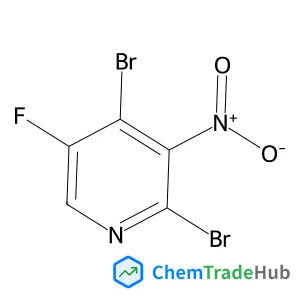
![tert-Butyl N-[(2-chloropyridin-4-yl)methyl]carbamate structure](https://cnstatic.chemtradehub.com/structs/916/916210-27-0-9f95.webp "tert-Butyl N-[(2-chloropyridin-4-yl)methyl]carbamate structure")
推荐供应商





免责声明
本页面提供的学术期刊信息仅供参考和研究使用。我们与任何期刊出版商均无关联,也不处理投稿事宜。如有投稿相关咨询,请直接联系相关期刊出版商。
如发现页面信息有误,请发送邮件至 support@chemtradehub.com 联系我们。我们将及时核实并处理您的问题。