






![4-{2-[4-(2-Methyl-2-propanyl)phenyl]ethoxy}quinazoline structure](https://cnstatic.chemtradehub.com/structs/120/120928-09-8-d3db.webp "4-{2-[4-(2-Methyl-2-propanyl)phenyl]ethoxy}quinazoline structure")
Synthesis, processing and properties of conjugated polymer networks
文献信息
发布日期
2005-10-12
DOI
10.1039/B509316C
影响因子
6.222
作者
Christoph Weder
查看原文
摘要
Despite the diverse research activities focused on the chemistry, materials science and physics of conjugated polymers, the feature of conjugated cross-links, which can provide electronic communication between chains, has received little attention. This situation may be a direct consequence of the challenge to introduce such links while retaining adequate processability. Focusing on recent studies of materials for which charge transport or electrical conductivity data are available, this feature article attempts to present an overview of the synthesis, processing and electronic properties of conjugated polymer networks. For the purpose of this discussion, two distinctly separate architectures—featuring covalent cross-links on the one hand and non-covalent organometallic bridges on the other—are treated in separate sections. The available data indicate that cross-linking can have significant benefits for intermolecular charge transfer if the polymers are carefully designed.
相关文献
Interaction and charge transfer between isolated thylakoids and multi-walled carbon nanotubes
Herlina Arianita Dewi, Lianxi Zheng, Sierin Lim
2014-12-22
Paper
DOI: 10.1039/C4CP04575K
Pressure-induced phase transition of BiOF: novel two-dimensional layered structures
Dawei Zhou, Chunying Pu, Chaozheng He, Cheng Lu, Gang Bao
2015-01-06
Paper
DOI: 10.1039/C4CP05142D
Electrochemical oxidation stability of anions for modern battery electrolytes: a CBS and DFT study
Erlendur Jónsson, Patrik Johansson
2015-01-05
Paper
DOI: 10.1039/C4CP04592K
Abstraction and addition kinetics of C2H radicals with CH4, C2H6, C3H8, C2H4, and C3H6: CVT/SCT/ISPE and hybrid meta-DFT methods
Manas Ranjan Dash, B. Rajakumar
2014-12-09
Paper
DOI: 10.1039/C4CP04677C
Galvanic deposition of Rh and Ru on randomly structured Ti felts for the electrochemical NH3 synthesis
Kurt Kugler, Mareike Luhn, Jean André Schramm, Khosrow Rahimi
2014-12-16
Paper
DOI: 10.1039/C4CP05501B
Nonidentical intracellular drug release rates in Raman and fluorescence spectroscopic determination
Erdene-Ochir Ganbold, Jinha Yoon, Doseok Kim, Sang-Woo Joo
2014-11-24
Paper
DOI: 10.1039/C4CP04235B
Quantification of protein–materials interaction by soft colloidal probe spectroscopy
Steve Martin, Hanqing Wang, Laura Hartmann, Tilo Pompe, Stephan Schmidt
2014-12-23
Communication
DOI: 10.1039/C4CP05484A
Fundamental frequency from classical molecular dynamics
Tomonori Yamada, Misako Aida
2014-12-03
Paper
DOI: 10.1039/C4CP04068F
Probing a chemical compass: novel variants of low-frequency reaction yield detected magnetic resonance
Kiminori Maeda, Jonathan G. Storey, Paul A. Liddell, Devens Gust, P. J. Hore, C. J. Wedge, Christiane R. Timmel
2014-12-24
Paper
DOI: 10.1039/C4CP04095C
您可能还喜欢
化合物问答
6-氯-2H-1,4-苯并噁嗪-3(4H)-酮(CAS号:7652-29-1)应用于哪些行业?
6-氯-2H-1,4-苯并噁嗪-3(4H)-酮主要应用于医药、农药和聚合物等领域。在医药领域,该化合物可用于合成抗菌药物;在农药领域,可用作杀虫剂的中间体;在聚...
7652-29-16-Chloro-2H-1,4-benz...
化合物问答
活性氧化铝(CAS号:1302-74-5)应用于哪些行业?
活性氧化铝广泛应用于医药、聚合物、传感器、半导体和催化等领域。在医药行业,活性氧化铝用作吸附剂和干燥剂,有助于去除杂质和水分。在聚合物行业,它用作增白剂和抗结块...
1302-74-5aluminum;trihydrate
化合物问答
什么是硅胶(CAS号:112926-00-8)?
硅胶(Silica gel, pptd.,cryst.-free)是一种无定形、多孔的硅酸盐材料,主要成分为二氧化硅(SiO₂)。其结构由硅氧四面体构成,通过酸...
112926-00-8Silica gel, pptd.,cr...
化合物问答
二乙基甲基一氢硅烷(CAS号:760-32-7)的主要用途是什么?
二乙基甲基一氢硅烷主要用于有机合成、表面处理以及作为溶剂。它还被用作合成其他硅烷化合物的原料,以及在涂料、粘合剂和密封剂中的应用。
760-32-7Diethyl(methyl)silan...
化合物问答
在合成中是否有N-花生四烯酰基甘氨酸(CAS号:179113-91-8)的替代品?
在合成过程中,可以考虑使用类似结构的化合物作为替代品,例如N-亚油酰基甘氨酸或N-花生二烯酰基甘氨酸。这些替代品在结构上有类似的双键位置,但可能具有不同的物理化...
179113-91-8Glycine, N-[(5Z,8Z,1...
化合物问答
在合成中是否有1-(4-甲氧基苯基)丙烷-1,2-二酮(CAS号:10557-27-4)的替代品?
在合成过程中,可以考虑使用类似结构的化合物作为替代品,例如1-(3-甲氧基苯基)丙烷-1,2-二酮或1-(4-羟基苯基)丙烷-1,2-二酮。这些替代品具有相似的...
10557-27-41-(4-Methoxyphenyl)p...
化合物问答
N-(4-氨基-1-苄基-3-羟基-5-苯基戊基)-3-甲基-2-(2-氧代四氢嘧啶-1-基)-丁酰胺 5-氧代吡咯烷-2-甲酸(CAS号:192726-06-0)通常如何合成?
该化合物通常通过一系列复杂的有机合成步骤获得。首先,通过芳香族化合物的羟基化反应获得羟基化产物,然后通过酰化反应形成酰胺中间体,最后通过环化反应得到目标产物。常...
192726-06-05-Oxo-L-proline - (2...
化合物问答
(S)-2-氨基-3-喹啉-2-丙酸(CAS号:161513-46-8)的市场或研究趋势如何?
该化合物作为生物活性化合物,尤其是在药物化学领域表现出色。近年来,随着对新型抗炎、抗病毒和抗癌药物的研究增加,其市场和研究趋势持续增长。此外,其在神经科学领域的...
161513-46-8(S)-2-Amino-3-quinol...
化合物问答
核黄素磷酸钠(CAS号:130-40-5)安全吗?
核黄素磷酸钠在常规使用条件下安全,但高剂量可能引起刺激性反应。操作时需佩戴防护手套和护目镜,避免吸入粉尘。若接触皮肤或眼睛,应立即用大量清水冲洗。急救时需根据接...
130-40-5Sodium 1-deoxy-1-(7,...
化合物问答
盐酸丙胺卡因杂质A(EP) 标准品(CAS号:19281-31-3)通常如何合成?
盐酸丙胺卡因杂质A(EP) 标准品可通过重氮化反应和随后的酰胺化反应合成。首先,利用氯化反应将苯环上的氢原子转化为氯原子,然后通过芳香族重氮化反应引入氨基,最后...
19281-31-32-Chloro-N-(2-methyl...
来源期刊
Chemical Communications
CiteScore:
8.6
自引率:
4.7%
年发文量:
2458
ChemComm publishes urgent research which is of outstanding significance and interest to experts in the field, while also appealing to the journal’s broad chemistry readership. Our communication format is ideally suited to short, urgent studies that are of such importance that they require accelerated publication. Our scope covers all topics in chemistry, and research at the interface of chemistry and other disciplines (such as materials science, nanoscience, physics, engineering and biology) where there is a significant novelty in the chemistry aspects. Major topic areas covered include: Analytical Chemistry Catalysis Chemical Biology and medicinal chemistry Computational Chemistry and Machine Learning Energy and sustainable chemistry Environmental Chemistry Green Chemistry Inorganic Chemistry Materials Chemistry Nanoscience Organic Chemistry Physical Chemistry Polymer Chemistry Supramolecular Chemistry
推荐化合物
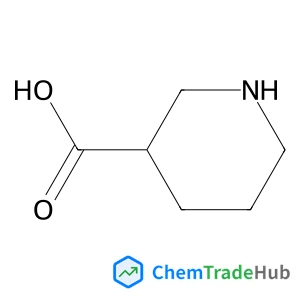
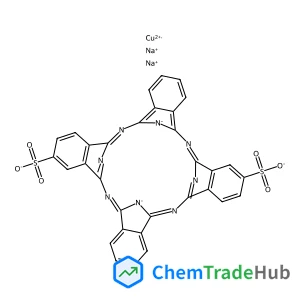
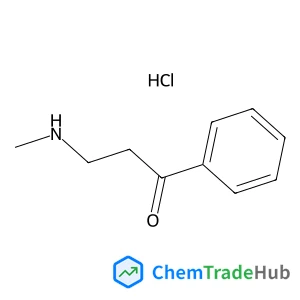
推荐供应商



免责声明
本页面提供的学术期刊信息仅供参考和研究使用。我们与任何期刊出版商均无关联,也不处理投稿事宜。如有投稿相关咨询,请直接联系相关期刊出版商。
如发现页面信息有误,请发送邮件至 support@chemtradehub.com 联系我们。我们将及时核实并处理您的问题。