




![2-Methyl-2-propanyl 1,6-diazaspiro[3.4]octane-6-carboxylate structure](https://cnstatic.chemtradehub.com/structs/115/1158749-79-1-81ee.webp "2-Methyl-2-propanyl 1,6-diazaspiro[3.4]octane-6-carboxylate structure")
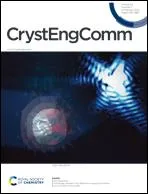
Front cover
文献信息
发布日期
DOI
10.1039/B611856A
影响因子
3.676
作者
查看原文
摘要
The first page of this article is displayed as the abstract.
相关文献
Mechanical properties of liquid-filled shellac composite capsules
Sabine Leick, Maureen Kott, Patrick Degen, Stefan Henning, Tobias Päsler, Dieter Suter, Heinz Rehage
2010-12-10
Paper
DOI: 10.1039/C0CP01803A
2D silver nanocrystal ordering modulated by various substrates and revealed using oxygen plasma treatment
Emilie Klecha, Imad Arfaoui, Johannes Richardi, Dorothée Ingert, Marie-Paule Pileni
2010-12-17
Paper
DOI: 10.1039/C0CP01237H
Size and morphology of assemblies formed by DNA and lysozyme in dilute aqueous mixtures
Anna M. Carnerup, John Janiak, Karin Schillén, Maria da Graça Miguel
2010-11-03
Paper
DOI: 10.1039/C0CP01220C
Electrochemical activation of molecular nitrogen at the Ir/YSZ interface
Ilia Valov, Bjoern Luerssen, Eva Mutoro, Luca Gregoratti, Roger A. De Souza, Thomas Bredow, Sebastian Günther, Alexei Barinov, Pavel Dudin, Manfred Martin, Jürgen Janek
2011-01-11
Paper
DOI: 10.1039/C0CP01024C
Controlled nanostructures for applications in catalysis
Ferdi Schüth
2011-01-20
Editorial
DOI: 10.1039/C1CP90005F
The active site structure of nitrided and oxynitrided graphite as a cathode catalyst in a fuel cell
Hiroyuki Tominaga, Wataru Ikeda, Masatoshi Nagai
2010-12-22
Communication
DOI: 10.1039/C0CP02209H
Microenvironment-switchable singlet oxygen generation by axially-coordinated hydrophilic ruthenium phthalocyanine dendrimers
Uwe Hahn, Francesca Setaro, Xavier Ragàs, Angus Gray-Weale, Santi Nonell, Tomas Torres
2010-12-21
Paper
DOI: 10.1039/C0CP01015D
Towards ultra small noble metal nanoparticles: testing Jellium model for ligand protected copper and silver M13 core nanoparticles
Ruibin Dong, Xiaoshuang Chen, Huxian Zhao, Xiaofang Wang, Haibo Shu, Zonglin Ding, Lu Wei
2011-01-05
Paper
DOI: 10.1039/C0CP00522C
Hydrogen bond strength and network structure effects on hydration of non-polar molecules
R. M. Lynden-Bell, N. Giovambattista, P. G. Debenedetti, T. Head-Gordon, P. J. Rossky
2010-12-10
Paper
DOI: 10.1039/C0CP01701A
A facile route to ordered mesoporous-alumina-supported catalysts, and their catalytic activities for CO oxidation
Zhen-Xing Li, Fu-Bo Shi, Le-Le Li, Tao Zhang, Chun-Hua Yan
2010-11-19
Communication
DOI: 10.1039/C0CP01309A
您可能还喜欢
化合物问答
什么是2-Bromo-1-(pyrimidin-2-yl)ethanone hydrobromide(CAS号:1588441-02-4)?
2-Bromo-1-(pyrimidin-2-yl)ethanone hydrobromide是一种有机化合物,分子式为C6H5Br2N2O2。它是一种溴代化合...
1588441-02-42-Bromo-1-(2-pyrimid...
化合物问答
在合成中是否有1-正-丁基-3-甲基咪唑鎓三氟甲烷磺酸盐(CAS号:174899-66-2)的替代品?
在合成中,可以考虑使用1-正-丁基-3-甲基咪唑鎓溴酸盐或1-正-丁基-3-甲基咪唑鎓氯酸盐作为替代品。这些化合物在性能上与1-正-丁基-3-甲基咪唑鎓三氟甲烷...
174899-66-21-Butyl-3-methyl-1H-...
化合物问答
2-methyl-5-thiophen-2-ylfuran-3-carboxylic acid(CAS号:651005-90-2)的市场或研究趋势如何?
目前,2-methyl-5-thiophen-2-ylfuran-3-carboxylic acid的研究主要集中在药物化学和新型材料领域。随着生物医药和有机合...
651005-90-22-Methyl-5-(thien-2-...
化合物问答
格列吡嗪杂质H(CAS号:13554-93-3)的主要用途是什么?
格列吡嗪杂质H主要作为药物中间体或副产物存在,并无特定的工业应用。在药物生产中,它可能需要被处理掉以保证最终药物的质量。
13554-93-3Ethyl (2-(4-((cycloh...
化合物问答
如何储存(9ci)-4-甲氧基-1H-苯并咪唑-2-乙腈(CAS号:317817-41-7)?
(9ci)-4-甲氧基-1H-苯并咪唑-2-乙腈应储存在阴凉、干燥、通风良好的地方,避免阳光直射。使用密封的玻璃或塑料容器储存,并确保容器的密封性良好,以防止挥...
317817-41-7(4-Methoxy-1H-benzim...
化合物问答
4,5,9,10-四氢苯芘(CAS号:781-17-9)应用于哪些行业?
4,5,9,10-四氢苯芘在医药行业用于作为某些药物的中间体,在聚合物行业用作添加剂提升材料的热稳定性,在传感器领域作为传感器的敏感材料,在半导体行业中用作掺杂...
781-17-94,5,9,10-Tetrahydrop...
化合物问答
处理叶酸-D4(CAS号:171777-72-3)时应注意哪些实验室安全事项?
处理叶酸-D4时应佩戴个人防护装备(PPE),如手套和实验服。操作应在通风橱内进行,以避免吸入蒸汽或粉尘。如果不慎泄露,应立即用大量清水冲洗,并通知安全人员。参...
171777-72-3Folic Acid-d4
化合物问答
如何处理含有6-溴-2-(三氟乙酰基)-1,2,3,4-四氢异喹啉(CAS号:252331-63-8)的废料?
含有该化合物的废料应收集到专用的容器中,并进行密封以防止挥发和泄漏。在处理前,需进行危险性评估,以确定是否需要进行化学处理。最终处置需遵循当地的危险废物管理规定...
252331-63-81-(6-bromo-3,4-dihyd...
化合物问答
4,5-二氟-2-甲氧基苯甲醛(CAS号:145742-34-3)的主要用途是什么?
4,5-二氟-2-甲氧基苯甲醛主要用作有机合成中的中间体,特别是在制药和农药领域。它可以作为合成其他有机化合物的原料。
145742-34-34,5-difluoro-2-metho...
化合物问答
5-溴-6-三氟甲基吲哚(CAS号:1198475-24-9)安全吗?
5-溴-6-三氟甲基吲哚作为一种化学试剂,具有一定的毒性,需要在通风橱中操作,并采取适当的安全措施以避免吸入、皮肤接触和眼睛刺激。应避免与皮肤和眼睛直接接触,并...
1198475-24-95-bromo-6-(trifluoro...
来源期刊
Physical Chemistry Chemical Physics

CiteScore:
5.5
自引率:
10.3%
年发文量:
3036
Physical Chemistry Chemical Physics (PCCP) is an international journal co-owned by 19 physical chemistry and physics societies from around the world. This journal publishes original, cutting-edge research in physical chemistry, chemical physics and biophysical chemistry. To be suitable for publication in PCCP, articles must include significant innovation and/or insight into physical chemistry; this is the most important criterion that reviewers and Editors will judge against when evaluating submissions. The journal has a broad scope and welcomes contributions spanning experiment, theory, computation and data science. Topical coverage includes spectroscopy, dynamics, kinetics, statistical mechanics, thermodynamics, electrochemistry, catalysis, surface science, quantum mechanics, quantum computing and machine learning. Interdisciplinary research areas such as polymers and soft matter, materials, nanoscience, energy, surfaces/interfaces, and biophysical chemistry are welcomed if they demonstrate significant innovation and/or insight into physical chemistry. Joined experimental/theoretical studies are particularly appreciated when complementary and based on up-to-date approaches.
推荐化合物
![9H-Fluoren-9-ylmethyl [(2S)-1-hydroxy-3-(1H-indol-3-yl)-2-propanyl]carbamate structure](https://cnstatic.chemtradehub.com/structs/153/153815-60-2-a67d.webp "9H-Fluoren-9-ylmethyl [(2S)-1-hydroxy-3-(1H-indol-3-yl)-2-propanyl]carbamate structure")
推荐供应商




免责声明
本页面提供的学术期刊信息仅供参考和研究使用。我们与任何期刊出版商均无关联,也不处理投稿事宜。如有投稿相关咨询,请直接联系相关期刊出版商。
如发现页面信息有误,请发送邮件至 support@chemtradehub.com 联系我们。我们将及时核实并处理您的问题。