


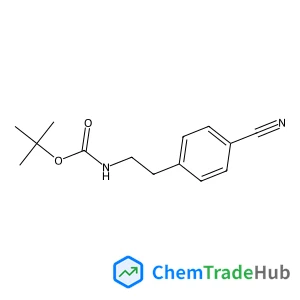
On the curvature dependence of the interfacial tension in a symmetric three-component interface
文献信息
发布日期
2006-11-28
DOI
10.1039/B613074G
影响因子
3.676
作者
查看原文
摘要
We consider a symmetric interface between two polymers AN and BN in a common monomeric solvent S using the mean-field Scheutjens–Fleer self-consistent field theory and focus on the curvature dependence of the interfacial tension. In multi-component systems there is not one unique scenario to curve such an interface. We elaborate on this by keeping either the chemical potential of the solvent or the bulk concentration of the solvent fixed, that is we focus on the semi-grand canonical ensemble case. Following Helfrich, we expand the surface tension as a Taylor series in the curvature parameters and find that there is a non-zero linear dependence of the interfacial tension on the mean curvature in both cases. This implies a finite Tolman length. In a thermodynamic analysis we prove that the non-zero Tolman length is related to the adsorption of solvent at the interface. Similar, but not the same, correlations between the solvent adsorption and the Tolman length are found in the two scenarios. This result indicates that one should be careful with symmetry arguments in a Helfrich analysis, in particular for systems that have a finite interfacial tension: one not only should consider the structural symmetry of the interface, but also consider the constraints that are enforced upon imposing the curvature. The volume fraction of solvent, the chain length N as well as the interaction parameter χAB in the system can be used to take the system in the direction of the critical point. The usual critical behavior is found. Both the width of the interface and the Tolman length diverge, whereas the density difference between the two phases, adsorbed amount of solvent at the interface, interfacial tension, spontaneous curvature, mean bending modulus as well as the Gaussian bending modulus vanish upon approach of the critical point.
期刊推荐

New Journal of Chemistry

Chemistry Education Research and Practice
Nature Medicine

Current Opinion in Colloid & Interface Science
Chemical Communications

Journal of Saudi Chemical Society
Russian Journal of Bioorganic Chemistry
Russian Chemical Bulletin
Crystallography Reports
Organic Process Research & Development
相关文献
Tellurophene-containing π-conjugated polymers with unique heteroatom–heteroatom interactions by post-element-transformation of an organotitanium polymer
Hiroki Nishiyama, Feng Zheng, Shinsuke Inagi, Hiroyuki Fueno, Ikuyoshi Tomita
2020-07-07
Communication
DOI: 10.1039/D0PY00724B
Balancing the transesterification reactivity of isosorbide with diphenyl carbonate: preferential activation of exo-OH
Ming Zhang, Yifei Tu, Zibo Zhou, Guozhang Wu
2020-07-23
Paper
DOI: 10.1039/D0PY00764A
Well-defined cyclic polymer synthesis via an efficient etherification-based bimolecular ring-closure strategy
Sandeep Sharma, Konstantinos Ntetsikas, Viko Ladelta, Saibal Bhaumik, Nikos Hadjichristidis
2021-10-28
Paper
DOI: 10.1039/D1PY01337H
Intrinsic flame retardant phosphonate-based vitrimers as a recyclable alternative for commodity polymers in composite materials
Jens C. Markwart, Alexander Battig, Tobias Urbaniak, Katharina Haag, Katharina Koschek, Bernhard Schartel, Frederik R. Wurm
2020-06-08
Paper
DOI: 10.1039/D0PY00275E
Development of the first panchromatic BODIPY-based one-component iodonium salts for initiating the photopolymerization processes
Monika Topa-Skwarczyńska, Mariusz Galek, Magdalena Jankowska, Fabrice Morlet-Savary, Bernadette Graff, Jacques Lalevée, Roman Popielarz
2021-11-03
Paper
DOI: 10.1039/D1PY01263K
The influences of monomer structure and solvent on the radical copolymerization of tertiary amine and PEGylated methacrylates
Priscila Quiñonez-Angulo, Robin A. Hutchinson, Ángel Licea-Claveríe, Enrique Saldívar-Guerra, Iván Zapata-González
2021-08-24
Paper
DOI: 10.1039/D1PY00750E
Biobased poly(ester-co-glycoside) from reactive natural Brønsted acidic deep eutectic solvent analogue
Gabriel Duaux, Etienne Fleury, Daniel Portinha
2021-08-27
Paper
DOI: 10.1039/D1PY00990G
Impacts of performing electrolysis during organocatalyzed atom transfer radical polymerization
Daniel A. Corbin, Blaine G. McCarthy, Garret M. Miyake
2020-06-30
Paper
DOI: 10.1039/D0PY00643B
Ring opening polymerization of macrocyclic oligoesters derived from renewable sources
Antxon Martínez de Ilarduya, Sebastián Muñoz Guerra
2020-03-17
Review Article
DOI: 10.1039/D0PY00258E
您可能还喜欢
化合物问答
(5-氨基吡唑-3-基)乙酸(CAS号:174891-10-2)的物理化学性质是什么?
(5-氨基吡唑-3-基)乙酸是一种无色至白色固体,分子量为174.15 g/mol。它在水中具有较好的溶解性,在有机溶剂中的溶解度较低。该化合物具有较好的反应活...
174891-10-2(3-Amino-1H-pyrazol-...
化合物问答
3-氟-4,5-二氯苯胺(CAS号:35754-38-2)适用哪些法规指南?
3-氟-4,5-二氯苯胺受到多项法规指南的约束,包括但不限于GHS(全球化学品统一分类和标签制度)的危险分类标准、欧盟的REACH法规(注册、评估、授权和限制)...
35754-38-23,4-Dichloro-5-fluor...
化合物问答
什么是(R)-(+)-2,2',6,6'-四甲氧基-4,4'-联(二(3,5-二甲苯基基)膦基)-3,3'-二联吡啶(CAS号:442905-33-1)?
这是一种有机化合物,化学名为(R)-(+)-2,2',6,6'-四甲氧基-4,4'-联(二(3,5-二甲苯基基)膦基)-3,3'-二联吡啶,CAS号为44290...
442905-33-14,4'-Bis[bis(3,5-dim...
化合物问答
1-氨基-2-氰基萘(CAS号:3100-67-2)应用于哪些行业?
1-氨基-2-氰基萘在医药、聚合物、传感器和半导体等行业中有应用。在医药领域,它可用作中间体合成某些药物。在聚合物行业,它可以用于制备具有特定性能的聚合物。此外...
3100-67-21-Amino-2-naphthonit...
化合物问答
如何处理含有1-溴-4-(异丙氧基甲基)苯(CAS号:98446-84-5)的废料?
处理含1-溴-4-(异丙氧基甲基)苯的废料时,首先应确保废液收集在防渗漏的容器中,避免泄露。然后,可以考虑采用化学降解法或物理吸附法进行处理。在特定条件下,可通...
98446-84-51-Bromo-4-(isopropox...
化合物问答
6-Chloro-8-(trifluoromethyl)chroman-4-one(CAS号:1344889-75-3)的主要用途是什么?
6-氯-8-三氟甲基-2,3-二氢-4H-色喃-4-酮主要用于有机合成中的中间体,也可作为研究试剂使用。
1344889-75-36-Chloro-8-(trifluor...
化合物问答
7-乙氧基-2-萘酚(CAS号:57944-44-2)通常如何合成?
7-乙氧基-2-萘酚通常通过N-乙氧基化反应合成,首先将2-萘酚与乙醇钠在乙醇中反应生成7-乙氧基-2-萘酚钠盐,再通过酸化进一步得到7-乙氧基-2-萘酚。该合...
57944-44-27-Ethoxy-2-naphthol
化合物问答
4-(1,1-二氧硫代吗啉)丁醇(CAS号:59801-41-1)适用哪些法规指南?
该化合物需遵循一系列的法规指南,包括但不限于GHS全球统一分类和标签制度,其分类可能包括易燃液体和可能危害水生环境。在欧洲,还需遵循REACH法规,确保物质和混...
59801-41-14-(4-Hydroxybutyl)th...
化合物问答
4-甲氧基苄基叠氮甲酸酯(CAS号:25474-85-5)的物理化学性质是什么?
4-甲氧基苄基叠氮甲酸酯是一种无色液体,具有一定的挥发性。其分子量为198.16,熔点为-69°C,沸点为105°C。该化合物在水中溶解度较低,在有机溶剂如乙醇...
25474-85-54-Methoxybenzyl carb...
化合物问答
如何处理含有4-氯-2-氟嘧啶(CAS号:51422-00-5)的废料?
含有4-氯-2-氟嘧啶的废料应按照危险废物处理。首先,应收集并分类这些废料,避免与其他废物混合。然后,可以采用焚烧处理或者交由专业机构进行处置。在处理过程中,需...
51422-00-54-Chloro-2-fluoropyr...
来源期刊
Physical Chemistry Chemical Physics

CiteScore:
5.5
自引率:
10.3%
年发文量:
3036
Physical Chemistry Chemical Physics (PCCP) is an international journal co-owned by 19 physical chemistry and physics societies from around the world. This journal publishes original, cutting-edge research in physical chemistry, chemical physics and biophysical chemistry. To be suitable for publication in PCCP, articles must include significant innovation and/or insight into physical chemistry; this is the most important criterion that reviewers and Editors will judge against when evaluating submissions. The journal has a broad scope and welcomes contributions spanning experiment, theory, computation and data science. Topical coverage includes spectroscopy, dynamics, kinetics, statistical mechanics, thermodynamics, electrochemistry, catalysis, surface science, quantum mechanics, quantum computing and machine learning. Interdisciplinary research areas such as polymers and soft matter, materials, nanoscience, energy, surfaces/interfaces, and biophysical chemistry are welcomed if they demonstrate significant innovation and/or insight into physical chemistry. Joined experimental/theoretical studies are particularly appreciated when complementary and based on up-to-date approaches.
推荐化合物
![1-(1-Benzyl-1,2,3,6-tetrahydropyridin-4-yl)-1H-benzo[d]imidazol-2(3H)-one structure](https://cnstatic.chemtradehub.com/structs/603/60373-71-9-7dfb.webp "1-(1-Benzyl-1,2,3,6-tetrahydropyridin-4-yl)-1H-benzo[d]imidazol-2(3H)-one structure")
推荐供应商




免责声明
本页面提供的学术期刊信息仅供参考和研究使用。我们与任何期刊出版商均无关联,也不处理投稿事宜。如有投稿相关咨询,请直接联系相关期刊出版商。
如发现页面信息有误,请发送邮件至 support@chemtradehub.com 联系我们。我们将及时核实并处理您的问题。