






Lewis acidity enhancement of organoboranes viaoxidation of appended ferrocene moieties
文献信息
发布日期
2007-05-01
DOI
10.1039/B701807J
影响因子
6.222
作者
Krishnan Venkatasubbaiah, Israel Nowik, Rolfe H. Herber, Frieder Jäkle
查看原文
摘要
The Lewis acidity of boron in diboradiferrocene 1 is strongly enhanced through oxidation of the iron atoms as evident from examination of X-ray structural parameters of the mixed-valent cation 1+PF6 and further confirmed from the strong complexation of MeCN to the dication in 22+(I3)2.
相关文献
Consequences of changes in the ZnO trap distribution on the performance of dye-sensitized solar cells
J. Falgenhauer, F. Fiehler, C. Richter, M. Rudolph, D. Schlettwein
2017-05-22
Paper
DOI: 10.1039/C7CP01024A
Naphthodifuran-based zigzag-type polycyclic arene with conjugated side chains for efficient photovoltaics
Hongjian Peng, Xiangfeng Luan, Liuliu Feng, Jun Yuan, Zhi-Guo Zhang, Yongfang Li, Yingping Zou
2017-05-09
Paper
DOI: 10.1039/C7CP02283B
The influence of hydrogen bonds on NIAD-4 for use in the optical imaging of amyloid fibrils
Donglin Li, Yonggang Yang, Chaozheng Li, Yufang Liu
2017-05-18
Paper
DOI: 10.1039/C7CP02268A
How silver segregation stabilizes 1D surface gold oxide: a cluster expansion study combined with ab initio MD simulations
Sandra Hoppe, Yong Li, Lyudmila V. Moskaleva, Stefan Müller
2017-05-09
Paper
DOI: 10.1039/C7CP02221B
Tunable electronic structure and magnetic moment in C2N nanoribbons with different edge functionalization atoms
Min Jia, Dapeng Yang, Chikowore Panashe, Yuye Yang, Jianjun Wang
2017-05-15
Paper
DOI: 10.1039/C7CP01359K
Investigating the effect of ionic strength on the suppression of dendrite formation during metal electrodeposition
Andrew K. Pearson, Pon Kao, Anthony P. O'Mullane, Anand I. Bhatt
2017-05-11
Paper
DOI: 10.1039/C7CP00839B
Isomer-dependent fragmentation dynamics of inner-shell photoionized difluoroiodobenzene
Cédric Bomme, Evgeny Savelyev, Hui Xiong, Rajesh Kushawaha, Rebecca Boll, Kasra Amini, Timur Osipov, David Kilcoyne, Artem Rudenko, Nora Berrah, Daniel Rolles
2017-05-11
Communication
DOI: 10.1039/C7CP01379E
The mechanism of ammonium bisulfate formation and decomposition over V/WTi catalysts for NH3-selective catalytic reduction at various temperatures
Chenxu Li, Jianqiang Wang, Jun Wang, Yanping Zhai
2017-05-05
Paper
DOI: 10.1039/C7CP02324C
Heavy ligand atom induced large magnetic anisotropy in Mn(ii) complexes
Sabyasachi Roy Chowdhury, Sabyashachi Mishra
2017-06-05
Paper
DOI: 10.1039/C7CP02957H
The effect of anions on the electrochemical properties of polyaniline for supercapacitors
Ji Xing, Maoying Liao, Min Yin, Dongdong Li, Ye Song
2017-04-28
Paper
DOI: 10.1039/C7CP02016C
您可能还喜欢
化合物问答
如何处理含有8-氯咪唑并[1,2-A]吡嗪(CAS号:69214-33-1)的废料?
处理含有8-氯咪唑并[1,2-A]吡嗪的废料时,应首先将其收集并进行化学回收或降解。如果无法回收,需采用安全的化学处理方法,如中和、氧化还原或沉淀。处理过程中需...
69214-33-18-chloroimidazo[1,2-...
化合物问答
Calhex 231 hydrochloride(CAS号:2387505-78-2)适用哪些法规指南?
Calhex 231 hydrochloride 需要遵循《全球化学品统一分类和标签制度》(GHS)的分类和标签要求,以及欧盟的《化学品注册、评估、授权和限制条...
2387505-78-24-Chloro-N-[(1S,2S)-...
化合物问答
11-Beta,17-alpha,21-三羟基-5-beta-孕烯-3,20-二酮(CAS号:1482-50-4)的物理化学性质是什么?
11-Beta,17-alpha,21-三羟基-5-beta-孕烯-3,20-二酮是一种无色结晶性粉末,分子量为372.45 g/mol。该化合物在水中的溶解度...
1482-50-45β-Dihydrocortisol
化合物问答
处理5-异丙基-1,3,4-恶二唑-2-羧酸(CAS号:944907-13-5)时应注意哪些实验室安全事项?
处理5-异丙基-1,3,4-恶二唑-2-羧酸时应注意以下安全事项:穿戴适当的个人防护装备,包括实验室外套、手套和护目镜;操作应在通风橱中进行,以减少吸入或接触有...
944907-13-55-Isopropyl-1,3,4-ox...
化合物问答
benzyl 3-bromopropanoate(CAS号:90841-55-7)安全吗?
Benzyl 3-bromopropanoate属于有毒物质,吸入、摄入或皮肤接触均可能对人体造成伤害。操作时应佩戴防护眼镜、口罩和手套,避免吸入蒸汽和直接接触...
90841-55-7Benzyl 3-bromopropan...
化合物问答
什么是(R)-N-苄氧羰基-3,4-二氢-1H-异喹啉羧酸(CAS号:151004-88-5)?
(R)-N-苄氧羰基-3,4-二氢-1H-异喹啉羧酸是一种含有苄氧羰基和异喹啉环结构的化合物,分子式为C17H15NO3。它是一种有机化合物,具有一定的生物活性...
151004-88-5(1R)-2-[(Benzyloxy)c...
化合物问答
在合成中是否有1-苄基吡啶嗡-3-羧酸盐(CAS号:15990-43-9)的替代品?
可以考虑使用1-苄基吡啶-3-羧酸盐作为1-苄基吡啶嗡-3-羧酸盐的替代品。此外,还可以探索其他类似物,如1-苄基吡啶-3-氨基甲酸酯等。具体的替代品选择需根据...
15990-43-91-Benzyl-3-pyridiniu...
化合物问答
(2,6-二甲基吡啶-3-基)甲醇(CAS号:582303-10-4)安全吗?
(2,6-二甲基吡啶-3-基)甲醇在使用时需注意安全,应避免吸入其蒸汽,接触皮肤和眼睛。操作应在通风良好的环境中进行,佩戴适当的个人防护装备。
582303-10-4(2,6-Dimethyl-3-pyri...
化合物问答
5-溴-2-乙烯基吡啶(CAS号:226883-52-9)的物理化学性质是什么?
5-溴-2-乙烯基吡啶是一种有机化合物,外观为白色固体,具有良好的结晶性。分子量约为190.03 g/mol。它的溶解性在水中较差,但在有机溶剂如二氯甲烷、甲醇...
226883-52-95-Bromo-2-vinylpyrid...
化合物问答
2-羟基-3-硝基-5-甲基吡啶(CAS号:7464-14-4)应用于哪些行业?
2-羟基-3-硝基-5-甲基吡啶主要应用于医药、聚合物和半导体行业。在医药领域,它可以用作合成其他药物的中间体。在聚合物领域,它可以作为功能性单体参与聚合反应,...
7464-14-45-Methyl-3-nitro-2(1...
来源期刊
Chemical Communications

CiteScore:
8.6
自引率:
4.7%
年发文量:
2458
ChemComm publishes urgent research which is of outstanding significance and interest to experts in the field, while also appealing to the journal’s broad chemistry readership. Our communication format is ideally suited to short, urgent studies that are of such importance that they require accelerated publication. Our scope covers all topics in chemistry, and research at the interface of chemistry and other disciplines (such as materials science, nanoscience, physics, engineering and biology) where there is a significant novelty in the chemistry aspects. Major topic areas covered include: Analytical Chemistry Catalysis Chemical Biology and medicinal chemistry Computational Chemistry and Machine Learning Energy and sustainable chemistry Environmental Chemistry Green Chemistry Inorganic Chemistry Materials Chemistry Nanoscience Organic Chemistry Physical Chemistry Polymer Chemistry Supramolecular Chemistry
推荐化合物
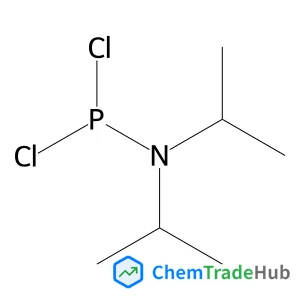
![Ethyl 3-((6-(4,5-dihydro-1H-benzo[d]azepin-3(2H)-yl)-2-(pyridin-2-yl)pyrimidin-4-yl)amino)propanoate structure](https://cnstatic.chemtradehub.com/structs/137/1373423-53-0-496a.webp "Ethyl 3-((6-(4,5-dihydro-1H-benzo[d]azepin-3(2H)-yl)-2-(pyridin-2-yl)pyrimidin-4-yl)amino)propanoate structure")
推荐供应商




免责声明
本页面提供的学术期刊信息仅供参考和研究使用。我们与任何期刊出版商均无关联,也不处理投稿事宜。如有投稿相关咨询,请直接联系相关期刊出版商。
如发现页面信息有误,请发送邮件至 support@chemtradehub.com 联系我们。我们将及时核实并处理您的问题。