


Applications of magnetic circular dichroism spectroscopy to porphyrins and phthalocyanines
文献信息
发布日期
2007-06-13
DOI
10.1039/B704991A
影响因子
6.222
作者
Nagao Kobayashi, Katsunori Nakai
查看原文
摘要
Magnetic circular dichroism (MCD) spectroscopy has widely been applied to porphyrins and phthalocyanines since around 1970, in order to elucidate their electronic structures. In this mini-review, some representative MCD results from the author's laboratory over the past 30 years are introduced, together with recent results from other laboratories. MCD studies on the following monomeric species are included: D4h type, adjacent vs. opposite type diaromatic ring-fused, non-planar, and reduced and oxidized species, as well as species showing temperature-dependent MCD signals. In addition, one example illustrates the use of MCD as a probe for the distal histidine residue in myoglobin. Recent results on dimers and oligomers are also reported. In particular, it is confirmed that the spectra of cofacial eclipsed dimers do not reflect the molecular symmetry of the constituent monomers. The spectra of rare-earth sandwich dimers and trimers are definitively assigned. Using spectra of planar oligomers of porphyrins, it is reiterated that it is often dangerous to assign the absorption bands of chromophores based only on the results of molecular orbital calculations. Some examples show that MCD can give information on the relative size of the ΔHOMO (energy difference between the HOMO and HOMO−1) and ΔLUMO (energy difference between the LUMO and LUMO+1); for example, if ΔHOMO > ΔLUMO, the MCD signal changes from minus to plus in ascending energy.
期刊推荐
European Journal of Organic Chemistry
Nature Reviews Drug Discovery
Journal of Enzyme inhibition and Medicinal Chemistry
Current Pharmaceutical Biotechnology
Foundations of Chemistry

Physical Chemistry Chemical Physics
Mini-Reviews in Medicinal Chemistry
Molecular Diversity
CrystEngComm
Advanced Engineering Materials
相关文献
Pyrolysis of organotin compounds: A preparative method for nanometric tin dioxide powders
A. G. Pereira, A. O. Porto, G. G. Silva, G. M. de Lima, H. G. L. Siebald, J. L. Neto
2002-08-22
Paper
DOI: 10.1039/B204476P
Translational proton motion in zeolite H-ZSM-5. Energy barriers and jump rates from DFT calculations
Marion E. Franke, Marek Sierka, Ulrich Simon, Joachim Sauer
2002-09-09
Paper
DOI: 10.1039/B205426D
Density functional theoretical (DFT) and surface-enhanced Raman spectroscopic study of guanine and its alkylated derivatives Part 1. DFT calculations on neutral, protonated and deprotonated guanine
Bernd Giese, Don McNaughton
2002-09-11
Paper
DOI: 10.1039/B203829C
Simulation of maintenance of the epidermis
Bengt Kasemo
2002-09-04
Communication
DOI: 10.1039/B205795F
A disjoining pressure study of n-dodecyl-β-D-maltoside foam films
Cosima Stubenrauch, Judith Schlarmann, Reinhard Strey
2002-08-19
Paper
DOI: 10.1039/B205728J
Oxygen incorporation into Fe-doped SrTiO3: Mechanistic interpretation of the surface reaction
2002-08-01
Paper
DOI: 10.1039/B204032H
Photophysical studies of formic acid in the VUV. Absorption spectrum in the 6–22 eV region
Sydney Leach, Martin Schwell, Francois Dulieu, Jean-Louis Chotin, Hans-Werner Jochims, Helmut Baumgärtel
2002-09-19
Paper
DOI: 10.1039/B205729H
Correlated ab initio study of nucleic acid bases and their tautomers in the gas phase, in a microhydrated environment and in aqueous solution Part 1. Cytosine
Semen A. Trygubenko, Tetyana V. Bogdan, Manuel Rueda, Modesto Orozco, F. Javier Luque, Jiří Šponer, Petr Slavíček, Pavel Hobza
2002-07-25
Paper
DOI: 10.1039/B202156K
Silica–alumina catalysts prepared in sol–gel process of TEOS with organic additives
Miyuki Yabuki, Ryoji Takahashi, Satoshi Sato, Toshiaki Sodesawa, Katsuyuki Ogura
2002-09-02
Paper
DOI: 10.1039/B205645C
Constructing a map from the electron density to the exchange–correlation potential
Aron J. Cohen, Nicholas C. Handy
2002-09-05
Paper
DOI: 10.1039/B205854E
您可能还喜欢
化合物问答
如何处理含有顺-二(2,2'-联吡啶)二氯化钌(II)二水合物(CAS号:67776-38-9)的废料?
处理含有该化合物的废料时,应先收集并分类,然后根据其危险特性选择合适的处理方法。推荐采用焚烧或由专业机构进行安全处理,以确保符合环保法规的要求。处理过程中应佩戴...
67776-38-93-{[(2R,3R,4S,5R,6R)...
化合物问答
4-amino-2-bromo-3-iodopyridine(CAS号:1300750-77-9)的市场或研究趋势如何?
4-氨基-2-溴-3-碘吡啶主要应用于药物合成和研究领域,尤其是在抗病毒和抗癌药物的研发中。随着新型药物的需求增加,该化合物的研究趋势较好。市场方面,由于其特殊...
1300750-77-92-bromo-3-iodopyridi...
化合物问答
4-乙酰基氨基-2-氨基-苯甲酸(CAS号:43134-76-5)的市场或研究趋势如何?
当前,4-乙酰基氨基-2-氨基-苯甲酸(CAS号:43134-76-5)在医药和化工领域有一定的应用。随着药物研发的进展,该化合物在新型药物设计中的应用可能增加...
43134-76-54-Acetamido-2-aminob...
化合物问答
庚a氟-1-(1-碘-1,2,2,2-四氟乙氧基)丙烷(CAS号:107432-46-2)的市场或研究趋势如何?
该化合物目前主要用于特定的工业应用,如氟聚合物的合成。市场趋势显示,由于其独特的结构和性能,未来可能在新型氟材料和特种化学品领域有更多的应用。研究趋势方面,主要...
107432-46-21,1,1,2,2,3,3-Heptaf...
化合物问答
在合成中是否有Propargyl-PEG13-bromide(CAS号:2055105-25-2)的替代品?
可以考虑使用1,3-丁二烯-1-炔-3-基-聚乙二醇-13-溴化物作为Propargyl-PEG13-bromide的替代品,因为两者在结构上相似,均可用于合成...
2055105-25-2Propargyl-peg13-brom...
化合物问答
2-氨基-6-甲氧基嘌呤(CAS号:20535-83-5)安全吗?
2-氨基-6-甲氧基嘌呤在正常使用条件下相对安全,但在操作时仍需注意防护措施,如佩戴手套和护目镜,避免吸入或接触皮肤和眼睛。
20535-83-56-Methoxy-7H-purin-2...
化合物问答
2-甲基-3-溴苯乙酸乙酯(CAS号:1261862-72-9)适用哪些法规指南?
该化合物根据其化学性质和潜在危害,可能适用于GHS(全球化学品统一分类和标签制度)的分类标准。具体分类需依据其毒性和燃烧危险性进行评估。此外,欧洲化学品管理局(...
1261862-72-9Ethyl (3-bromo-2-met...
化合物问答
4,4-二甲基吡咯烷-3-羧酸盐酸盐(CAS号:1351343-41-3)应用于哪些行业?
4,4-二甲基吡咯烷-3-羧酸盐酸盐在医药、聚合物和传感器领域有应用。在医药领域,它可以作为某些药物的中间体;在聚合物领域,它可用作某些聚合物的稳定剂;在传感器...
1351343-41-34,4-Dimethyl-3-pyrro...
化合物问答
处理5-Hydroxy-7-methoxy-2-(4-methoxyphenyl)-4-oxo-4H-chromen-6-yl 2-O-beta-D-xylopyranosyl-beta-D-glucopyranoside(CAS号:149998-39-0)时应注意哪些实验室安全事项?
处理该化合物时应注意使用个人防护装备(如手套、护目镜和实验服),在通风橱中操作。避免直接接触皮肤和吸入,泄漏时应立即清理并使用适当的吸收材料。参考安全数据表(S...
149998-39-05-Hydroxy-7-methoxy-...
化合物问答
7-甲基-1,2,3,4-四氢-吖啶-9-甲酸(CAS号:345621-27-4)的市场或研究趋势如何?
该化合物在医药研究中具有潜在应用价值,特别是在抗癌药物研发方面。随着研究的深入,对其合成方法的优化和生物活性的进一步探索将成为研究热点。
345621-27-47-Methyl-1,2,3,4-tet...
来源期刊
Chemical Communications

CiteScore:
8.6
自引率:
4.7%
年发文量:
2458
ChemComm publishes urgent research which is of outstanding significance and interest to experts in the field, while also appealing to the journal’s broad chemistry readership. Our communication format is ideally suited to short, urgent studies that are of such importance that they require accelerated publication. Our scope covers all topics in chemistry, and research at the interface of chemistry and other disciplines (such as materials science, nanoscience, physics, engineering and biology) where there is a significant novelty in the chemistry aspects. Major topic areas covered include: Analytical Chemistry Catalysis Chemical Biology and medicinal chemistry Computational Chemistry and Machine Learning Energy and sustainable chemistry Environmental Chemistry Green Chemistry Inorganic Chemistry Materials Chemistry Nanoscience Organic Chemistry Physical Chemistry Polymer Chemistry Supramolecular Chemistry
推荐化合物
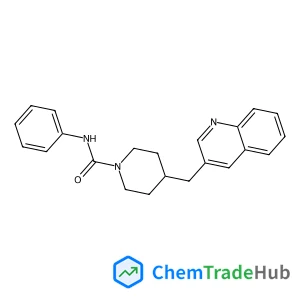
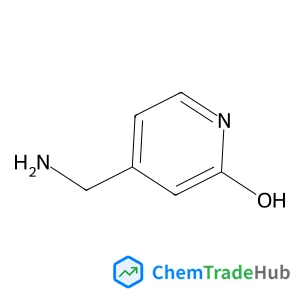
![4-chloro-N-[5-methyl-2-(7H-pyrrolo[2,3-d]pyrimidine-4-carbonyl)-3-pyridyl]-3-(trifluoromethyl)benzenesulfonamide structure](https://cnstatic.chemtradehub.com/structs/110/1100318-47-5-127d.webp "4-chloro-N-[5-methyl-2-(7H-pyrrolo[2,3-d]pyrimidine-4-carbonyl)-3-pyridyl]-3-(trifluoromethyl)benzenesulfonamide structure")
推荐供应商





免责声明
本页面提供的学术期刊信息仅供参考和研究使用。我们与任何期刊出版商均无关联,也不处理投稿事宜。如有投稿相关咨询,请直接联系相关期刊出版商。
如发现页面信息有误,请发送邮件至 support@chemtradehub.com 联系我们。我们将及时核实并处理您的问题。