


Accurate calibration of mercury vapour measurements
文献信息
发布日期
2008-08-21
DOI
10.1039/B806860G
影响因子
4.616
作者
Richard J. C. Brown, Andrew S. Brown
查看原文
摘要
Almost all measurements of mercury vapour, for example those to determine mass concentration in air, are currently ultimately traceable to the vapour pressure of mercury, usually via a bell-jar calibration apparatus. This allows a saturated concentration of mercury vapour in air to develop in a confined space in equilibrium with ambient conditions, from which a known mass of mercury can be removed for calibration purposes. Setting aside the uncertainty in the vapour pressure of mercury at a given temperature, the accuracy of vapour phase mercury determinations depends critically on fully understanding the operation and sensitivities of the mercury bell-jar apparatus. This paper discusses the thermodynamic and kinetic considerations that must be taken into account when using the bell-jar apparatus, provides the theoretical basis for understanding the operation of the bell-jar, and presents experimental data demonstrating the systematic biases which may be obtained if the bell-jar is used incorrectly. These biases depend on the temperature difference between the mercury vapour in the bell-jar and the syringe used to remove the mercury vapour from the bell-jar, but they may be well in excess of 10% under some operating conditions. The results from this study have been used to propose best practice solutions for mercury vapour calibrations using the bell-jar.
期刊推荐
Molecular Pharmacology

European Journal of Wood and Wood Products

Nature
Journal of Physics and Chemistry of Solids
Helvetica Chimica Acta

Proceedings of the National Academy of Sciences of the United States of America
Pure and Applied Chemistry

Russian Chemical Reviews
Journal of Heterocyclic Chemistry

Science
相关文献
Infrared spectroscopy of ‘forbidden’ peptide sequences
Timothy D. Vaden, Sally A. N. Gowers, Lavina C. Snoek
2009-05-08
Paper
DOI: 10.1039/B903039E
Evidences in favour of a single electron transfer (SET) mechanism in the TiO2 sensitized photo-oxidation of α-hydroxy- and α,β-dihydroxybenzyl derivatives in water
Marta Bettoni, Cesare Rol, Giovanni V. Sebastiani
2010-04-06
Paper
DOI: 10.1039/B920785F
The effect of Mn oxidation state on metal core electron excitations in manganese dimers: a time-dependent density functional investigation
Adrian R. Jaszewski, Rob Stranger, Ronald J. Pace
2009-04-30
Paper
DOI: 10.1039/B900694J
Shannon entropy as a new measure of aromaticity, Shannon aromaticity
Siamak Noorizadeh, Ehsan Shakerzadeh
2010-03-16
Paper
DOI: 10.1039/B916509F
Adenine deactivation in DNA resolved at the CASPT2//CASSCF/AMBER level
Irene Conti, Piero Altoè, Marco Stenta, Marco Garavelli
2010-04-21
Paper
DOI: 10.1039/B926608A
A wavepacket study of the low-energy charge transfer process in the S3+ + H reaction using time-resolved electronic densities
Marta Łabuda, Jesús González-Vázquez, Leticia González
2010-04-08
Paper
DOI: 10.1039/B926825A
Motion of single wandering diblock-macromolecules directed by a PTFE nano-fence: real time SFM observations
Marat O. Gallyamov, Shuhui Qin, Krzysztof Matyjaszewski, Martin Möller
2009-04-20
Paper
DOI: 10.1039/B819011A
EPR spectroscopic investigation of radical-induced degradation of partially fluorinated aromatic model compounds for fuelcell membranes
Frank Schönberger, Jochen Kerres, Herbert Dilger, Emil Roduner
2009-05-12
Paper
DOI: 10.1039/B817070C
Defect structure in lithium-doped polymer-derived SiCN ceramics characterized by Raman and electron paramagnetic resonance spectroscopy
Armin Schulz, Verena Liebau-Kunzmann, Claudia Fasel, Ralf Riedel
2009-05-05
Paper
DOI: 10.1039/B822457A
Investigation of proton dynamics and the proton transport pathway in choline dihydrogen phosphate using solid-state NMR
Lindsay S. Cahill, Usman Ali Rana, Maria Forsyth, Mark E. Smith
2010-04-08
Paper
DOI: 10.1039/B916422G
您可能还喜欢
化合物问答
十二烷基磺酸钠(CAS号:2386-53-0)的主要用途是什么?
十二烷基磺酸钠主要用作表面活性剂,广泛应用于洗涤剂、肥皂、化妆品和工业清洁产品中。它能有效去除油脂和污垢,常用于制造洗发水、沐浴露、洗衣粉和金属清洗剂。此外,它...
2386-53-01-Dodecanesulfonic a...
化合物问答
5-羟基异喹啉(CAS号:2439-04-5)适用哪些法规指南?
5-羟基异喹啉作为化学品,主要适用的法规包括GHS全球化学品统一分类和标签制度,REACH法规等。GHS将5-羟基异喹啉分类为皮肤腐蚀/刺激类别2,严重眼损伤/...
2439-04-55-Isoquinolinol
化合物问答
在合成中是否有FIDAS-5 | Wnt(CAS号:1391934-98-7)的替代品?
合成中可以考虑使用类似结构的化合物,如4-[(E)-2-(2-氯-6-氟苯基)乙烯基]-N-甲基苯胺的类似物或衍生物作为替代品。这类化合物可能具有相似的生物活性...
1391934-98-74-[(E)-2-(2-Chloro-6...
化合物问答
(R)-tert-Butyl 2-(5-bromo-1H-imidazol-2-yl)pyrrolidine-1-carboxylate(CAS号:1370600-56-8)通常如何合成?
该化合物通常通过如下步骤合成:首先,将4-溴-1H-咪唑与对甲苯磺酸在乙酸乙酯中反应,得到中间体5-溴-1H-咪唑-2-甲酸乙酯。然后,该中间体与2-甲基-2-...
1370600-56-82-Methyl-2-propanyl ...
化合物问答
处理4-(吡咯烷-1-基)环己酮(CAS号:10421-18-8)时应注意哪些实验室安全事项?
处理4-(吡咯烷-1-基)环己酮时,应佩戴手套、护目镜和实验室外套,以防止直接接触或吸入。在通风橱中操作,确保良好的通风条件。一旦发生泄漏,应立即清理并使用适当...
10421-18-84-(Pyrrolidin-1-yl)c...
化合物问答
如何处理含有异麦芽糖醇(CAS号:534-73-6)的废料?
含有异麦芽糖醇的废液应首先进行分类收集,避免与其他化学品混合。对于小规模的废液,可以通过焚烧或加入特定的化学试剂进行无害化处理。对于大规模的废液,建议联系专业的...
534-73-66-O-alpha-D-Glucopyr...
化合物问答
7-甲基壬酸(CAS号:41653-89-8)的主要用途是什么?
7-甲基壬酸主要用于有机合成领域,作为合成其他化合物的原料。此外,它还可能作为一种中间体用于药品制造和香料合成,但具体用途需要根据其具体的化学结构和反应特性来确...
41653-89-87-Methylnonanoic aci...
化合物问答
N-甲氧基-N-甲基甲基吡啶羧酰胺(CAS号:148493-07-6)应用于哪些行业?
N-甲氧基-N-甲基甲基吡啶羧酰胺在医药领域有一定的应用,作为一种潜在的药物前体或中间体。此外,该化合物也可能应用于聚合物改性剂、传感器材料等。由于其独特的化学...
148493-07-6N-Methoxy-N-methylpi...
化合物问答
什么是惕各酸香叶酯(CAS号:7785-33-3)?
惕各酸香叶酯是一种化合物,化学名称为(2E)-3,7-二甲基-2,6-辛二烯-1-基(2E)-2-甲基-2-丁烯酸酯。它是一种具有香叶香气的化合物,分子式为C1...
7785-33-3(2E)-3,7-Dimethyl-2,...
化合物问答
1-环丁基哌嗪(CAS号:132800-13-6)安全吗?
1-环丁基哌嗪在适当的操作条件下是相对安全的,但如遇明火或高热会释放有毒气体。操作时应佩戴防护眼镜和手套,避免吸入或接触皮肤、眼睛。
132800-13-61-Cyclobutylpiperazi...
来源期刊
Analyst

CiteScore:
7.8
自引率:
5.6%
年发文量:
653
Analyst publishes analytical and bioanalytical research that reports premier fundamental discoveries and inventions, and the applications of those discoveries, unconfined by traditional discipline barriers.
推荐化合物

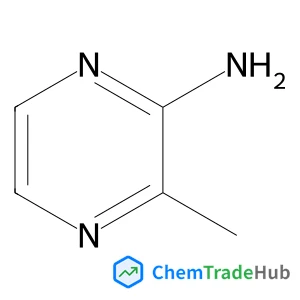


N-(2,6-Dimethylphenyl)-2-methoxy-N-(2-oxo-1,3-oxazolidin-3-yl)acetamide
CAS号:
77732-09-3
分子式:
C14H18N2O4
推荐供应商





免责声明
本页面提供的学术期刊信息仅供参考和研究使用。我们与任何期刊出版商均无关联,也不处理投稿事宜。如有投稿相关咨询,请直接联系相关期刊出版商。
如发现页面信息有误,请发送邮件至 support@chemtradehub.com 联系我们。我们将及时核实并处理您的问题。