



Double excitation effect in non-adiabatic time-dependent density functional theory with an analytic construction of the exchange–correlation kernel in the common energy denominator approximation
文献信息
发布日期
2009-04-23
DOI
10.1039/B903123E
影响因子
3.676
作者
Oleg V. Gritsenko
查看原文
摘要
Time-dependent density functional (response) theory (TDDF(R)T) is applied almost exclusively in its adiabatic approximation (ATDDFT), which is restricted to predominantly single electronic excitations and neglects additional roots of the TDDFT eigenvalue problem stemming from the interaction between single and double excitations. We incorporate the effect of the latter interaction into a non-adiabatic frequency-dependent and spatially non-local Hartree-exchange–correlation (Hxc) kernel fCEDAHxc (r1, r2, ω), the explicit analytical expression of which is derived for interacting single and double excitations well separated from the other excitations, within the common energy denominator approximation (CEDA) for the Kohn–Sham (KS) and interacting density response functions, χs and χ, respectively. The kernel fCEDAHxc (r1, r2, ω) obtained from the direct analytical inverse of χCEDAs and χCEDA is a sum of the delta-function and non-local orbital-dependent spatial terms with frequency-dependent factors, with which fCEDAHxc acquires a modulated quadratic dependence on ω. The effective incorporation in fCEDAHxc of the complete manifold of excited states (through the delta function term) represents an extension of the kernel reported by Maitra, Zhang, Cave, and Burke [J. Chem. Phys., 2004, 120, 5932]. In the TDDFT eigenvalue equations considered in the diagonal approximation, fCEDAHxc generates two excitation energies ωq and ωq+1, which both correspond to the same single KS excitation ωsq, thus producing the effect of the single–double excitation interaction.
期刊推荐

New Journal of Chemistry

Journal of Natural Medicines

Russian Journal of Organic Chemistry
Russian Journal of Coordination Chemistry

Journal of Peptide Science

Journal of Saudi Chemical Society

Organic Process Research & Development
Crystallography Reports
Russian Chemical Bulletin

Chemistry Education Research and Practice
相关文献
Investigating the role of interstitial water molecules in copper hexacyanoferrate for sodium-ion battery cathodes
Donghyeon Kim, Ahreum Choi, Changhyun Park, Min-Ho Kim, Hyun-Wook Lee
2023-05-29
Paper
DOI: 10.1039/D3TA02417B
Giant thermal expansion associated with a macroscopic polarization change in a single crystal of a Zn(ii) complex
Zheng Tang, Chengdong Liu, Yan Zhang, Xiao-Peng Sun, Jun Tao, Zi-Shuo Yao
2022-12-01
Research Article
DOI: 10.1039/D2QI02371G
A general and practical oxidation of alcohols to primary amides under metal-free conditions‡
Jian-Bo Feng, Helfried Neumann, Anahit Pews-Davtyan, Matthias Beller
2013-05-01
Paper
DOI: 10.1039/C3GC40668G
Variation from closed-shell to open shell electronic structures in oligothiophene bis(dioxolene) complexes
Paul D. Miller, David A. Shultz, Joshua Mengell, Lukasz Wojtas
2023-10-09
Edge Article
DOI: 10.1039/D3SC02341A
A possible means of realizing a sacrifice-free three component separation of lignocellulose from wood biomass using an amino acid ionic liquid
Yukoh Hamada, Kohei Yoshida, Ryo-ichi Asai, Shuichi Hayase, Toshiki Nokami, Shunsuke Izumi, Toshiyuki Itoh
2013-06-06
Communication
DOI: 10.1039/C3GC40445E
Studying manganese carbonyl photochemistry in a permanently porous metal–organic framework
Michael T. Huxley, Lingjun Wu, Jack Hart, James O'Shea, Christian J. Doonan, Christopher J. Sumby
2023-08-15
Edge Article
DOI: 10.1039/D3SC03553K
Bifunctional thioacetamide-mediated synthesis of few-layered MoOSx nanosheet-modified CdS hollow spheres for efficient photocatalytic H2 production
Siqin Tao, Wei Zhong, Yuxiao Chen, Feng Chen, Ping Wang
2022-08-18
Paper
DOI: 10.1039/D2CY01315K
Dinuclear osmium complexes as mitochondrion-targeting antitumor photothermal agents in vivo
Meng-Fan Wang, Yu-Ang Deng, Qing-Fang Li, Shi-Jie Tang, Rong Yang, Run-Yu Zhao, Fu-Dan Liu, Xiaoxia Ren, Dan Zhang, Feng Gao
2022-10-18
Communication
DOI: 10.1039/D2CC05230J
Aza-Michael versus aminolysis reactions of glycerol carbonate acrylate
Nohra Bassam, Candy Laure, Blanco Jean-François, Raoul Yann, Mouloungui Zephirin
2013-04-19
Paper
DOI: 10.1039/C3GC37054B
您可能还喜欢
化合物问答
4-((4-甲基哌嗪-1-基)甲基)苯硼酸(CAS号:763120-62-3)的市场或研究趋势如何?
随着有机硼化学的发展,该化合物在催化、药物合成、材料科学等领域展现出潜在的应用价值。近年来,其在药物前体合成中的应用越来越受到关注。市场趋势显示,随着科研投入的...
763120-62-3{4-[(4-Methyl-1-pipe...
化合物问答
如何储存2,4,5-三甲基-1-硝基苯(CAS号:610-91-3)?
2,4,5-三甲基-1-硝基苯应储存在阴凉、干燥且通风良好的地方,避免阳光直射。储存在密封的金属容器中,远离火源和热源。储存温度应控制在25°C以下,湿度不宜过...
610-91-31,2,4-Trimethyl-5-ni...
化合物问答
处理2,5-二碘噻吩(CAS号:625-88-7)时应注意哪些实验室安全事项?
在处理2,5-二碘噻吩时,应穿戴适当的个人防护装备(PPE),包括实验室外套、手套和防护眼镜。在通风橱中进行操作以避免吸入蒸气。如果发生泄漏,应立即疏散人员并使...
625-88-72,5-Diiodothiophene
化合物问答
在合成中是否有6-bromo-3-chloro-1H-indole(CAS号:57916-08-2)的替代品?
在合成6-溴-3-氯-1H-吲哚(CAS号:57916-08-2)时,可以考虑使用一些类似的化合物作为替代品,如6-氯-3-氯-1H-吲哚或3-氯-1H-吲哚,...
57916-08-26-bromo-3-chloro-1H-...
化合物问答
在合成中是否有(R)-(-)-1-(1-萘基)乙基异氰酸酯(CAS号:42340-98-7)的替代品?
可以考虑使用类似结构的化合物,如1-[(1R)-1-(2-氨基乙基)萘-1-基]乙基异氰酸酯作为替代品。此外,还可以寻找其他类型的异氰酸酯衍生物,如苯基异氰酸酯...
42340-98-71-[(1R)-1-Isocyanato...
化合物问答
3-氨基苯甲酰苯胺(CAS号:14315-16-3)适用哪些法规指南?
3-氨基苯甲酰苯胺适用于多项法规指南,包括但不限于GHS(全球化学品统一分类和标签制度)分类为皮肤腐蚀/刺激类别2,以及潜在的皮肤过敏性类别1。在欧盟地区,它受...
14315-16-33-Amino-N-phenylbenz...
化合物问答
β-环柠檬醛-D5(CAS号:26309-95-5)通常如何合成?
β-环柠檬醛-D5可通过不对称合成方法获得。常见的合成路线包括以环己酮为原料,经过选择性氧化、还原、保护基引入等步骤,最终得到目标化合物。该合成过程中通常使用多...
26309-95-5[(2,2-Dimethylpropan...
34915-68-9Bunitrolol
化合物问答
如何处理含有BIO-1211(CAS号:187735-94-0)的废料?
对于含有BIO-1211(CAS号:187735-94-0)的废料,首先应进行分类收集,确保符合环保要求。然后,可以考虑通过焚烧或其他专业处理方法进行处置。在处...
187735-94-0BIO-1211
化合物问答
如何处理含有4-氯-2-氟-3-甲基苯酚(CAS号:1351668-24-0)的废料?
含有该化合物的废液应收集至专用容器中,避免与其他化学品混合。可采用焚烧或送交专业废弃物处理公司处理。处理过程中需遵守当地环保法规,确保不产生二次污染。处理前应进...
1351668-24-04-Chloro-2-fluoro-3-...
来源期刊
Physical Chemistry Chemical Physics

CiteScore:
5.5
自引率:
10.3%
年发文量:
3036
Physical Chemistry Chemical Physics (PCCP) is an international journal co-owned by 19 physical chemistry and physics societies from around the world. This journal publishes original, cutting-edge research in physical chemistry, chemical physics and biophysical chemistry. To be suitable for publication in PCCP, articles must include significant innovation and/or insight into physical chemistry; this is the most important criterion that reviewers and Editors will judge against when evaluating submissions. The journal has a broad scope and welcomes contributions spanning experiment, theory, computation and data science. Topical coverage includes spectroscopy, dynamics, kinetics, statistical mechanics, thermodynamics, electrochemistry, catalysis, surface science, quantum mechanics, quantum computing and machine learning. Interdisciplinary research areas such as polymers and soft matter, materials, nanoscience, energy, surfaces/interfaces, and biophysical chemistry are welcomed if they demonstrate significant innovation and/or insight into physical chemistry. Joined experimental/theoretical studies are particularly appreciated when complementary and based on up-to-date approaches.
推荐化合物
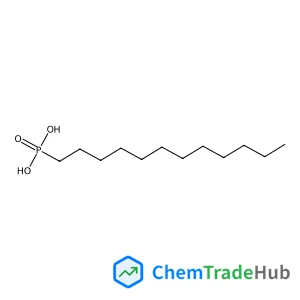

推荐供应商





免责声明
本页面提供的学术期刊信息仅供参考和研究使用。我们与任何期刊出版商均无关联,也不处理投稿事宜。如有投稿相关咨询,请直接联系相关期刊出版商。
如发现页面信息有误,请发送邮件至 support@chemtradehub.com 联系我们。我们将及时核实并处理您的问题。