



Local variations in defect polarization and covalent bonding in ferroelectric Cu2+-doped PZT and KNN functional ceramics at the morphotropic phase boundary
文献信息
发布日期
2009-07-28
DOI
10.1039/B905642D
影响因子
3.676
作者
Rüdiger-A. Eichel, Ebru Erünal, Michael D. Drahus, Donald M. Smyth, Johan van Tol, Jérôme Acker, Hans Kungl, Michael J. Hoffmann
查看原文
摘要
Cu2+-doped Pb[Zr0.54Ti0.46]O3 (PZT) and Cu2+-doped [K0.5Na0.5]NbO3 (KNN) ferroelectrics with a dopant concentration of 0.25 mol% were investigated by means of multi-frequency and multi-pulse electron paramagnetic resonance (EPR) spectroscopy. Through the use of high magnetic fields and pulsed microwave fields an enhanced resolution was achieved yielding valuable information about the structural distortion at the dopant site. The results obtained suggest that Cu2+ substitutes for both systems as an acceptor centre for the perovskite B-site. For reasons of local charge compensation, different kinds of defect associates invoking one and two oxygen vacancies are formed. These two kinds of extended defects differ in their electric and elastic properties. The results obtained are analyzed in order to characterize differences of the local structure in the Cu2+-defect center for morphotropic phase boundary compositions between the two systems. In particular, it is found that Cu2+-doping in KNN creates 50% more oxygen vacancies than the same amount of copper in PZT. Furthermore, local differences in covalent and ionic bonding are monitored.
期刊推荐
Environmental Toxicology and Pharmacology

Coloration Technology
Green Chemistry
Nature Reviews Drug Discovery
Current Pharmaceutical Biotechnology
Contact Lens & Anterior Eye

Foundations of Chemistry
European Journal of Organic Chemistry

Physical Chemistry Chemical Physics
Mini-Reviews in Medicinal Chemistry
相关文献
The influence of π–π-stacking on the light-harvesting properties of perylene bisimide antennas that are covalently linked to a [60]fullerene
Christiane C. Hofmann, Stefan M. Lindner, Michaela Ruppert, Andreas Hirsch, Saif A. Haque, Mukundan Thelakkat, Jürgen Köhler
2010-10-07
Paper
DOI: 10.1039/C0CP01200A
An improved chemical model for the quantitative description of the front propagation in the tetrathionate–chlorite reaction
Gábor Peintler, György Csekő, Andrea Petz, Attila K. Horváth
2010-01-15
Paper
DOI: 10.1039/B920618C
Stochastic approach to laser-induced ultrafast dynamics: the desorption of H2/D2 from Ru(0001)
Gernot Füchsel, Tillmann Klamroth, Jean Christophe Tremblay, Peter Saalfrank
2010-09-21
Paper
DOI: 10.1039/C0CP00895H
Undoped diamondnanoparticles: origins of surface redox chemistry
Katherine B. Holt
2010-01-06
Perspective
DOI: 10.1039/B920075D
B-Site cation diffusivity of Mn and Cr in perovskite-type LaMnO3 with cation-deficit nonstoichiometry
Shogo Miyoshi, Manfred Martin
2009-03-13
Paper
DOI: 10.1039/B901208G
A new battery-charging method suggested by molecular dynamics simulations
Ibrahim Abou Hamad, D. O. Wipf, P. A. Rikvold
2010-01-21
Paper
DOI: 10.1039/B920970K
Electrical conductivity–defect structure correlation of variable-valence and fixed-valence acceptor-doped BaTiO3 in quenched state
Han-Ill Yoo, Tae-Sik Oh, Hyung-Soon Kwon, Dong-Kyu Shin, Jong-Sook Lee
2009-03-18
Paper
DOI: 10.1039/B822381P
Correlating phase behaviour and diffusion in mesopores: perspectives revealed by pulsed field gradientNMR
Rustem Valiullin, Jörg Kärger, Roger Gläser
2009-03-16
Perspective
DOI: 10.1039/B822939B
Multinuclear gallium-oxidecations in high-silica zeolites‡
Evgeny A. Pidko, Rutger A. van Santen, Emiel J. M. Hensen
2009-01-05
Paper
DOI: 10.1039/B815943B
Calibration of 57Fe isomer shift from ab initio calculations: can theory and experiment reach an agreement?
Reshmi Kurian, Michael Filatov
2010-02-01
Paper
DOI: 10.1039/B918655G
您可能还喜欢
化合物问答
(3-氨苯基)环丙基甲酮(CAS号:162174-75-6)的主要用途是什么?
(3-氨苯基)环丙基甲酮主要用于合成化学中间体,特别是在药物化学领域作为原料。它还可以用于有机合成反应中,作为催化剂或反应物。
162174-75-6(3-Aminophenyl)(cycl...
化合物问答
如何储存亚胺菌(CAS号:136470-79-6)?
亚胺菌应储存在干燥、阴凉处,避免直接暴露于光线下。建议使用密封容器储存,防止吸潮和污染。具体的储存条件应参考产品的安全数据表(MSDS)或药品说明书。
136470-79-6Abacavir EP Impurity...
化合物问答
2-氯-2,2-二氟乙酰胺(CAS号:354-28-9)应用于哪些行业?
2-氯-2,2-二氟乙酰胺在医药、聚合物、传感器、半导体等领域有广泛应用。在医药领域,它作为中间体用于合成其他药物;在聚合物领域,用作聚合引发剂或稳定剂;在传感...
354-28-92-Chloro-2,2-difluor...
化合物问答
处理4-甲基-3-硝基-1,1-联苯(CAS号:53812-68-3)时应注意哪些实验室安全事项?
在处理4-甲基-3-硝基-1,1-联苯时,应佩戴手套、护目镜和实验室外套等个人防护装备(PPE),确保在通风橱中操作以减少吸入风险。若发生泄露,应立即使用沙子或...
53812-68-34'-Methyl-3-nitro-1,...
化合物问答
(2S)-羟基(苯基)乙酸 (2R)-N-苄基-1-(4-甲氧基苯基)丙-2-胺盐(CAS号:188690-84-8)应用于哪些行业?
该化合物广泛应用于医药、聚合物和半导体行业。在医药领域,它是某些药物中间体的重要组成部分;在聚合物领域,可用作增塑剂;在半导体行业,可用于制造光刻胶。
188690-84-8Benzeneacetic acid, ...
化合物问答
在合成中是否有芬苯哒唑砜-D3标准品(CAS号:1228182-49-7)的替代品?
芬苯哒唑砜-D3标准品的替代品可能包括类似的苯并咪唑类化合物,如芬苯哒唑本身或其非同位素标记版本。这些替代品在结构上与芬苯哒唑砜-D3相似,但在具体应用中需进行...
1228182-49-7(~2~H_3_)Methyl [5-(...
化合物问答
2-氟-4-硝基苯乙酸(CAS号:315228-19-4)通常如何合成?
2-氟-4-硝基苯乙酸可以通过一系列化学反应合成,通常是从4-氟苯胺开始,首先进行硝化反应生成4-氟-2-硝基苯胺,然后进行乙酰化反应得到目标产物。具体的合成步...
315228-19-42-(2-fluoro-4-nitrop...
化合物问答
2-氟-4-甲氧基苯乙酸(CAS号:883531-28-0)通常如何合成?
2-氟-4-甲氧基苯乙酸通常通过将4-甲氧基苯乙酸与氟化试剂(如氟化氰)反应来合成。反应通常在无水条件下进行,使用催化剂如六氟磷酸锂或四氟硼酸锂以提高选择性和产...
883531-28-02-Fluoro-4-methoxyph...
化合物问答
什么是4SC 202;4SC202(CAS号:1186222-89-8)?
4SC 202;4SC202是一种化学化合物,其化学名称为(2E)-N-(2-氨基苯基)-3-(1-{[4-(1-甲基-1H-吡唑-4-基)苯基]磺酰基}-1H...
1186222-89-8(2E)-N-(2-Aminopheny...
132980-99-53,5-Difluorobenzamid...
来源期刊
Physical Chemistry Chemical Physics
CiteScore:
5.5
自引率:
10.3%
年发文量:
3036
Physical Chemistry Chemical Physics (PCCP) is an international journal co-owned by 19 physical chemistry and physics societies from around the world. This journal publishes original, cutting-edge research in physical chemistry, chemical physics and biophysical chemistry. To be suitable for publication in PCCP, articles must include significant innovation and/or insight into physical chemistry; this is the most important criterion that reviewers and Editors will judge against when evaluating submissions. The journal has a broad scope and welcomes contributions spanning experiment, theory, computation and data science. Topical coverage includes spectroscopy, dynamics, kinetics, statistical mechanics, thermodynamics, electrochemistry, catalysis, surface science, quantum mechanics, quantum computing and machine learning. Interdisciplinary research areas such as polymers and soft matter, materials, nanoscience, energy, surfaces/interfaces, and biophysical chemistry are welcomed if they demonstrate significant innovation and/or insight into physical chemistry. Joined experimental/theoretical studies are particularly appreciated when complementary and based on up-to-date approaches.
推荐化合物
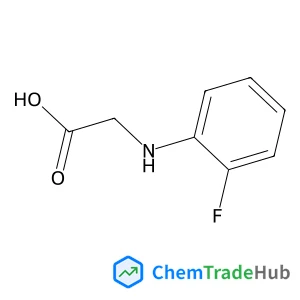
![[4-Chloro-3-(diethylcarbamoyl)phenyl]boronic acid structure](https://cnstatic.chemtradehub.com/structs/871/871332-68-2-0e3b.webp "[4-Chloro-3-(diethylcarbamoyl)phenyl]boronic acid structure")
![(2E)-4-[(1R,2S,8R,19S,21R)-14-Hydroxy-11-isopropenyl-8,23,23-trimethyl-5-(3-methyl-2-buten-1-yl)-16,20-dioxo-3,7,22-trioxaheptacyclo[17.4.1.1~8,12~.0~2,17~.0~2,21~.0~4,15~.0~6,13~]pentacosa-4(15),5,13
,17-tetraen-21-yl]-2-methyl-2-butenoic acid structure](https://cnstatic.chemtradehub.com/structs/173/173867-04-4-d2d3.webp "(2E)-4-[(1R,2S,8R,19S,21R)-14-Hydroxy-11-isopropenyl-8,23,23-trimethyl-5-(3-methyl-2-buten-1-yl)-16,20-dioxo-3,7,22-trioxaheptacyclo[17.4.1.1~8,12~.0~2,17~.0~2,21~.0~4,15~.0~6,13~]pentacosa-4(15),5,13
,17-tetraen-21-yl]-2-methyl-2-butenoic acid structure")
![2-[({[(2-Methyl-2-propanyl)oxy]carbonyl}amino)methyl]isonicotinic acid structure](https://cnstatic.chemtradehub.com/structs/473/473924-63-9-973b.webp "2-[({[(2-Methyl-2-propanyl)oxy]carbonyl}amino)methyl]isonicotinic acid structure")
2-[({[(2-Methyl-2-propanyl)oxy]carbonyl}amino)methyl]isonicotinic acid
CAS号:
473924-63-9
分子式:
C12H16N2O4
推荐供应商



免责声明
本页面提供的学术期刊信息仅供参考和研究使用。我们与任何期刊出版商均无关联,也不处理投稿事宜。如有投稿相关咨询,请直接联系相关期刊出版商。
如发现页面信息有误,请发送邮件至 support@chemtradehub.com 联系我们。我们将及时核实并处理您的问题。