






Spin-coated and PECVD low dielectric constant porous organosilicate films studied by 1D and 2D solid-state NMR
文献信息
发布日期
2009-08-24
DOI
10.1039/B909654J
影响因子
3.676
作者
Guillaume Gerbaud, Sabine Hediger, Michel Bardet, Laurent Favennec, Aziz Zenasni, Julien Beynet, Olivier Gourhant, Vincent Jousseaume
查看原文
摘要
In the research field of the sub-65 nm semiconductor industry, organosilicate SiOCH films with low dielectric constant (k < 2.4) need to be developed in order to improve the performance of integrated circuits [International Roadmap for Semiconductors (ITRS), San Jose, CA, 2004]. One way to produce SiOCH films of low dielectric constant is to introduce pores into the film. This is usually obtained in two steps. Firstly, co-deposition of a matrix precursor, with a sacrificial organic porogen, either by plasma enhanced chemical vapor deposition (PECVD) or spin-coating. Secondly, application of a specific thermal treatment to remove the porogen and create the porosity. This last step can be improved by adding to the thermal process a super-critical CO2 treatment, an UV irradiation or an electronic bombardment (e-beam). In this study, the two deposition processes as well as the various treatments applied to eliminate the porogens were evaluated and compared using high-resolution solid-state NMR. For this purpose, hybrid (containing porogens) and porous films were extensively characterized on the basis of their 1H, 13C and 29Si high-resolution NMR spectra. Information was obtained concerning the crosslinking of the Si skeleton. Spectral features could be correlated to the processes used. Isotropic chemical shift analyses and 2D correlation NMR experiments were used to show the existence and nature of the interactions between the matrix precursor and the organic porogen.
相关文献
Effects of sodium cationization versus protonation on the conformations and N-glycosidic bond stabilities of sodium cationized Urd and dUrd: solution conformation of [Urd+Na]+ is preserved upon ESI
Y. Zhu, H. A. Roy, N. A. Cunningham, S. F. Strobehn, J. Gao, M. U. Munshi, G. Berden, J. Oomens, M. T. Rodgers
2017-06-19
Paper
DOI: 10.1039/C7CP02377D
The effect of an external magnetic field on the dealloying process of the Ni–Al alloy in alkaline solution
Haixia Zhang, Mingzhu Yang, Qibo Deng
2017-06-30
Communication
DOI: 10.1039/C7CP03363J
Modeling of movement of liquid metal droplets driven by an electric field
M. F. Wang, M. J. Jin, X. J. Jin, S. G. Zuo
2017-06-20
Paper
DOI: 10.1039/C7CP02798B
A DFT study of the adsorption of glycine in the interlayer space of montmorillonite
Elizabeth Escamilla-Roa, F. Javier Huertas, Alfonso Hernández-Laguna, C. Ignacio Sainz-Díaz
2017-05-17
Paper
DOI: 10.1039/C7CP02300F
Effect of the cation on the stability of cation–glyme complexes and their interactions with the [TFSA]− anion
Seiji Tsuzuki, Toshihiko Mandai, Soma Suzuki, Wataru Shinoda, Takenobu Nakamura, Tetsuya Morishita, Kazuhide Ueno, Shiro Seki, Yasuhiro Umebayashi, Masayoshi Watanabe
2017-07-05
Paper
DOI: 10.1039/C7CP02779F
Computing distance distributions from dipolar evolution data with overtones: RIDME spectroscopy with Gd(iii)-based spin labels
Katharina Keller, Valerie Mertens, Mian Qi, Anna I. Nalepa, Adelheid Godt, Anton Savitsky, Gunnar Jeschke, Maxim Yulikov
2017-06-21
Paper
DOI: 10.1039/C7CP01524K
Ternary solvent for CH3NH3PbI3 perovskite films with uniform domain size
Lin Xie, Heewon Hwang, Minjung Kim, Kyungkon Kim
2016-11-30
Paper
DOI: 10.1039/C6CP06709C
Seeing the invisible plasma with transient phonons in cuprous oxide
Laszlo Frazer, Kelvin B. Chang, Aleksandr Chernatynskiy
2016-12-12
Paper
DOI: 10.1039/C6CP06532E
Method to determine radiative and non-radiative defects applied to AgInS2–ZnS luminescent nanocrystals
G. Le Blevennec, F. Chandezon
2016-12-22
Paper
DOI: 10.1039/C6CP06509K
Self-assembly of melem on Au(111) and Ag(111): the origin of two different hydrogen bonding configurations
Meiling Bao, Xiaoqing Wei, Liangliang Cai, Qiang Sun, Zhengxin Liu, Wei Xu
2017-06-27
Paper
DOI: 10.1039/C7CP03862C
您可能还喜欢
化合物问答
4-[4-三氟甲基苯基]恶唑(CAS号:1126636-40-5)通常如何合成?
4-[4-三氟甲基苯基]恶唑通常通过将4-三氟甲基苯酚与异硫氰酸苯酯在有机溶剂中进行酯化反应合成。该反应可在无水条件下,使用适当的催化剂,如四丁基氢氧化铵,以提...
1126636-40-54-(4-(Trifluoromethy...
59729-32-71-[3-(Dimethylamino)...
化合物问答
RockPhos Pd G3(CAS号:2009020-38-4)通常如何合成?
RockPhos Pd G3 通常通过钯催化偶联反应合成,使用配体 (2'-Amino-2-biphenylyl)(methanesulfonato-kappa...
2009020-38-4(2'-Amino-2-biphenyl...
化合物问答
1-哌啶甲酰胺(CAS号:2158-03-4)的市场或研究趋势如何?
1-哌啶甲酰胺作为有机合成中的重要中间体,其市场需求主要受医药、农药、染料等行业推动。近年来,随着新药开发和绿色化学的发展,该化合物的研究趋势集中在开发更高效、...
2158-03-41-Piperidinecarboxam...
化合物问答
2-(二苯基膦基)乙胺(CAS号:4848-43-5)适用哪些法规指南?
2-(二苯基膦基)乙胺适用于多种法规指南,包括但不限于《全球化学品统一分类和标签制度》(GHS),欧盟《化学品注册、评估、授权和限制》法规(REACH),以及美...
4848-43-52-(Diphenylphosphino...
化合物问答
如何储存间苯二甲酸二烯丙酯(CAS号:1087-21-4)?
间苯二甲酸二烯丙酯应储存在阴凉、干燥、通风良好的地方,远离火源和热源。储存容器应密封,避免光照和高温。储存温度应控制在25℃以下,相对湿度应低于80%。避免与其...
1087-21-4Diallyl isophthalate
化合物问答
什么是间甲苯异硫代异氰酸酯(CAS号:621-30-7)?
间甲苯异硫代异氰酸酯是一种有机化合物,分子式为C7H7NO2S,具有刺激性气味。它是一种重要的有机合成中间体,在合成其他化合物时广泛应用。
621-30-71-Isothiocyanato-3-m...
化合物问答
在合成中是否有N-Boc-D-苯丙氨醇(CAS号:106454-69-7)的替代品?
在合成中,可以考虑使用N-Cbz-D-苯丙氨醇或N-Fmoc-D-苯丙氨醇作为替代品。这些化合物同样具有保护氨基的功能,且在合成过程中表现出良好的反应性能。
106454-69-72-Methyl-2-propanyl ...
化合物问答
3-羟甲基-2-氧异丙基吡啶(CAS号:954240-50-7)的主要用途是什么?
3-羟甲基-2-氧异丙基吡啶主要用于有机合成领域,可以作为合成其他药物、农药或精细化学品的中间体。此外,它还可能在实验室研究中作为特定反应的前体或溶剂。
954240-50-7(2-Isopropoxy-3-pyri...
化合物问答
6-氨基-9-甲基嘌呤(CAS号:700-00-5)应用于哪些行业?
6-氨基-9-甲基嘌呤目前主要应用于医药行业,作为某些药物的中间体。此外,它还可能用于聚合物、传感器和半导体的某些领域,作为功能性单体或掺杂剂。
700-00-59-Methyl-9H-purin-6-...
来源期刊
Physical Chemistry Chemical Physics

CiteScore:
5.5
自引率:
10.3%
年发文量:
3036
Physical Chemistry Chemical Physics (PCCP) is an international journal co-owned by 19 physical chemistry and physics societies from around the world. This journal publishes original, cutting-edge research in physical chemistry, chemical physics and biophysical chemistry. To be suitable for publication in PCCP, articles must include significant innovation and/or insight into physical chemistry; this is the most important criterion that reviewers and Editors will judge against when evaluating submissions. The journal has a broad scope and welcomes contributions spanning experiment, theory, computation and data science. Topical coverage includes spectroscopy, dynamics, kinetics, statistical mechanics, thermodynamics, electrochemistry, catalysis, surface science, quantum mechanics, quantum computing and machine learning. Interdisciplinary research areas such as polymers and soft matter, materials, nanoscience, energy, surfaces/interfaces, and biophysical chemistry are welcomed if they demonstrate significant innovation and/or insight into physical chemistry. Joined experimental/theoretical studies are particularly appreciated when complementary and based on up-to-date approaches.
推荐化合物
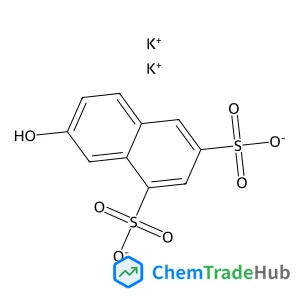
![Bis[(1,2,3,4,5-eta)-1-(diphenylphosphino)cyclopentadienyl]iron structure](https://cnstatic.chemtradehub.com/structs/121/12150-46-8-ecd2.webp "Bis[(1,2,3,4,5-eta)-1-(diphenylphosphino)cyclopentadienyl]iron structure")
推荐供应商



免责声明
本页面提供的学术期刊信息仅供参考和研究使用。我们与任何期刊出版商均无关联,也不处理投稿事宜。如有投稿相关咨询,请直接联系相关期刊出版商。
如发现页面信息有误,请发送邮件至 support@chemtradehub.com 联系我们。我们将及时核实并处理您的问题。