


![4-{2-[4-(2-Methyl-2-propanyl)phenyl]ethoxy}quinazoline structure](https://cnstatic.chemtradehub.com/structs/120/120928-09-8-d3db.webp "4-{2-[4-(2-Methyl-2-propanyl)phenyl]ethoxy}quinazoline structure")
Neon-matrix spectroscopic and theoretical studies of the reactivity of titanium dimer with diatomic ligands: comparison of reactions with nitrogen and carbon monoxide
文献信息
发布日期
2009-08-27
DOI
10.1039/B910056C
影响因子
3.676
作者
S. M. Souvi, N. Berkaïne, M. E. Alikhani, L. Manceron
查看原文
摘要
The reactivity of diatomic titanium with molecular carbon monoxide has been investigated in solid neon at very low temperature. In contrast to the spontaneous reaction observed between Ti2 and N2, our results show that the formation of dititanium oxycarbide (OTi2C) from the condensation of effusive beams of Ti and CO in neon matrices involves several intermediate steps including one metastable intermediate. In the absence of electronic excitation, only formation of a Ti2(CO) complex occurs spontaneously during the reaction at 9 K of ground state Ti2 and CO, as reported in solid argon by Xu, Jiang and Tsumori (Angew. Chem. Int. Ed., 2005, 44, 4338). However, during deposition or following electronic excitation, this species rearranges into a new species: the more stable, OTi2C oxycarbide form. Several low-lying excited states of OTi2C are also observed between 0.77 and 0.89 eV above the ground state, leading to a complex sequence of interacting vibronic transitions, merging into a broad continuum above 1 eV. Observations of Ti212C16O, Ti213C16O and Ti212C18O and natural titanium isotopic data enable the identification of four fundamental vibrations in the ground electronic state and two others in the first two excited states. Quantum chemical calculations predict an open-shell 1Ag ground state with Ti–C and Ti–O distances close to 184 pm, and 91° for the TiCTi and TiOTi bond angles, and give fundamental frequencies in good agreement with observation. The reaction paths of the Ti2 + N2→ Ti2N2 and Ti2 + CO → Ti2(CO) → OTi2C have been investigated and a reaction scheme is proposed accounting for the similarities in nature and properties of the final products, as well as explaining the observation of a coordination complex with Ti2 only in the case of the carbonyl ligand.
期刊推荐
Pharmacological Reviews
Planta Medica

Molecular Pharmacology

Journal of Organometallic Chemistry
Journal of Physics and Chemistry of Solids

Science

Organic Preparations and Procedures International

Journal of Heterocyclic Chemistry

Science Progress

Proceedings of the National Academy of Sciences of the United States of America
相关文献
Beware of phosphate: evidence of specific dendrimer–phosphate interactions
Mónika Kéri, Zoltán Nagy, Levente Novák, Edit Szarvas, Lajos P. Balogh, István Bányai
2017-03-31
Paper
DOI: 10.1039/C7CP00875A
Local pH and effective pKA of weak polyelectrolytes – insights from computer simulations
Lucie Nová, Filip Uhlík, Peter Košovan
2017-02-28
Paper
DOI: 10.1039/C7CP00265C
Reduced {001}-TiO2−x photocatalysts: noble-metal-free CO2 photoreduction for selective CH4 evolution
Lhoussain Khrouz, Yi Zhou, Bin Shen, Chunyang Dong, Mingyang Xing, Shashank Mishra, Stéphane Daniele, Jinlong Zhang
2017-05-03
Paper
DOI: 10.1039/C7CP01212H
Mechanical and vibrational characterization of amyloid-like HET-s nanosheets based on the skewed plate theory
Hyun Joon Chang, Myeongsang Lee, Jae In Kim, Sungsoo Na
2017-04-03
Paper
DOI: 10.1039/C7CP01418J
Reduction and oxidation of Au adatoms on the CeO2(111) surface – DFT+U versus hybrid functionals
Christopher Penschke, Joachim Paier
2017-04-24
Paper
DOI: 10.1039/C7CP01785E
Increased substrate affinity in the Escherichia coli L28R dihydrofolate reductase mutant causes trimethoprim resistance
Haleh Abdizadeh, Yusuf Talha Tamer, Omer Acar, Erdal Toprak, Ali Rana Atilgan, Canan Atilgan
2017-04-03
Paper
DOI: 10.1039/C7CP01458A
Assessment of electronic structure methods for the determination of the ground spin states of Fe(ii), Fe(iii) and Fe(iv) complexes
2017-05-02
Paper
DOI: 10.1039/C7CP01263B
A coarse-grained model for assisting the investigation of structure and dynamics of large nucleic acids by ion mobility spectrometry–mass spectrometry
S. Vangaveti, R. J. D'Esposito, J. L. Lippens, S. V. Ranganathan
2017-03-16
Paper
DOI: 10.1039/C7CP00717E
Structural control of side-chain chromophores to achieve highly efficient electro-optic activity
Zhuo Chen, Jialei Liu, Hongyan Xiao, Zhen Zhen, Xinhou Liu
2017-03-31
Paper
DOI: 10.1039/C7CP01582H
您可能还喜欢
化合物问答
4-[[6-(3-苯基苯基)-7H-嘌呤-2-基]氨基]苯磺酰胺(CAS号:2079895-42-2)适用哪些法规指南?
该化合物需遵循REACH法规以确保其安全使用和管理。同时,根据其潜在的生物降解性和毒性,也需要符合GHS分类中的相应要求。此外,若用于医药或食品相关领域,则还需...
2079895-42-24-{[6-(3-Biphenylyl)...
化合物问答
反式-度骨化醇(CAS号:74007-20-8)的物理化学性质是什么?
反式-度骨化醇是一种脂溶性维生素D3的衍生物,呈无色或白色结晶性粉末,不溶于水,溶于乙醇、丙酮、氯仿等有机溶剂。其分子式为C28H44O,分子量为404.65。...
74007-20-8trans-Doxercalcifero...
化合物问答
莲花掌苷(CAS号:59282-56-3)的市场或研究趋势如何?
莲花掌苷作为一种天然产物,近年来在抗炎、抗癌等生物活性研究方面显示出一定的潜力,因此市场需求逐渐增长。市场动态方面,随着天然产物开发的深入,预计该化合物的研究会...
59282-56-3Lindleyin
化合物问答
2-溴-6-(吡咯烷-1-基)吡啶-4-硼酸频那醇酯(CAS号:1150271-64-9)应用于哪些行业?
2-溴-6-(吡咯烷-1-基)吡啶-4-硼酸频那醇酯在医药领域有着广泛的应用,它可以用作药物合成中的中间体。此外,它还可以用于有机合成,特别是在构建复杂杂环化合...
1150271-64-92-Bromo-6-(1-pyrroli...
化合物问答
什么是methyl 2-(4-bromophenyl)-3-methylbutanoate(CAS号:1061284-70-5)?
methyl 2-(4-溴苯基)-3-甲基丁酸甲酯是一种化学物质,分子式为C12H13BrO2。它是一种有机化合物,具有一定的挥发性和易燃性。
1061284-70-52-(4-Bromo-phenyl)-3...
化合物问答
CJC1-295(CAS号:863288-34-0)的物理化学性质是什么?
CJC1-295是一种具有复杂肽链结构的化合物,其分子量约为1875 Da。该化合物在水中具有一定的溶解性,但在有机溶剂中的溶解性不佳。它是一种反应活性化合物,...
863288-34-0L-tyrosyl-D-alanyl-L...
化合物问答
三正丁基锍碘(CAS号:18146-62-8)的市场或研究趋势如何?
三正丁基锍碘作为一种重要的有机硫化合物,主要用于有机合成中作为亲电试剂。近年来,由于其在合成中的广泛应用,市场对其需求持续增长。此外,随着绿色化学的发展,对其替...
18146-62-8Tributylsulfonium io...
化合物问答
雌二醇-[13C3]同位素内标(CAS号:1261254-48-1)通常如何合成?
雌二醇-[13C3]同位素内标通常通过在雌二醇分子中引入[13C3]同位素来合成。常见的方法是通过化学标记反应,如与[13C3]标记的甲基溴化物进行亲核取代反应...
1261254-48-117beta-Estradiol-2,3...
化合物问答
N1-(2-吡啶甲基)-N2-(2-甲基-1-萘基)草酰胺(CAS号:2611225-93-3)的物理化学性质是什么?
N1-(2-吡啶甲基)-N2-(2-甲基-1-萘基)草酰胺为固体化合物,具有良好的结晶形态,分子量为340.34 g/mol。该化合物在水中的溶解度较低,但在有...
2611225-93-3N-(2-Methyl-1-naphth...
化合物问答
如何处理含有十五碳烯酸甲酯(顺-10)(C15:1)标准品(CAS号:90176-52-6)的废料?
含有十五碳烯酸甲酯(顺-10)(C15:1)标准品的废料应首先进行适当收集和储存,避免与其他化学品混合。然后,可采用焚烧或交由专业废物处理公司进行处理。处理过程...
90176-52-6(Z)-10-Pentadecenoic...
来源期刊
Physical Chemistry Chemical Physics

CiteScore:
5.5
自引率:
10.3%
年发文量:
3036
Physical Chemistry Chemical Physics (PCCP) is an international journal co-owned by 19 physical chemistry and physics societies from around the world. This journal publishes original, cutting-edge research in physical chemistry, chemical physics and biophysical chemistry. To be suitable for publication in PCCP, articles must include significant innovation and/or insight into physical chemistry; this is the most important criterion that reviewers and Editors will judge against when evaluating submissions. The journal has a broad scope and welcomes contributions spanning experiment, theory, computation and data science. Topical coverage includes spectroscopy, dynamics, kinetics, statistical mechanics, thermodynamics, electrochemistry, catalysis, surface science, quantum mechanics, quantum computing and machine learning. Interdisciplinary research areas such as polymers and soft matter, materials, nanoscience, energy, surfaces/interfaces, and biophysical chemistry are welcomed if they demonstrate significant innovation and/or insight into physical chemistry. Joined experimental/theoretical studies are particularly appreciated when complementary and based on up-to-date approaches.
推荐化合物
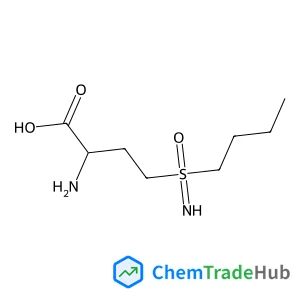
![N-[(Benzyloxy)carbonyl]serine structure](https://cnstatic.chemtradehub.com/structs/276/2768-56-1-77f7.webp "N-[(Benzyloxy)carbonyl]serine structure")
推荐供应商







免责声明
本页面提供的学术期刊信息仅供参考和研究使用。我们与任何期刊出版商均无关联,也不处理投稿事宜。如有投稿相关咨询,请直接联系相关期刊出版商。
如发现页面信息有误,请发送邮件至 support@chemtradehub.com 联系我们。我们将及时核实并处理您的问题。