


Photoreaction of mutated LOVphotoreceptor domains from Chlamydomonas reinhardtii with aliphatic mercaptans: implications for the mechanism of wild type LOV
文献信息
发布日期
2010-05-06
DOI
10.1039/B922408D
影响因子
3.676
作者
Karin Lanzl, Madlene v. Sanden-Flohe, Roger-Jan Kutta, Bernhard Dick
查看原文
摘要
Irradiation of the LOV1 domain from the blue-light photoreceptor phototropin of the green alga Chlamydomonas reinhardtii leads to the formation of a covalent adduct of the sulfur atom of cysteine 57 to the carbon C4a in the chromophore FMN. This reaction is not possible in the mutant LOV1-C57G in which this cysteine is replaced by glycine. Irradiation of LOV1-C57G in the absence of oxygen but in the presence of aliphatic mercaptans or thioethers leads to the formation of a species with an absorption maximum at 615 nm, which is identified as the neutral radical FMNH˙. When oxygen is admitted, the reaction is completely reversible. Irradiation of LOV1-C57G in the presence of methylmercaptan CH3SH under oxygen-free conditions yields, in addition to FMNH˙, a third species with a single absorption maximum at 379 nm. This species is stable against oxygen and is also formed when the irradiation is performed in the presence of oxygen. This species is assigned to the adduct between CH3SH and FMN. In aqueous solution the photoreaction of CH3SH with FMN leads to the fully reduced hydroquinone form FMNH2 or its anion FMNH−. Adduct formation apparently requires the protein cage. After formation, the adduct is stable for hours inside the protein, but decomposes immediately upon denaturation. The implications of these observations for the mechanism of adduct formation in wild type LOV domains are discussed.
期刊推荐
Bioorganic & Medicinal Chemistry Letters
Journal of the Indian Institute of Science
NDT & E International
Herald of the Russian Academy of Sciences
Acta Metallurgica Sinica-English Letters
Medicinal Chemistry Research

Polycyclic Aromatic Compounds
Critical Reviews in Solid State and Materials Sciences
Main Group Chemistry
Bioorganic & Medicinal Chemistry
相关文献
Half-metallic and magnetic semiconducting behaviors of metal-doped blue phosphorus nanoribbons from first-principles calculations
Shun-Jin Peng, Kai-Ming Wu, Kai-Lun Yao, Chee-Leung Mak, Chi-Hang Lam
2018-02-13
Paper
DOI: 10.1039/C7CP08635K
Investigation of copper precursors in the synthesis of higher alcohols from syngas over CuZnAl catalysts without promoters
Yong-Jun Liu, Lei Jia, Wei Huang
2018-06-26
Paper
DOI: 10.1039/C8CP02296H
Understanding proton capture and cation-induced dimerization of [Ag29(BDT)12]3− clusters by ion mobility mass spectrometry
Papri Chakraborty, Ananya Baksi, Sathish Kumar Mudedla, Abhijit Nag, Ganesan Paramasivam, Venkatesan Subramanian, Thalappil Pradeep
2018-02-12
Paper
DOI: 10.1039/C7CP08181B
B3@Si12+: strong stabilizing effects of a triatomic cyclic boron unit on tubular silicon clusters
Hung Tan Pham, Thi Tuyet Mai Dang, Long Van Duong
2018-02-19
Paper
DOI: 10.1039/C8CP00380G
Multi-channel dynamics in high harmonic generation of aligned CO2: ab initio analysis with time-dependent B-spline algebraic diagrammatic construction
M. Ruberti, P. Decleva, V. Averbukh
2018-03-13
Paper
DOI: 10.1039/C7CP07849H
Platinum microelectrodes on gadolinia doped ceria single crystals – bulk properties and electrode kinetics
2018-02-19
Paper
DOI: 10.1039/C8CP00261D
Decoding the role of encapsulated ions in the electronic and magnetic properties of mixed-valence polyoxovanadate capsules {X@V22O54} (X = ClO4−, SCN−, VO2F2−): a combined theoretical approach
Almudena Notario-Estévez, Piotr Kozłowski, Oliver Linnenberg, Xavier López, Kirill Yu. Monakhov
2018-06-08
Paper
DOI: 10.1039/C8CP02669F
Understanding the quenching nature of Mn4+ in wide band gap inorganic compounds: design principles for Mn4+ phosphors with higher efficiency
Lei Wang, Zhaoxiang Dai, Rulong Zhou
2018-05-24
Paper
DOI: 10.1039/C8CP02569J
Improved fill factor in inverted planar perovskite solar cells with zirconium acetate as the hole-and-ion-blocking layer
Xuewen Zhang, Chunjun Liang, Mengjie Sun, Huimin Zhang, Chao Ji, Zebang Guo, Yajun Xu, Fulin Sun, Qi Song, Zhiqun He
2018-02-23
Communication
DOI: 10.1039/C8CP00563J
您可能还喜欢
化合物问答
4-[[6-(3-苯基苯基)-7H-嘌呤-2-基]氨基]苯磺酰胺(CAS号:2079895-42-2)适用哪些法规指南?
该化合物需遵循REACH法规以确保其安全使用和管理。同时,根据其潜在的生物降解性和毒性,也需要符合GHS分类中的相应要求。此外,若用于医药或食品相关领域,则还需...
2079895-42-24-{[6-(3-Biphenylyl)...
化合物问答
反式-度骨化醇(CAS号:74007-20-8)的物理化学性质是什么?
反式-度骨化醇是一种脂溶性维生素D3的衍生物,呈无色或白色结晶性粉末,不溶于水,溶于乙醇、丙酮、氯仿等有机溶剂。其分子式为C28H44O,分子量为404.65。...
74007-20-8trans-Doxercalcifero...
化合物问答
莲花掌苷(CAS号:59282-56-3)的市场或研究趋势如何?
莲花掌苷作为一种天然产物,近年来在抗炎、抗癌等生物活性研究方面显示出一定的潜力,因此市场需求逐渐增长。市场动态方面,随着天然产物开发的深入,预计该化合物的研究会...
59282-56-3Lindleyin
化合物问答
2-溴-6-(吡咯烷-1-基)吡啶-4-硼酸频那醇酯(CAS号:1150271-64-9)应用于哪些行业?
2-溴-6-(吡咯烷-1-基)吡啶-4-硼酸频那醇酯在医药领域有着广泛的应用,它可以用作药物合成中的中间体。此外,它还可以用于有机合成,特别是在构建复杂杂环化合...
1150271-64-92-Bromo-6-(1-pyrroli...
化合物问答
什么是methyl 2-(4-bromophenyl)-3-methylbutanoate(CAS号:1061284-70-5)?
methyl 2-(4-溴苯基)-3-甲基丁酸甲酯是一种化学物质,分子式为C12H13BrO2。它是一种有机化合物,具有一定的挥发性和易燃性。
1061284-70-52-(4-Bromo-phenyl)-3...
化合物问答
CJC1-295(CAS号:863288-34-0)的物理化学性质是什么?
CJC1-295是一种具有复杂肽链结构的化合物,其分子量约为1875 Da。该化合物在水中具有一定的溶解性,但在有机溶剂中的溶解性不佳。它是一种反应活性化合物,...
863288-34-0L-tyrosyl-D-alanyl-L...
化合物问答
三正丁基锍碘(CAS号:18146-62-8)的市场或研究趋势如何?
三正丁基锍碘作为一种重要的有机硫化合物,主要用于有机合成中作为亲电试剂。近年来,由于其在合成中的广泛应用,市场对其需求持续增长。此外,随着绿色化学的发展,对其替...
18146-62-8Tributylsulfonium io...
化合物问答
雌二醇-[13C3]同位素内标(CAS号:1261254-48-1)通常如何合成?
雌二醇-[13C3]同位素内标通常通过在雌二醇分子中引入[13C3]同位素来合成。常见的方法是通过化学标记反应,如与[13C3]标记的甲基溴化物进行亲核取代反应...
1261254-48-117beta-Estradiol-2,3...
化合物问答
N1-(2-吡啶甲基)-N2-(2-甲基-1-萘基)草酰胺(CAS号:2611225-93-3)的物理化学性质是什么?
N1-(2-吡啶甲基)-N2-(2-甲基-1-萘基)草酰胺为固体化合物,具有良好的结晶形态,分子量为340.34 g/mol。该化合物在水中的溶解度较低,但在有...
2611225-93-3N-(2-Methyl-1-naphth...
化合物问答
如何处理含有十五碳烯酸甲酯(顺-10)(C15:1)标准品(CAS号:90176-52-6)的废料?
含有十五碳烯酸甲酯(顺-10)(C15:1)标准品的废料应首先进行适当收集和储存,避免与其他化学品混合。然后,可采用焚烧或交由专业废物处理公司进行处理。处理过程...
90176-52-6(Z)-10-Pentadecenoic...
来源期刊
Physical Chemistry Chemical Physics

CiteScore:
5.5
自引率:
10.3%
年发文量:
3036
Physical Chemistry Chemical Physics (PCCP) is an international journal co-owned by 19 physical chemistry and physics societies from around the world. This journal publishes original, cutting-edge research in physical chemistry, chemical physics and biophysical chemistry. To be suitable for publication in PCCP, articles must include significant innovation and/or insight into physical chemistry; this is the most important criterion that reviewers and Editors will judge against when evaluating submissions. The journal has a broad scope and welcomes contributions spanning experiment, theory, computation and data science. Topical coverage includes spectroscopy, dynamics, kinetics, statistical mechanics, thermodynamics, electrochemistry, catalysis, surface science, quantum mechanics, quantum computing and machine learning. Interdisciplinary research areas such as polymers and soft matter, materials, nanoscience, energy, surfaces/interfaces, and biophysical chemistry are welcomed if they demonstrate significant innovation and/or insight into physical chemistry. Joined experimental/theoretical studies are particularly appreciated when complementary and based on up-to-date approaches.
推荐化合物
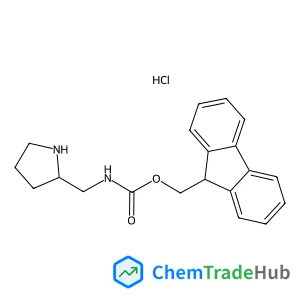
(S)-(9H-Fluoren-9-yl)methyl (pyrrolidin-2-ylmethyl)carbamate hydrochloride
CAS号:
1217813-15-4
分子式:
C20H23ClN2O2
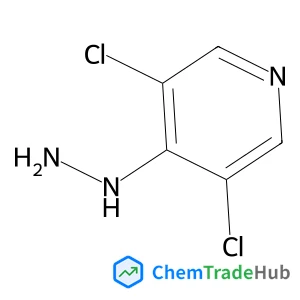
![[(5-Methyl-1,3,4-thiadiazol-2-yl)sulfanyl]acetic acid structure](https://cnstatic.chemtradehub.com/structs/509/50918-26-8-4ce8.webp "[(5-Methyl-1,3,4-thiadiazol-2-yl)sulfanyl]acetic acid structure")
推荐供应商



免责声明
本页面提供的学术期刊信息仅供参考和研究使用。我们与任何期刊出版商均无关联,也不处理投稿事宜。如有投稿相关咨询,请直接联系相关期刊出版商。
如发现页面信息有误,请发送邮件至 support@chemtradehub.com 联系我们。我们将及时核实并处理您的问题。