


![(3S,4aS,8aS)-2-[(2R,3S)-3-Amino-2-hydroxy-4-phenylbutyl]-N-(2-methyl-2-propanyl)decahydro-3-isoquinolinecarboxamide structure](https://cnstatic.chemtradehub.com/structs/136/136522-17-3-4d77.webp "(3S,4aS,8aS)-2-[(2R,3S)-3-Amino-2-hydroxy-4-phenylbutyl]-N-(2-methyl-2-propanyl)decahydro-3-isoquinolinecarboxamide structure")
DFT study of propane dehydrogenation on Pt catalyst: effects of step sites
文献信息
发布日期
2011-01-21
DOI
10.1039/C0CP00341G
影响因子
3.676
作者
Ming-Lei Yang, Yi-An Zhu, Chen Fan, Zhi-Jun Sui, De Chen, Xing-Gui Zhou
查看原文
摘要
Self-consistent periodic slab calculations based on gradient-corrected density functional theory (DFT-GGA) have been conducted to examine the reaction network of propane dehydrogenation over close-packed Pt(111) and stepped Pt(211) surfaces. Selective C–H or C–C bond cleaving is investigated to gain a better understanding of the catalyst site requirements for propane dehydrogenation. The energy barriers for the dehydrogenation of propane to form propylene are calculated to be in the region of 0.65–0.75 eV and 0.25–0.35 eV on flat and stepped surfaces, respectively. Likewise, the activation of the side reactions such as the deep dehydrogenation and cracking of C3 derivatives depends strongly on the step density, arising from the much lower energy barriers on Pt(211). Taking the activation energy difference between propylene dehydrogenation and propylene desorption as the descriptor, we find that while step sites play a crucial role in the activation of propane dehydrogenation, the selectivity towards propylene is substantially lowered in the presence of the coordinatively unsaturated surface Pt atoms. As the sole C3 derivative which prefers the cleavage of the C–C bond to the C–H bond breaking, propyne is suggested to be the starting point for the C–C bond breaking which eventually gives rise to the formation of ethane, methane and coke. These findings provide a rational interpretation of the recent experimental observations that smaller Pt particles containing more step sites are much more active but less selective than larger particles in propane dehydrogenation.
期刊推荐

Medicinal Chemistry Research
Polycyclic Aromatic Compounds
Critical Reviews in Solid State and Materials Sciences

Main Group Chemistry

Atomization and Sprays

NDT & E International

Journal of Asian Natural Products Research
Journal of the Indian Institute of Science

Topics in Catalysis

Bioorganic & Medicinal Chemistry Letters
相关文献
Asymmetric total synthesis of cryptoconcatone I
Ranjan Kumar Acharyya, Pratik Pal, Shrestha Chatterjee, Samik Nanda
2019-03-12
Paper
DOI: 10.1039/C9OB00399A
Selective azide–alkyne cycloaddition reactions of azidoalkylated calixarenes
Alexander Gorbunov, Julia Kuznetsova, Ilya Deltsov, Anastasia Molokanova, Dmitry Cheshkov, Stanislav Bezzubov, Vladimir Kovalev, Ivan Vatsouro
2020-07-15
Research Article
DOI: 10.1039/D0QO00650E
Pictet–Spengler reaction based on in situ generated α-amino iminium ions through the Heyns rearrangement
Guo-bin Yang, Yong-po Zhang, Dong-dong Guo, Jin-zhong Zhao, Guang-xun Li, Zhuo Tang
2020-09-18
Research Article
DOI: 10.1039/D0QO00722F
Poloxin-2HT+: changing the hydrophobic tag of Poloxin-2HT increases Plk1 degradation and apoptosis induction in tumor cells
Stefan Rubner, Sabine Schubert, Thorsten Berg
2019-03-08
Communication
DOI: 10.1039/C9OB00080A
An improved synthesis of the [5.6.7]-tricyclic core of cyrneine B and glaucopine C
Guo-Jie Wu, Xiu Han
2020-08-25
Research Article
DOI: 10.1039/D0QO00758G
Transmembrane H+/Cl− cotransport activity of bis(amido)imidazole receptors
Sopan Valiba Shinde, Pinaki Talukdar
2019-04-01
Paper
DOI: 10.1039/C9OB00554D
Recent advances in the synthesis of bridgehead (or ring-junction) nitrogen heterocycles via transition metal-catalyzed C–H bond activation and functionalization
Biao Nie, Wanqing Wu, Yingjun Zhang, Huanfeng Jiang, Ji Zhang
2020-08-05
Review Article
DOI: 10.1039/D0QO00510J
您可能还喜欢
化合物问答
什么是3-表南美楝属二醇(CAS号:19942-04-2)?
3-表南美楝属二醇是一种具有特定立体化学结构的化合物,其分子式为C31H52O2,属于甾醇类化合物。它具有光学活性,是一种复杂的有机分子,主要存在于一些植物中。
19942-04-2(3S,5R,8R,9R,10R,13R...
化合物问答
3-羧基-5-碘苯甲酸甲酯(CAS号:50765-22-5)应用于哪些行业?
3-羧基-5-碘苯甲酸甲酯主要应用于医药行业,作为合成某些药物中间体的重要原料。此外,它还可能用于聚合物的改性、传感器的制备以及半导体材料的制备等领域。
50765-22-5Methyl 3-hydroxy-5-i...
化合物问答
什么是3-Bromoindolin-2-one(CAS号:22942-87-6)?
3-Bromoindolin-2-one是一种含有溴代基团的吲哚酮衍生物,分子式为C9H7BrNO。它是一种无色固体,具有一定的挥发性,熔点为158-159°C...
22942-87-63-Bromoindolin-2-one
化合物问答
如何处理含有L-Lysyl-L-phenylalanyl-L-isoleucylglycyl-L-leucyl-L-methioninamide(CAS号:2990-43-4)的废料?
对于含有该化合物的废液,应先进行中和处理,然后根据其毒性和活性选择合适的处置方法。可以考虑焚烧处理或由专业的化学品废物处理公司进行无害化处理。处理过程中需注意环...
2990-43-4L-Lysyl-L-phenylalan...
化合物问答
ANGIOTENSIN 1/2 + A (2 - 8)(CAS号:51833-76-2)的物理化学性质是什么?
ANGIOTENSIN 1/2 + A (2 - 8)是一种蛋白质类化合物,具有典型的蛋白质性质。它的分子量约为5900 Da。该化合物在水中具有一定的溶解性,...
51833-76-2ANGIOTENSIN 1/2 + A ...
化合物问答
如何储存2-甲基硫代嘧啶-5-硼酸频那酯(CAS号:940284-18-4)?
应将该化合物存放在阴凉干燥、通风良好的地方,避免阳光直射。建议将化合物密封保存在避光的、干燥的容器中,远离火源和高温环境。
940284-18-42-(Methylthio)-5-(4,...
化合物问答
什么是苏丹红IV氘代物 标准品(CAS号:1014689-18-9)?
苏丹红IV氘代物 标准品是一种含有氘代标记的苏丹红IV化合物,是一种用于化合物分析、结构确证以及代谢研究的标准物质。
1014689-18-91-[(E)-{2-Methyl-4-[...
化合物问答
(+)-2-Amino-6-propionamido-d3-tetrahydrobenzothiazole(CAS号:1217680-69-7)适用哪些法规指南?
该化合物需要遵循《全球化学品统一分类和标签制度》(GHS)中的分类和标签要求,具体分类需依据其毒性和物理化学性质。此外,还需要符合《欧盟化学品注册、评估、授权和...
1217680-69-7(+)-2-Amino-6-propio...
化合物问答
如何储存2-氨基-2-(2-吡啶)乙酸乙酯(CAS号:55243-15-7)?
2-氨基-2-(2-吡啶)乙酸乙酯应储存于阴凉、干燥、通风良好的环境中,避免高温和光照。应使用密封容器储存,并远离易燃物、氧化剂和其他危险化学品。
55243-15-7Ethyl 2-amino-2-(pyr...
化合物问答
3-羟基-4-甲氧基吡啶-2-羧酸(CAS号:210300-09-7)的主要用途是什么?
3-羟基-4-甲氧基吡啶-2-羧酸主要用于合成其他有机化合物,如药物合成、农药合成和染料合成等。此外,它还可用作中间体和试剂,在化学研究领域也有一定的应用。
210300-09-73-Hydroxy-4-methoxy-...
来源期刊
Physical Chemistry Chemical Physics

CiteScore:
5.5
自引率:
10.3%
年发文量:
3036
Physical Chemistry Chemical Physics (PCCP) is an international journal co-owned by 19 physical chemistry and physics societies from around the world. This journal publishes original, cutting-edge research in physical chemistry, chemical physics and biophysical chemistry. To be suitable for publication in PCCP, articles must include significant innovation and/or insight into physical chemistry; this is the most important criterion that reviewers and Editors will judge against when evaluating submissions. The journal has a broad scope and welcomes contributions spanning experiment, theory, computation and data science. Topical coverage includes spectroscopy, dynamics, kinetics, statistical mechanics, thermodynamics, electrochemistry, catalysis, surface science, quantum mechanics, quantum computing and machine learning. Interdisciplinary research areas such as polymers and soft matter, materials, nanoscience, energy, surfaces/interfaces, and biophysical chemistry are welcomed if they demonstrate significant innovation and/or insight into physical chemistry. Joined experimental/theoretical studies are particularly appreciated when complementary and based on up-to-date approaches.
推荐化合物
![3-[4-(difluoromethoxy)phenyl]-2-({[(9H-fluoren-9-yl)methoxy]carbonyl}amino)propanoic acid structure](https://cnstatic.chemtradehub.com/structs/149/1496564-27-2-952e.webp "3-[4-(difluoromethoxy)phenyl]-2-({[(9H-fluoren-9-yl)methoxy]carbonyl}amino)propanoic acid structure")
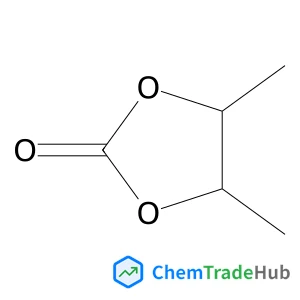
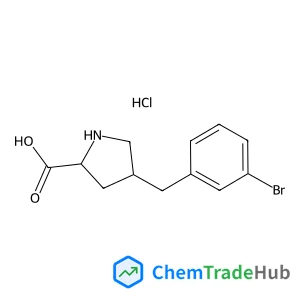
(2S,4R)-4-(3-Bromobenzyl)pyrrolidine-2-carboxylic acid hydrochloride
CAS号:
1049734-10-2
分子式:
C12H15BrClNO2

推荐供应商






免责声明
本页面提供的学术期刊信息仅供参考和研究使用。我们与任何期刊出版商均无关联,也不处理投稿事宜。如有投稿相关咨询,请直接联系相关期刊出版商。
如发现页面信息有误,请发送邮件至 support@chemtradehub.com 联系我们。我们将及时核实并处理您的问题。