









![19-[Chloro(dideuterio)methyl]-19-deuterio-20,20-dideuteriooxyoctatriacontane-18,21-dione structure](https://cnstatic.chemtradehub.com/structs/124/1246818-85-8-6244.webp "19-[Chloro(dideuterio)methyl]-19-deuterio-20,20-dideuteriooxyoctatriacontane-18,21-dione structure")
Ground-state proton-transfer dynamics governed by configurational optimization
文献信息
发布日期
2010-12-20
DOI
10.1039/C0CP01977A
影响因子
3.676
作者
Sun-Young Park, Young-Shin Lee, Du-Jeon Jang
查看原文
摘要
The ground-state proton transfer (GSPT) of 7-hydroxyquinoline along a hydrogen-bonded alcohol chain has been investigated in n-alkanes using time-resolved transient-absorption spectroscopy with variation of alcohols, media, isotopes, and temperatures. As a 7-hydroxyquinoline molecule associates with two alcohol molecules viahydrogen bonding to form a cyclic complex in a nonpolar aprotic medium, the intrinsic GSPT dynamics of the cyclic complex in a n-alkane has been observed directly without being interfered with by solvent association to form the cyclic complex. GSPT occurs concertedly without accumulating any reaction intermediate and yet asymmetrically with a rate-determining tunneling process. Both the rate constant and the kinetic isotope effect of GSPT increase rapidly with the proton-donating ability of the alcohol but decrease greatly with the molecular size of the alcohol. The reorganization of the hydrogen-bond bridge to form an optimal precursor configuration for efficient proton tunneling takes place prior to intrinsic GSPT, and configurational optimization becomes more important as the molecular size of the alcohol increases. Consequently, the larger contribution of configurational optimization to GSPT leads to the weaker asymmetric character of GSPT.
相关文献
Insights into the thioamidation of thiopeptins to enhance the understanding of the biosynthetic logic of thioamide-containing thiopeptides
Yuqing Li, Qingfei Zheng, Dandan Chen
2019-03-21
Communication
DOI: 10.1039/C9OB00402E
An enzymatic acetal/hemiacetal conversion for the physiological temperature activation of the alkoxyamine C–ON bond homolysis
Muriel Albalat, Gérard Audran, Maxence Holzritter, Sylvain R. A. Marque, Nicolas Vanthuyne, Pierre Voisin
2020-07-30
Research Article
DOI: 10.1039/D0QO00559B
Recent advances in the asymmetric synthesis of pharmacology-relevant nitrogen heterocycles via stereoselective aza-Michael reactions
Maxim G. Vinogradov, Olga V. Turova, Sergei G. Zlotin
2019-02-28
Review Article
DOI: 10.1039/C8OB03034K
A novel multicomponent quadruple/double quadruple domino reaction: highly efficient synthesis of polyheterocyclic architectures
Manickam Bakthadoss, Srinivasan Jayakumar, Selvakumar Raman, Anthonisamy Devaraj, Duddu S. Sharada
2018-12-12
Paper
DOI: 10.1039/C8OB02970A
Gram-scale synthesis of luciferins derived from coelenterazine and original insights into their bioluminescence properties‡
Eloi P. Coutant, Sophie Goyard, Vincent Hervin, Racha Baatallah, Yves Jacob, Thierry Rose, Yves L. Janin
2019-03-07
Communication
DOI: 10.1039/C9OB00459A
Iron catalyzed ketoalkylation and ketoalkylation/etherification of styrenes initiated by selective C–C bond cleavage
Meng-Ting Suo, Shuo Yang, Jun-Cheng Yang, Ze-Yu Liu, Jun-Jie Zhang, Li-Na Guo
2020-07-15
Research Article
DOI: 10.1039/D0QO00671H
Phosphine-catalyzed regiospecific (3 + 2) cyclization of 3-nitroindoles with allene esters
Li-Wen Jin, Fei Jiang, Ke-Wei Chen, Bai-Xiang Du, Guang-Jian Mei, Feng Shi
2019-03-23
Paper
DOI: 10.1039/C9OB00432G
您可能还喜欢
化合物问答
什么是3-表南美楝属二醇(CAS号:19942-04-2)?
3-表南美楝属二醇是一种具有特定立体化学结构的化合物,其分子式为C31H52O2,属于甾醇类化合物。它具有光学活性,是一种复杂的有机分子,主要存在于一些植物中。
19942-04-2(3S,5R,8R,9R,10R,13R...
化合物问答
3-羧基-5-碘苯甲酸甲酯(CAS号:50765-22-5)应用于哪些行业?
3-羧基-5-碘苯甲酸甲酯主要应用于医药行业,作为合成某些药物中间体的重要原料。此外,它还可能用于聚合物的改性、传感器的制备以及半导体材料的制备等领域。
50765-22-5Methyl 3-hydroxy-5-i...
化合物问答
什么是3-Bromoindolin-2-one(CAS号:22942-87-6)?
3-Bromoindolin-2-one是一种含有溴代基团的吲哚酮衍生物,分子式为C9H7BrNO。它是一种无色固体,具有一定的挥发性,熔点为158-159°C...
22942-87-63-Bromoindolin-2-one
化合物问答
如何处理含有L-Lysyl-L-phenylalanyl-L-isoleucylglycyl-L-leucyl-L-methioninamide(CAS号:2990-43-4)的废料?
对于含有该化合物的废液,应先进行中和处理,然后根据其毒性和活性选择合适的处置方法。可以考虑焚烧处理或由专业的化学品废物处理公司进行无害化处理。处理过程中需注意环...
2990-43-4L-Lysyl-L-phenylalan...
化合物问答
ANGIOTENSIN 1/2 + A (2 - 8)(CAS号:51833-76-2)的物理化学性质是什么?
ANGIOTENSIN 1/2 + A (2 - 8)是一种蛋白质类化合物,具有典型的蛋白质性质。它的分子量约为5900 Da。该化合物在水中具有一定的溶解性,...
51833-76-2ANGIOTENSIN 1/2 + A ...
化合物问答
如何储存2-甲基硫代嘧啶-5-硼酸频那酯(CAS号:940284-18-4)?
应将该化合物存放在阴凉干燥、通风良好的地方,避免阳光直射。建议将化合物密封保存在避光的、干燥的容器中,远离火源和高温环境。
940284-18-42-(Methylthio)-5-(4,...
化合物问答
什么是苏丹红IV氘代物 标准品(CAS号:1014689-18-9)?
苏丹红IV氘代物 标准品是一种含有氘代标记的苏丹红IV化合物,是一种用于化合物分析、结构确证以及代谢研究的标准物质。
1014689-18-91-[(E)-{2-Methyl-4-[...
化合物问答
(+)-2-Amino-6-propionamido-d3-tetrahydrobenzothiazole(CAS号:1217680-69-7)适用哪些法规指南?
该化合物需要遵循《全球化学品统一分类和标签制度》(GHS)中的分类和标签要求,具体分类需依据其毒性和物理化学性质。此外,还需要符合《欧盟化学品注册、评估、授权和...
1217680-69-7(+)-2-Amino-6-propio...
化合物问答
如何储存2-氨基-2-(2-吡啶)乙酸乙酯(CAS号:55243-15-7)?
2-氨基-2-(2-吡啶)乙酸乙酯应储存于阴凉、干燥、通风良好的环境中,避免高温和光照。应使用密封容器储存,并远离易燃物、氧化剂和其他危险化学品。
55243-15-7Ethyl 2-amino-2-(pyr...
化合物问答
3-羟基-4-甲氧基吡啶-2-羧酸(CAS号:210300-09-7)的主要用途是什么?
3-羟基-4-甲氧基吡啶-2-羧酸主要用于合成其他有机化合物,如药物合成、农药合成和染料合成等。此外,它还可用作中间体和试剂,在化学研究领域也有一定的应用。
210300-09-73-Hydroxy-4-methoxy-...
来源期刊
Physical Chemistry Chemical Physics

CiteScore:
5.5
自引率:
10.3%
年发文量:
3036
Physical Chemistry Chemical Physics (PCCP) is an international journal co-owned by 19 physical chemistry and physics societies from around the world. This journal publishes original, cutting-edge research in physical chemistry, chemical physics and biophysical chemistry. To be suitable for publication in PCCP, articles must include significant innovation and/or insight into physical chemistry; this is the most important criterion that reviewers and Editors will judge against when evaluating submissions. The journal has a broad scope and welcomes contributions spanning experiment, theory, computation and data science. Topical coverage includes spectroscopy, dynamics, kinetics, statistical mechanics, thermodynamics, electrochemistry, catalysis, surface science, quantum mechanics, quantum computing and machine learning. Interdisciplinary research areas such as polymers and soft matter, materials, nanoscience, energy, surfaces/interfaces, and biophysical chemistry are welcomed if they demonstrate significant innovation and/or insight into physical chemistry. Joined experimental/theoretical studies are particularly appreciated when complementary and based on up-to-date approaches.
推荐化合物
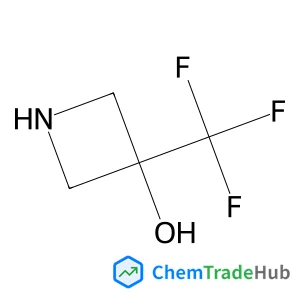
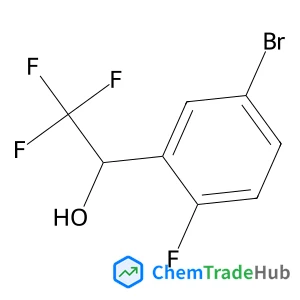
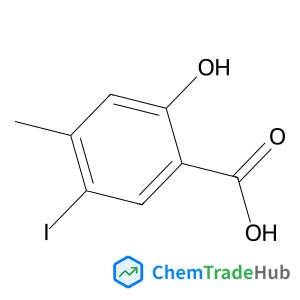
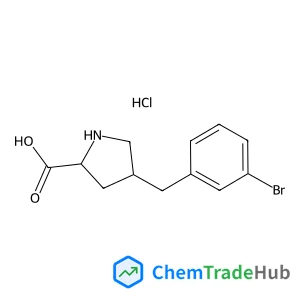
(2S,4R)-4-(3-Bromobenzyl)pyrrolidine-2-carboxylic acid hydrochloride
CAS号:
1049734-10-2
分子式:
C12H15BrClNO2
推荐供应商





免责声明
本页面提供的学术期刊信息仅供参考和研究使用。我们与任何期刊出版商均无关联,也不处理投稿事宜。如有投稿相关咨询,请直接联系相关期刊出版商。
如发现页面信息有误,请发送邮件至 support@chemtradehub.com 联系我们。我们将及时核实并处理您的问题。