


Multinuclear solid state NMR investigation of two polymorphic forms of Ciprofloxacin-saccharinate
文献信息
发布日期
2011-03-07
DOI
10.1039/C0CP02919J
影响因子
3.676
作者
Y. Garro Linck, A. K. Chattah, R. Graf, C. B. Romañuk, M. E. Olivera, R. H. Manzo, G. A. Monti, H. W. Spiess
查看原文
摘要
Two polymorphic forms of a novel pharmaceutical compound, ciprofloxacin-saccharinate (CIP-SAC), are analyzed using one dimensional (1D) and two dimensional (2D) 1H nuclear magnetic resonance (NMR) at fast magic angle spinning (MAS). Additionally 15N spectroscopy and 1H–13C correlation experiments were performed to complement our conclusions. The 1D 1H NMR spectra of CIP and complexes reveal valuable information about the ionic bonding between ciprofloxacin and saccharine. Additionally, these spectra allow us to perform a clear characterization of each solid form, giving the number of molecules per unit cell in one of the polymorphs. From 2D 1H–1H spectra obtained through double quantum correlations we can arrive at important conclusions about the hydrogen bonding, conformation, and intra and inter-molecular interactions present in these compounds. Comparing and contrasting the 1H–1H correlation data obtained for both polymorphic forms and taking into account the single crystal structure data existing for the solid form CIP-SAC (II) was possible to extract some conclusions on the polymorph CIP-SAC (I) where no single crystal information is available. 1H MAS NMR is shown to be an important tool in the field of polymorphism and for the characterization of multicomponent pharmaceutical compounds.
期刊推荐
Russian Chemical Reviews
Kinetics and Catalysis

Science Progress

European Journal of Wood and Wood Products

Proceedings of the National Academy of Sciences of the United States of America

Journal of Medicinal Chemistry
Molecular Pharmacology
Planta Medica
Israel Journal of Chemistry
Journal of Physics and Chemistry of Solids
相关文献
Size-dependent Auger spectra and two-hole Coulomb interaction of small supported Cu-clusters
M. Al-Hada
2013-04-15
Paper
DOI: 10.1039/C3CP00109A
The effect of dimensionality of nanostructured carbon on the architecture of organic–inorganic hybrid materials
R. D. K. Misra, D. Depan, J. Shah
2013-06-07
Paper
DOI: 10.1039/C3CP51236C
Sorption enhanced CO2 methanation
Andreas Borgschulte, Noris Gallandat, Benjamin Probst, Riccardo Suter, Elsa Callini, Davide Ferri, Yadira Arroyo, Rolf Erni, Hans Geerlings, Andreas Züttel
2013-04-15
Paper
DOI: 10.1039/C3CP51408K
Stretching single atom contacts at multiple subatomic step-length
Yi-Min Wei, Jing-Hong Liang, Zhao-Bin Chen, Xiao-Shun Zhou, Bing-Wei Mao, Oscar A. Oviedo, Ezequiel P. M. Leiva
2013-03-27
Paper
DOI: 10.1039/C3CP50473E
High performance enzyme fuel cells using a genetically expressed FAD-dependent glucose dehydrogenase α-subunit of Burkholderia cepacia immobilized in a carbon nanotubeelectrode for low glucose conditions
Deby Fapyane, Soo-Jin Lee, Seo-Hee Kang, Du-Hyun Lim, Kwon-Koo Cho, Tae-hyun Nam, Jae-Pyoung Ahn, Jou-Hyeon Ahn, Seon-Won Kim, In Seop Chang
2013-05-07
Communication
DOI: 10.1039/C3CP51864G
Electron spin resonance studies of trityl OX063 at a concentration optimal for DNP
Lloyd Lumata, Zoltan Kovacs, Johan van Tol, Lu Yu, Likai Song
2013-05-08
Paper
DOI: 10.1039/C3CP50186H
Efficient hydrogenation over single-site bimetallic RuSn clusters
Lauro Oliver Paz-Borbón, Anders Hellman, John Meurig Thomas, Henrik Grönbeck
2013-04-11
Paper
DOI: 10.1039/C3CP51384J
Infiltrating sulfur in hierarchical architecture MWCNT@meso C core–shell nanocomposites for lithium–sulfur batteries
Yingchao Yu, Weidong Zhou, Hao Chen, Francis J. DiSalvo, Héctor D. Abruña
2013-04-12
Communication
DOI: 10.1039/C3CP51551F
Computational study of peptide bond formation in the gas phase through ion–molecule reactions
Pilar Redondo, Henar Martínez, Álvaro Cimas, Carmen Barrientos, Antonio Largo
2013-06-07
Paper
DOI: 10.1039/C3CP51535D
Fukui and dual-descriptor matrices within the framework of spin-polarized density functional theory
Diego R. Alcoba, Luis Lain, Alicia Torre, Ofelia B. Oña, Eduardo Chamorro
2013-04-19
Paper
DOI: 10.1039/C3CP50736J
您可能还喜欢
化合物问答
什么是2-Bromo-1-(pyrimidin-2-yl)ethanone hydrobromide(CAS号:1588441-02-4)?
2-Bromo-1-(pyrimidin-2-yl)ethanone hydrobromide是一种有机化合物,分子式为C6H5Br2N2O2。它是一种溴代化合...
1588441-02-42-Bromo-1-(2-pyrimid...
化合物问答
在合成中是否有1-正-丁基-3-甲基咪唑鎓三氟甲烷磺酸盐(CAS号:174899-66-2)的替代品?
在合成中,可以考虑使用1-正-丁基-3-甲基咪唑鎓溴酸盐或1-正-丁基-3-甲基咪唑鎓氯酸盐作为替代品。这些化合物在性能上与1-正-丁基-3-甲基咪唑鎓三氟甲烷...
174899-66-21-Butyl-3-methyl-1H-...
化合物问答
2-methyl-5-thiophen-2-ylfuran-3-carboxylic acid(CAS号:651005-90-2)的市场或研究趋势如何?
目前,2-methyl-5-thiophen-2-ylfuran-3-carboxylic acid的研究主要集中在药物化学和新型材料领域。随着生物医药和有机合...
651005-90-22-Methyl-5-(thien-2-...
化合物问答
格列吡嗪杂质H(CAS号:13554-93-3)的主要用途是什么?
格列吡嗪杂质H主要作为药物中间体或副产物存在,并无特定的工业应用。在药物生产中,它可能需要被处理掉以保证最终药物的质量。
13554-93-3Ethyl (2-(4-((cycloh...
化合物问答
如何储存(9ci)-4-甲氧基-1H-苯并咪唑-2-乙腈(CAS号:317817-41-7)?
(9ci)-4-甲氧基-1H-苯并咪唑-2-乙腈应储存在阴凉、干燥、通风良好的地方,避免阳光直射。使用密封的玻璃或塑料容器储存,并确保容器的密封性良好,以防止挥...
317817-41-7(4-Methoxy-1H-benzim...
化合物问答
4,5,9,10-四氢苯芘(CAS号:781-17-9)应用于哪些行业?
4,5,9,10-四氢苯芘在医药行业用于作为某些药物的中间体,在聚合物行业用作添加剂提升材料的热稳定性,在传感器领域作为传感器的敏感材料,在半导体行业中用作掺杂...
781-17-94,5,9,10-Tetrahydrop...
化合物问答
处理叶酸-D4(CAS号:171777-72-3)时应注意哪些实验室安全事项?
处理叶酸-D4时应佩戴个人防护装备(PPE),如手套和实验服。操作应在通风橱内进行,以避免吸入蒸汽或粉尘。如果不慎泄露,应立即用大量清水冲洗,并通知安全人员。参...
171777-72-3Folic Acid-d4
化合物问答
如何处理含有6-溴-2-(三氟乙酰基)-1,2,3,4-四氢异喹啉(CAS号:252331-63-8)的废料?
含有该化合物的废料应收集到专用的容器中,并进行密封以防止挥发和泄漏。在处理前,需进行危险性评估,以确定是否需要进行化学处理。最终处置需遵循当地的危险废物管理规定...
252331-63-81-(6-bromo-3,4-dihyd...
化合物问答
4,5-二氟-2-甲氧基苯甲醛(CAS号:145742-34-3)的主要用途是什么?
4,5-二氟-2-甲氧基苯甲醛主要用作有机合成中的中间体,特别是在制药和农药领域。它可以作为合成其他有机化合物的原料。
145742-34-34,5-difluoro-2-metho...
化合物问答
5-溴-6-三氟甲基吲哚(CAS号:1198475-24-9)安全吗?
5-溴-6-三氟甲基吲哚作为一种化学试剂,具有一定的毒性,需要在通风橱中操作,并采取适当的安全措施以避免吸入、皮肤接触和眼睛刺激。应避免与皮肤和眼睛直接接触,并...
1198475-24-95-bromo-6-(trifluoro...
来源期刊
Physical Chemistry Chemical Physics

CiteScore:
5.5
自引率:
10.3%
年发文量:
3036
Physical Chemistry Chemical Physics (PCCP) is an international journal co-owned by 19 physical chemistry and physics societies from around the world. This journal publishes original, cutting-edge research in physical chemistry, chemical physics and biophysical chemistry. To be suitable for publication in PCCP, articles must include significant innovation and/or insight into physical chemistry; this is the most important criterion that reviewers and Editors will judge against when evaluating submissions. The journal has a broad scope and welcomes contributions spanning experiment, theory, computation and data science. Topical coverage includes spectroscopy, dynamics, kinetics, statistical mechanics, thermodynamics, electrochemistry, catalysis, surface science, quantum mechanics, quantum computing and machine learning. Interdisciplinary research areas such as polymers and soft matter, materials, nanoscience, energy, surfaces/interfaces, and biophysical chemistry are welcomed if they demonstrate significant innovation and/or insight into physical chemistry. Joined experimental/theoretical studies are particularly appreciated when complementary and based on up-to-date approaches.
推荐化合物
![Sodium 6-amino-3-[(E)-{4-[(E)-(4-aminophenyl)diazenyl]-2-methoxy-5-methylphenyl}diazenyl]-4-hydroxy-2-naphthalenesulfonate structure](https://cnstatic.chemtradehub.com/structs/294/2945-96-2-092f.webp "Sodium 6-amino-3-[(E)-{4-[(E)-(4-aminophenyl)diazenyl]-2-methoxy-5-methylphenyl}diazenyl]-4-hydroxy-2-naphthalenesulfonate structure")
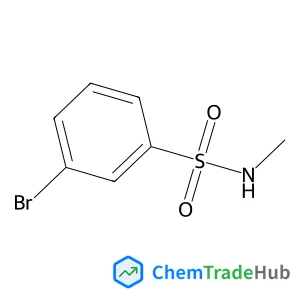
![2-Methyl-2-propanyl 1,6-diazaspiro[3.4]octane-6-carboxylate structure](https://cnstatic.chemtradehub.com/structs/115/1158749-79-1-81ee.webp "2-Methyl-2-propanyl 1,6-diazaspiro[3.4]octane-6-carboxylate structure")
推荐供应商





免责声明
本页面提供的学术期刊信息仅供参考和研究使用。我们与任何期刊出版商均无关联,也不处理投稿事宜。如有投稿相关咨询,请直接联系相关期刊出版商。
如发现页面信息有误,请发送邮件至 support@chemtradehub.com 联系我们。我们将及时核实并处理您的问题。