





![Benzyl spiro[indole-3,4'-piperidine]-1(2H)-carboxylate hydrochloride (1:1) structure](https://cnstatic.chemtradehub.com/structs/159/159635-46-8-8de0.webp "Benzyl spiro[indole-3,4'-piperidine]-1(2H)-carboxylate hydrochloride (1:1) structure")
Benzyl spiro[indole-3,4'-piperidine]-1(2H)-carboxylate hydrochloride (1:1)
CAS号:
159635-46-8
分子式:
C20H23ClN2O2
Annabelle Scarpaci, Clément Cabanetos, Errol Blart, Yann Pellegrin, Véronique Montembault, Laurent Fontaine, Vincent Rodriguez, Fabrice Odobel
New methacrylate copolymers incorporating two complementary thermally cross-linkable groups (azide or ethynyl) for implementation in electro-optic devices were synthesized and their nonlinear optical properties were investigated. These copolymers were prepared from a monomer containing Disperse Red 1 (DR1) as active NLO chromophore which is end substituted either by an azide or ethynyl group connected via a rigid (phenyl) or flexible spacer (alkyl chain). The second monomer is either a trimethylsilyl-propargyl methacrylate, or an azidopropyl methacrylate or a trimethylsilyl-phenyl methacrylate. The determination of the reactivity ratios showed that the monomer containing the DR1 chromophore is more reactive than trimethylsilyl-propargyl methacrylate. The cross-linking temperatures of these polymers range from 150 °C to 187 °C depending on the rigidity of the spacers connecting the cross-linkable units. These polymers displayed relatively high macroscopic electro-optic stability, enhanced upon cross-linking by more than 40 °C relative to non-cross-linked polymers. The results underscore the importance of the flexibility of the spacers to achieve the stable bulk electro-optic response. While rigidity is favorable to maintain the orientation of the chromophores, the optimal polymer is the one containing a flexible and a rigid spacer, since the mobility of the reactive groups is a key parameter which guarantees a high cross-linking conversion within the polymer. This study demonstrates the versatility of this new cross-linking process because we showed that the reactive groups (azide or trimethylsilylacetylated groups) can be interconverted (on the chromophore or as polymer side chain) with no change on the overall electro-optic activity and its thermal stability. Furthermore, preliminary kinetic study indicates that the Huisgen reaction rate can be controlled by the substituent on the ethynyl group opening the possibility to tune the cross-linking temperature by the careful choice of this substituent.
Gil O. Rutter, David Quigley, Tiffany R. Walsh
DOI: 10.1039/C5CP05652G
Raffaele Borrelli, Amedeo Capobianco, Alessandro Landi, Andrea Peluso
DOI: 10.1039/C5CP01190F
Jin-Yong Hong, Jeong Jae Wie, Yu Xu, Ho Seok Park
DOI: 10.1039/C5CP04203H
Daniel Avram, Bogdan Cojocaru, Adriana Urda, Ion Tiseanu, Mihaela Florea, Carmen Tiseanu
DOI: 10.1039/C5CP03458B
Vladimir I. Novoderezhkin, Elisabet Romero, Rienk van Grondelle
DOI: 10.1039/C5CP00582E
Anita Dawes, Nigel John Mason, Helen Jane Fraser
DOI: 10.1039/C5CP05299H
Monica Kosa, Hannah Noa Barad, Vijay Singh, David A. Keller, Klimentiy Shimanovich, Sven Rühle, Assaf Y. Anderson, Arie Zaban, Dan Thomas Major
DOI: 10.1039/C5CP05987A
Pengfei Huo, Thomas F. Miller III
DOI: 10.1039/C5CP02517F
C. Colleoni, S. Esposito, R. Grasso, D. Romeli, G. Rosace
DOI: 10.1039/C5CP03420E
Linqi Shi, Jiabao Cui, Fei Zhao, Dejun Wang, Tengfeng Xie, Yanhong Lin
DOI: 10.1039/C5CP05935F
该化合物适用的法规指南包括GHS(全球化学品统一分类和标签制度)分类为特定目标器官毒性-单次接触类别3;根据欧盟REACH法规,该化合物需要进行注册和评估;在美...
在合成中,可以考虑使用一些类似的化合物作为4-(4-氯苯基)-1H-咪唑的替代品,如4-(4-溴苯基)-1H-咪唑或4-(4-甲氧基苯基)-1H-咪唑。这些化合...
N~2~-甲基丙氨酸酰胺是一种有机化合物,其化学名为2-(Methylamino)propanamide。它是一种酰胺类化合物,分子式为C4H10N2O,相对分...
处理含有N-苄基-3-氨基氧杂环丁烷草酸盐(CAS号:1956341-96-0)的废料时,应首先确保遵循相关法规要求,如GHS和REACH等。通常,废液应先进行...
4-溴-2-氯-6-甲基苯甲酸是一种固体化合物,具有较高的熔点和较低的沸点。它的分子量为261.03 g/mol。该化合物在水中几乎不溶,在有机溶剂中溶解度适中...
该化合物通常通过缩合反应合成,典型的方法是将2,5-二氯嘧啶与N-甲基苯甲酰胺在碱性条件下进行偶联反应。常用的碱包括NaH、LDA等强碱。该合成路线具有较高的选...
3,5-二溴-4-甲基苯胺在某些合成路线中可能没有直接替代品。然而,在某些应用场景下,可以考虑使用其他类似结构的化合物如3,5-二溴-4-硝基苯胺或3,5-二碘...
2-氯喹啉-4-羧酸甲酯主要用于有机合成和药物合成领域,作为中间体或原料。它在合成某些药物和染料时具有重要作用。此外,该化合物还可能用于某些特定的化学研究中。
6-溴-8-氯咪唑[1,2-a]吡啶在操作过程中需要谨慎以确保安全。该化合物具有一定的毒性,吸入其蒸气或粉尘可能导致呼吸道刺激。处理时应佩戴适当的防护装备,如手...

Polymer Chemistry welcomes submissions in all areas of polymer science that have a strong focus on macromolecular chemistry. Manuscripts may cover a broad range of fields, yet no direct application focus is required.
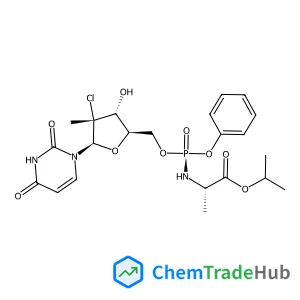
![2-Methyl-2-propanyl [(2S)-1-hydroxy-3-(4-hydroxyphenyl)-2-propanyl]carbamate structure](https://cnstatic.chemtradehub.com/structs/833/83345-46-4-eec2.webp "2-Methyl-2-propanyl [(2S)-1-hydroxy-3-(4-hydroxyphenyl)-2-propanyl]carbamate structure")