


![[4-Chloro-3-(diethylcarbamoyl)phenyl]boronic acid structure](https://cnstatic.chemtradehub.com/structs/871/871332-68-2-0e3b.webp "[4-Chloro-3-(diethylcarbamoyl)phenyl]boronic acid structure")
Tetra-alkoxy substituted PPV derivatives: a new class of highly soluble liquid crystalline conjugated polymers
文献信息
发布日期
2011-03-28
DOI
10.1039/C1PY00027F
影响因子
5.582
作者
Joke Vandenbergh, Ineke Van Severen, Laurence Lutsen, Peter Adriaensens, Henk J. Bolink, Thomas J. Cleij
查看原文
摘要
Two first examples of highly soluble tetra-alkoxy substituted PPV derivatives, poly(2,3,5,6-tetrahexyloxy-1,4-phenylene vinylene) (TH-PPV) and poly[2,3,5,6-tetra(2′-ethyl-hexyloxy)-1,4-phenylene vinylene] TEH-PPV, are presented. Both polymers have been fully characterized and the solubility and UV-Vis absorption characteristics have been studied in various organic solvents. Due to the symmetric nature of the repeating unit, TH-PPV and TEH-PPV have an inherently regioregular nature, which is unusual for PPV-type polymers. Observations from polarized light microscopy and differential scanning calorimetry indicate that TH-PPV exhibits thermally induced order resulting in a liquid crystalline mesophase. In contrast, due to steric hindrance of the branched alkyl side chains, TEH-PPV is rather disordered. As a first demonstration of the charge transporting properties of TH-PPV, a simple solution processed electroluminescent device has been prepared. The electroluminescence spectrum shows a detailed structure similar to that observed from the solid-state photoluminescence spectrum and shows one of the highest energy emissions observed for PPVs. It is speculated that the enhanced order in TH-PPV will benefit the usage of this new class of polymers in optoelectronic applications, in which the improved charge carrier mobility is desirable.
期刊推荐
Environmental Toxicology and Pharmacology
Journal of Medical Biochemistry
Journal of Enzyme inhibition and Medicinal Chemistry
Foundations of Chemistry

Coloration Technology

Green Chemistry
Faraday Discussions

Physical Chemistry Chemical Physics
Contact Lens & Anterior Eye
Current Pharmaceutical Biotechnology
相关文献
Alkali subhalides: high-pressure stability and interplay between metallic and ionic bonds
G. Saleh
2015-12-02
Paper
DOI: 10.1039/C5CP06026E
Vibronic couplings and coherent electron transfer in bridged systems
Raffaele Borrelli, Amedeo Capobianco, Alessandro Landi, Andrea Peluso
2015-06-30
Paper
DOI: 10.1039/C5CP01190F
High-performance formaldehyde gas-sensors based on three dimensional center-hollow ZnO
Linqi Shi, Jiabao Cui, Fei Zhao, Dejun Wang, Tengfeng Xie, Yanhong Lin
2015-10-29
Paper
DOI: 10.1039/C5CP05935F
Understanding the fundamentals of redox mediators in Li–O2 batteries: a case study on nitroxides
Benjamin J. Bergner, Christine Hofmann, Adrian Schürmann, Daniel Schröder, Klaus Peppler, Peter R. Schreiner, Jürgen Janek
2015-10-26
Paper
DOI: 10.1039/C5CP04505C
In silico characterization of protein partial molecular volumes and hydration shells
Sara Del Galdo, Paolo Marracino, Marco D'Abramo, Andrea Amadei
2015-10-27
Paper
DOI: 10.1039/C5CP05891K
Application-oriented computational studies on a series of D–π–A structured porphyrin sensitizers with different electron-donor groups
Bao Zhang, Yuanchao Li, Yuxia Liang, Xiaodong Xue
2015-10-26
Paper
DOI: 10.1039/C5CP05625J
Chemical and photochemical properties of chloroharmine derivatives in aqueous solutions
Federico A. O. Rasse-Suriani, M. Paula Denofrio, Juan G. Yañuk, M. Micaela Gonzalez, Ezequiel Wolcan, Marco Seifermann, Rosa Erra-Balsells, Franco M. Cabrerizo
2015-11-23
Paper
DOI: 10.1039/C5CP05866J
Physicochemical perspectives (aggregation, structure and dynamics) of interaction between pluronic (L31) and surfactant (SDS)
G. K. S. Prameela, B. V. N. Phani Kumar, A. Pan, V. K. Aswal, J. Subramanian, A. B. Mandal, S. P. Moulik
2015-10-13
Paper
DOI: 10.1039/C5CP04910E
Nanostring-cluster hierarchical structured Bi2O3: synthesis, evolution and application in biosensing
Ya-Nan Yu, Shi-Yu Lu, Shu-Juan Bao, Qiang-Qiang Sun, Sheng-Hui Liao
2015-12-03
Paper
DOI: 10.1039/C5CP05790F
Spatial frequency heterodyne imaging of aqueous phase transitions inside multi-walled carbon nanotubes
F. M. Schunk, D. Rand, C. Rose-Petruck
2015-10-26
Paper
DOI: 10.1039/C5CP04508H
您可能还喜欢
化合物问答
2-(甲基磺酰基)嘧啶-5-胺(CAS号:56621-92-2)适用哪些法规指南?
该化合物适用的法规指南包括GHS(全球化学品统一分类和标签制度)分类为特定目标器官毒性-单次接触类别3;根据欧盟REACH法规,该化合物需要进行注册和评估;在美...
56621-92-22-(Methylsulfonyl)py...
化合物问答
在合成中是否有4-(4-氯苯基)-1H-咪唑(CAS号:35512-29-9)的替代品?
在合成中,可以考虑使用一些类似的化合物作为4-(4-氯苯基)-1H-咪唑的替代品,如4-(4-溴苯基)-1H-咪唑或4-(4-甲氧基苯基)-1H-咪唑。这些化合...
35512-29-94-(4-Chlorophenyl)-1...
化合物问答
什么是N~2~-甲基丙氨酸酰胺(CAS号:32012-16-1)?
N~2~-甲基丙氨酸酰胺是一种有机化合物,其化学名为2-(Methylamino)propanamide。它是一种酰胺类化合物,分子式为C4H10N2O,相对分...
32012-16-12-(Methylamino)propa...
化合物问答
如何处理含有N-苄基-3-氨基氧杂环丁烷草酸盐(CAS号:1956341-96-0)的废料?
处理含有N-苄基-3-氨基氧杂环丁烷草酸盐(CAS号:1956341-96-0)的废料时,应首先确保遵循相关法规要求,如GHS和REACH等。通常,废液应先进行...
1956341-96-0N-Benzyloxetan-3-ami...
化合物问答
4-bromo-2-chloro-6-methylbenzoic acid(CAS号:877149-07-0)的物理化学性质是什么?
4-溴-2-氯-6-甲基苯甲酸是一种固体化合物,具有较高的熔点和较低的沸点。它的分子量为261.03 g/mol。该化合物在水中几乎不溶,在有机溶剂中溶解度适中...
877149-07-04-Bromo-2-chloro-6-m...
化合物问答
2-[(2,5-二氯-4-嘧啶)氨基]-N-甲基苯甲酰胺(CAS号:761440-08-8)通常如何合成?
该化合物通常通过缩合反应合成,典型的方法是将2,5-二氯嘧啶与N-甲基苯甲酰胺在碱性条件下进行偶联反应。常用的碱包括NaH、LDA等强碱。该合成路线具有较高的选...
761440-08-82-[(2,5-dichloropyri...
4752-10-71,4-Dichlorophthalaz...
化合物问答
在合成中是否有3,5-二溴-4-甲基苯胺(CAS号:13194-73-5)的替代品?
3,5-二溴-4-甲基苯胺在某些合成路线中可能没有直接替代品。然而,在某些应用场景下,可以考虑使用其他类似结构的化合物如3,5-二溴-4-硝基苯胺或3,5-二碘...
13194-73-53,5-Dibromo-4-methyl...
化合物问答
2-氯喹啉-4-羧酸甲酯(CAS号:62482-26-2)的主要用途是什么?
2-氯喹啉-4-羧酸甲酯主要用于有机合成和药物合成领域,作为中间体或原料。它在合成某些药物和染料时具有重要作用。此外,该化合物还可能用于某些特定的化学研究中。
62482-26-2Methyl 2-chloro-4-qu...
化合物问答
i>]吡啶(CAS号:474708-88-8)安全吗?
6-溴-8-氯咪唑[1,2-a]吡啶在操作过程中需要谨慎以确保安全。该化合物具有一定的毒性,吸入其蒸气或粉尘可能导致呼吸道刺激。处理时应佩戴适当的防护装备,如手...
474708-88-86-Bromo-8-chloroimid...
来源期刊
Polymer Chemistry

CiteScore:
8.6
自引率:
7.3%
年发文量:
457
Polymer Chemistry welcomes submissions in all areas of polymer science that have a strong focus on macromolecular chemistry. Manuscripts may cover a broad range of fields, yet no direct application focus is required.
推荐化合物
![2-[({[(2-Methyl-2-propanyl)oxy]carbonyl}amino)methyl]isonicotinic acid structure](https://cnstatic.chemtradehub.com/structs/473/473924-63-9-973b.webp "2-[({[(2-Methyl-2-propanyl)oxy]carbonyl}amino)methyl]isonicotinic acid structure")
2-[({[(2-Methyl-2-propanyl)oxy]carbonyl}amino)methyl]isonicotinic acid
CAS号:
473924-63-9
分子式:
C12H16N2O4
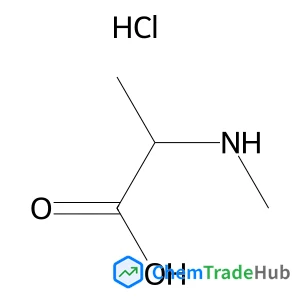
推荐供应商







免责声明
本页面提供的学术期刊信息仅供参考和研究使用。我们与任何期刊出版商均无关联,也不处理投稿事宜。如有投稿相关咨询,请直接联系相关期刊出版商。
如发现页面信息有误,请发送邮件至 support@chemtradehub.com 联系我们。我们将及时核实并处理您的问题。