


Unusual activation by solvent of the ethylene free radical polymerization
文献信息
发布日期
2011-07-28
DOI
10.1039/C1PY00200G
影响因子
5.582
作者
Etienne Grau, Jean-Pierre Broyer, Christophe Boisson, Roger Spitz, Vincent Monteil
查看原文
摘要
Ethylene polymerization is performed industrially either by radical polymerization under severe conditions (1000–4000 bar, 200–300 °C) or by a catalytic mechanism at lower temperatures (usually less than 100 °C) and pressures (below 50 bar). Standard radical polymerization conditions are too severe to permit a fine control of the macromolecular architecture. Under milder conditions (100 bar, 70 °C), radical ethylene polymerization is assumed ineffective which has been confirmed in bulk (supercritical ethylene). However, we have shown that the efficiency of this polymerization is strongly dependent on the solvent. This unusual activation by solvent has been rationalized using theoretical considerations. A second effect investigated is the influence of solvent on PE molecular weight. Indeed PE with either low molecular weight and high chain-end functionality or higher molecular weight can be synthesized according to the solvent used.
期刊推荐

Physical Chemistry Chemical Physics
Journal of Medical Biochemistry
CrystEngComm

Coloration Technology
Mini-Reviews in Medicinal Chemistry
Environmental Toxicology and Pharmacology
Angewandte Chemie International Edition

Nature Reviews Drug Discovery

Contact Lens & Anterior Eye
Current Pharmaceutical Biotechnology
相关文献
Effects of water on the solvation and structure of lipase in deep eutectic solvents containing a protein destabilizer and stabilizer
Qi Qiao, Jian Shi, Qing Shao
2021-09-29
Paper
DOI: 10.1039/D1CP03282H
Structure and thermodynamics of empty clathrate hydrates below the freezing point of water
Fernando J. A. L. Cruz, José P. B. Mota
2021-07-13
Paper
DOI: 10.1039/D1CP00893E
Single sheets of graphene for fabrication of fibers with enhanced mechanical properties
Muhammad G. Salim, Luke A. Thimons, Min A. Kim, Brennan Carr, Michelle Montgomery, Nathan Tolman, Tevis D. B. Jacobs, Haitao Liu
2021-09-20
Paper
DOI: 10.1039/D1CP03238K
Identification of intermediates of a molecular ruthenium catalyst for water oxidation using in situ electrochemical X-ray absorption spectroscopy
Huacai Yan, Fusheng Li, Qingyu Kong
2021-10-12
Paper
DOI: 10.1039/D1CP03837K
Optical pressure and temperature sensing properties of Nd3+:YTaO4
Pengyu Zhou, Qingli Zhang, Xiuming Dou, Jian Wang, Baoquan Sun, Yuhua Shen, Bao Liu, Dandan Han
2021-09-22
Paper
DOI: 10.1039/D1CP03418A
Large Rashba splitting, carrier mobility, and valley polarization in a 1T-SnS2/MoTe2 heterostructure
Sukai Teng, Jia Li, Xiujuan Mao, Fuli He, Ze Liu, Jiaxi Wang, Yafan Wang
2021-07-07
Paper
DOI: 10.1039/D1CP02039K
A flat-lying dimer as a key intermediate in NO reduction on Cu(100)
Kenta Kuroishi, Thanh Ngoc Pham, Yuelin Wang, Yuji Hamamoto, Kouji Inagaki, Akitoshi Shiotari, Hiroshi Okuyama, Shinichiro Hatta, Tetsuya Aruga
2021-07-08
Paper
DOI: 10.1039/D1CP02746H
Theoretical characterization of zeolite encapsulated platinum clusters in the presence of water molecules
2021-10-07
Paper
DOI: 10.1039/D1CP03766H
Computational investigations of selected enzymes from two iron and α-ketoglutarate-dependent families
Madison B. Berger, Alice R. Walker, Erik Antonio Vázquez-Montelongo, G. Andrés Cisneros
2021-09-24
Perspective
DOI: 10.1039/D1CP03800A
New complexes of liquid crystal discotic triphenylenes: induction of the double gyroid phase
O. A. Otmakhova, G. N. Bondarenko, G. A. Shandryuk, A. S. Merekalov, R. V. Talroze
2021-07-22
Paper
DOI: 10.1039/D1CP00660F
您可能还喜欢
化合物问答
2-(甲基磺酰基)嘧啶-5-胺(CAS号:56621-92-2)适用哪些法规指南?
该化合物适用的法规指南包括GHS(全球化学品统一分类和标签制度)分类为特定目标器官毒性-单次接触类别3;根据欧盟REACH法规,该化合物需要进行注册和评估;在美...
56621-92-22-(Methylsulfonyl)py...
化合物问答
在合成中是否有4-(4-氯苯基)-1H-咪唑(CAS号:35512-29-9)的替代品?
在合成中,可以考虑使用一些类似的化合物作为4-(4-氯苯基)-1H-咪唑的替代品,如4-(4-溴苯基)-1H-咪唑或4-(4-甲氧基苯基)-1H-咪唑。这些化合...
35512-29-94-(4-Chlorophenyl)-1...
化合物问答
什么是N~2~-甲基丙氨酸酰胺(CAS号:32012-16-1)?
N~2~-甲基丙氨酸酰胺是一种有机化合物,其化学名为2-(Methylamino)propanamide。它是一种酰胺类化合物,分子式为C4H10N2O,相对分...
32012-16-12-(Methylamino)propa...
化合物问答
如何处理含有N-苄基-3-氨基氧杂环丁烷草酸盐(CAS号:1956341-96-0)的废料?
处理含有N-苄基-3-氨基氧杂环丁烷草酸盐(CAS号:1956341-96-0)的废料时,应首先确保遵循相关法规要求,如GHS和REACH等。通常,废液应先进行...
1956341-96-0N-Benzyloxetan-3-ami...
化合物问答
4-bromo-2-chloro-6-methylbenzoic acid(CAS号:877149-07-0)的物理化学性质是什么?
4-溴-2-氯-6-甲基苯甲酸是一种固体化合物,具有较高的熔点和较低的沸点。它的分子量为261.03 g/mol。该化合物在水中几乎不溶,在有机溶剂中溶解度适中...
877149-07-04-Bromo-2-chloro-6-m...
化合物问答
2-[(2,5-二氯-4-嘧啶)氨基]-N-甲基苯甲酰胺(CAS号:761440-08-8)通常如何合成?
该化合物通常通过缩合反应合成,典型的方法是将2,5-二氯嘧啶与N-甲基苯甲酰胺在碱性条件下进行偶联反应。常用的碱包括NaH、LDA等强碱。该合成路线具有较高的选...
761440-08-82-[(2,5-dichloropyri...
4752-10-71,4-Dichlorophthalaz...
化合物问答
在合成中是否有3,5-二溴-4-甲基苯胺(CAS号:13194-73-5)的替代品?
3,5-二溴-4-甲基苯胺在某些合成路线中可能没有直接替代品。然而,在某些应用场景下,可以考虑使用其他类似结构的化合物如3,5-二溴-4-硝基苯胺或3,5-二碘...
13194-73-53,5-Dibromo-4-methyl...
化合物问答
2-氯喹啉-4-羧酸甲酯(CAS号:62482-26-2)的主要用途是什么?
2-氯喹啉-4-羧酸甲酯主要用于有机合成和药物合成领域,作为中间体或原料。它在合成某些药物和染料时具有重要作用。此外,该化合物还可能用于某些特定的化学研究中。
62482-26-2Methyl 2-chloro-4-qu...
化合物问答
i>]吡啶(CAS号:474708-88-8)安全吗?
6-溴-8-氯咪唑[1,2-a]吡啶在操作过程中需要谨慎以确保安全。该化合物具有一定的毒性,吸入其蒸气或粉尘可能导致呼吸道刺激。处理时应佩戴适当的防护装备,如手...
474708-88-86-Bromo-8-chloroimid...
来源期刊
Polymer Chemistry

CiteScore:
8.6
自引率:
7.3%
年发文量:
457
Polymer Chemistry welcomes submissions in all areas of polymer science that have a strong focus on macromolecular chemistry. Manuscripts may cover a broad range of fields, yet no direct application focus is required.
推荐化合物
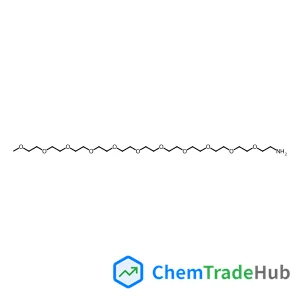
![1,1'-[(E)-1,2-Ethenediyl]bis(4-bromobenzene) structure](https://cnstatic.chemtradehub.com/structs/188/18869-30-2-c907.webp "1,1'-[(E)-1,2-Ethenediyl]bis(4-bromobenzene) structure")
推荐供应商




免责声明
本页面提供的学术期刊信息仅供参考和研究使用。我们与任何期刊出版商均无关联,也不处理投稿事宜。如有投稿相关咨询,请直接联系相关期刊出版商。
如发现页面信息有误,请发送邮件至 support@chemtradehub.com 联系我们。我们将及时核实并处理您的问题。