


A theoretical study on photomagnetic fluorescent proteinchromophore coupled diradicals and their possible applications
文献信息
发布日期
2012-03-09
DOI
10.1039/C2CP00053A
影响因子
3.676
作者
Debojit Bhattacharya, Anirban Panda, Suranjan Shil, Tamal Goswami, Anirban Misra
查看原文
摘要
We have designed and theoretically studied three different pairs of green fluorescent protein chromophores and their different homologue-based diradicals coupled with imino nitroxides. To begin with, the geometries of all these diradicals have been optimized at high spin (HS) state in the gas phase, in a water medium and in a blood plasma medium. The process of calculations is straightforward and well-established in the case of the gas phase. However, for calculations in water, we have adopted our own N-layer integrated molecular orbital and molecular mechanics (ONIOM) method. Similarly for the blood phase calculations, the polarized continuum model (PCM) method has been adopted. With these optimized geometries the magnetic exchange coupling constant (J) values are estimated for these diradicals in different media using the broken symmetry (BS) approach in an unrestricted DFT framework. In order to obtain the BS solutions in the ONIOM method, we have carried out ONIOM-BS, where the BS calculations are done for the inner high-level layer (diradical system) keeping the outer water layer at low level. In a similar fashion, a PCM-BS technique has also been adopted for the BS calculations in the PCM method. We have found that these diradicals have an ability to change their magnetic nature from antiferromagnetic in the trans form to ferromagnetic in the cis form upon irradiation of light with the appropriate wavelength. Using a time-dependent DFT (TDDFT) technique, the required wavelengths of light by which non-fluorescent dark trans diradicals turn into their corresponding bright fluorescent cis isomers are determined for each pair of diradicals for the gas and water media. This color change is indeed a signature of the change in magnetic state of the diradicals concerned. Here, we have also calculated the zero field splitting (ZFS) parameter (D), rhombic ZFS parameter (E) and ZFS magnitude (a2). From our calculations we ambitiously expect that if these diradicals are synthesized then they might be used as a successful, non-hazardous magnetic resonance imaging contrast agent (MRICA) in place of other metal-based contrast agents.
期刊推荐
Journal of Asian Natural Products Research
Critical Reviews in Solid State and Materials Sciences
Medicinal Chemistry Research
NDT & E International
Atomization and Sprays
Herald of the Russian Academy of Sciences
Journal of the Indian Institute of Science
Chinese Journal of Chemistry
Heteroatom Chemistry

Electroanalysis
相关文献
Ultrasensitive Pb2+ detection based on fluorescence resonance energy transfer (FRET) between quantum dots and gold nanoparticles
Xin Wang, Xiangqun Guo
2009-04-01
Paper
DOI: 10.1039/B822744F
Culture-independent susceptibility determination of E. coli isolated directly from patients’ urine using FTIR and machine-learning
George Abu-Aqil, Uraib Sharaha, Manal Suleiman, Klaris Riesenberg, Itshak Lapidot, Ahmad Salman, Mahmoud Huleihel
2022-09-22
Paper
DOI: 10.1039/D2AN01253G
An electroactive fiber optic chip for spectroelectrochemical characterization of ultra-thin redox-active films
Brooke M. Beam, Neal R. Armstrong, Sergio B. Mendes
2008-12-19
Paper
DOI: 10.1039/B814338B
A colorimetric aptasensor based on a hemin/EpCAM aptamer DNAzyme for sensitive exosome detection
Jingjing Kuang, Zhibo Fu, Xuezhi Sun, Chuhui Lin, Shenglong Yang, Jiayao Xu, Min Zhang, Hongyang Zhang, Fanghong Ning, Ping Hu
2022-10-05
Paper
DOI: 10.1039/D2AN01410F
Colorimetric recognition of the coralyne–poly(dA) interaction using unmodified gold nanoparticle probes, and further detection of coralyne based upon this recognition system
Zhaozi Lv, Erkang Wang
2009-06-22
Paper
DOI: 10.1039/B909069J
Au nanoflower film-based stretchable biosensors for in situ monitoring of superoxide anion release in cell mechanotransduction
Xu Zhao, Meihong Peng, Jialu Wang, Shutong Chen, Yuqing Lin
2022-07-28
Paper
DOI: 10.1039/D2AN01095J
Development of a metabolomic approach based on liquid chromatography-high resolution mass spectrometry to screen for clenbuterol abuse in calves
Frédérique Courant, Gaud Pinel, Emmanuelle Bichon, Fabrice Monteau, Jean-Philippe Antignac, Bruno Le Bizec
2009-05-06
Paper
DOI: 10.1039/B901813A
A colorimetric chemical tongue detects and distinguishes between multiple analytes
Francis Buan Hong Lim, Tingjun Lei, Gabriella Fernandez, Nicole Lopez, Andre-Lorenz Chu, Allan Valiente, Abhignyan Nagesetti, Andy Nelson, Kerstin Schmidt, Ta Chen Chang, Obdulio Piloto
2022-10-17
Paper
DOI: 10.1039/D2AN01615J
Sputter-induced chemical transformation in oxoanions by combination of C60+ and Ar+ ion beams analyzed with X-ray photoelectron spectrometry
Yu-Chin Lin, Ying-Yu Chen, Bang-Ying Yu, Wei-Chun Lin
2009-03-10
Paper
DOI: 10.1039/B814729A
您可能还喜欢
化合物问答
6-氯-2H-1,4-苯并噁嗪-3(4H)-酮(CAS号:7652-29-1)应用于哪些行业?
6-氯-2H-1,4-苯并噁嗪-3(4H)-酮主要应用于医药、农药和聚合物等领域。在医药领域,该化合物可用于合成抗菌药物;在农药领域,可用作杀虫剂的中间体;在聚...
7652-29-16-Chloro-2H-1,4-benz...
化合物问答
活性氧化铝(CAS号:1302-74-5)应用于哪些行业?
活性氧化铝广泛应用于医药、聚合物、传感器、半导体和催化等领域。在医药行业,活性氧化铝用作吸附剂和干燥剂,有助于去除杂质和水分。在聚合物行业,它用作增白剂和抗结块...
1302-74-5aluminum;trihydrate
化合物问答
什么是硅胶(CAS号:112926-00-8)?
硅胶(Silica gel, pptd.,cryst.-free)是一种无定形、多孔的硅酸盐材料,主要成分为二氧化硅(SiO₂)。其结构由硅氧四面体构成,通过酸...
112926-00-8Silica gel, pptd.,cr...
化合物问答
二乙基甲基一氢硅烷(CAS号:760-32-7)的主要用途是什么?
二乙基甲基一氢硅烷主要用于有机合成、表面处理以及作为溶剂。它还被用作合成其他硅烷化合物的原料,以及在涂料、粘合剂和密封剂中的应用。
760-32-7Diethyl(methyl)silan...
化合物问答
在合成中是否有N-花生四烯酰基甘氨酸(CAS号:179113-91-8)的替代品?
在合成过程中,可以考虑使用类似结构的化合物作为替代品,例如N-亚油酰基甘氨酸或N-花生二烯酰基甘氨酸。这些替代品在结构上有类似的双键位置,但可能具有不同的物理化...
179113-91-8Glycine, N-[(5Z,8Z,1...
化合物问答
在合成中是否有1-(4-甲氧基苯基)丙烷-1,2-二酮(CAS号:10557-27-4)的替代品?
在合成过程中,可以考虑使用类似结构的化合物作为替代品,例如1-(3-甲氧基苯基)丙烷-1,2-二酮或1-(4-羟基苯基)丙烷-1,2-二酮。这些替代品具有相似的...
10557-27-41-(4-Methoxyphenyl)p...
化合物问答
N-(4-氨基-1-苄基-3-羟基-5-苯基戊基)-3-甲基-2-(2-氧代四氢嘧啶-1-基)-丁酰胺 5-氧代吡咯烷-2-甲酸(CAS号:192726-06-0)通常如何合成?
该化合物通常通过一系列复杂的有机合成步骤获得。首先,通过芳香族化合物的羟基化反应获得羟基化产物,然后通过酰化反应形成酰胺中间体,最后通过环化反应得到目标产物。常...
192726-06-05-Oxo-L-proline - (2...
化合物问答
(S)-2-氨基-3-喹啉-2-丙酸(CAS号:161513-46-8)的市场或研究趋势如何?
该化合物作为生物活性化合物,尤其是在药物化学领域表现出色。近年来,随着对新型抗炎、抗病毒和抗癌药物的研究增加,其市场和研究趋势持续增长。此外,其在神经科学领域的...
161513-46-8(S)-2-Amino-3-quinol...
化合物问答
核黄素磷酸钠(CAS号:130-40-5)安全吗?
核黄素磷酸钠在常规使用条件下安全,但高剂量可能引起刺激性反应。操作时需佩戴防护手套和护目镜,避免吸入粉尘。若接触皮肤或眼睛,应立即用大量清水冲洗。急救时需根据接...
130-40-5Sodium 1-deoxy-1-(7,...
化合物问答
盐酸丙胺卡因杂质A(EP) 标准品(CAS号:19281-31-3)通常如何合成?
盐酸丙胺卡因杂质A(EP) 标准品可通过重氮化反应和随后的酰胺化反应合成。首先,利用氯化反应将苯环上的氢原子转化为氯原子,然后通过芳香族重氮化反应引入氨基,最后...
19281-31-32-Chloro-N-(2-methyl...
来源期刊
Physical Chemistry Chemical Physics

CiteScore:
5.5
自引率:
10.3%
年发文量:
3036
Physical Chemistry Chemical Physics (PCCP) is an international journal co-owned by 19 physical chemistry and physics societies from around the world. This journal publishes original, cutting-edge research in physical chemistry, chemical physics and biophysical chemistry. To be suitable for publication in PCCP, articles must include significant innovation and/or insight into physical chemistry; this is the most important criterion that reviewers and Editors will judge against when evaluating submissions. The journal has a broad scope and welcomes contributions spanning experiment, theory, computation and data science. Topical coverage includes spectroscopy, dynamics, kinetics, statistical mechanics, thermodynamics, electrochemistry, catalysis, surface science, quantum mechanics, quantum computing and machine learning. Interdisciplinary research areas such as polymers and soft matter, materials, nanoscience, energy, surfaces/interfaces, and biophysical chemistry are welcomed if they demonstrate significant innovation and/or insight into physical chemistry. Joined experimental/theoretical studies are particularly appreciated when complementary and based on up-to-date approaches.
推荐化合物
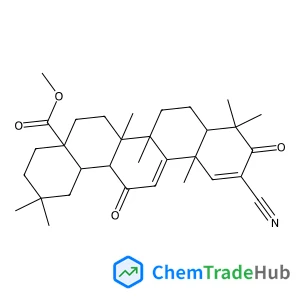
![1-Naphthalenesulfonic acid, 2-[(2-hydroxy-1-naphthalenyl)azo]-, bariumsalt (2:1) structure](https://cnstatic.chemtradehub.com/structs/110/1103-38-4-0b33.webp "1-Naphthalenesulfonic acid, 2-[(2-hydroxy-1-naphthalenyl)azo]-, bariumsalt (2:1) structure")
1-Naphthalenesulfonic acid, 2-[(2-hydroxy-1-naphthalenyl)azo]-, bariumsalt (2:1)
CAS号:
1103-38-4
分子式:
C20H14BaN2O4S
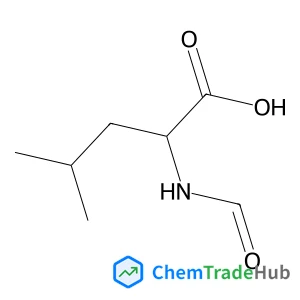
![[4-(Heptyloxy)phenyl]boronic acid structure](https://cnstatic.chemtradehub.com/structs/136/136370-19-9-ad33.webp "[4-(Heptyloxy)phenyl]boronic acid structure")
推荐供应商




免责声明
本页面提供的学术期刊信息仅供参考和研究使用。我们与任何期刊出版商均无关联,也不处理投稿事宜。如有投稿相关咨询,请直接联系相关期刊出版商。
如发现页面信息有误,请发送邮件至 support@chemtradehub.com 联系我们。我们将及时核实并处理您的问题。